Book 1
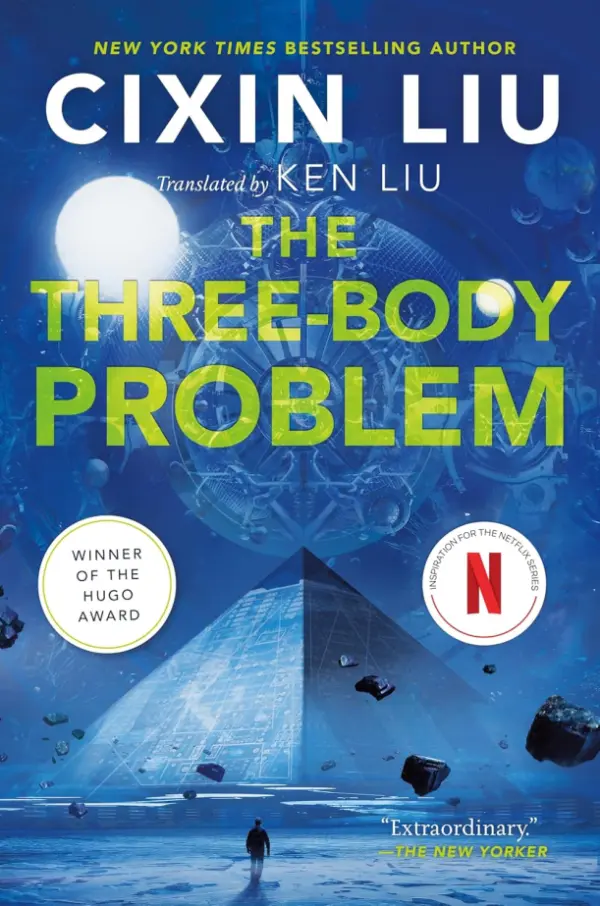
The Three-Body Problem
Average Goodreads rating4.1
- Systemic Injustice
- Secret Society

Author · Chinese
Chinese hard sci-fi author Liu Cixin wrote The Three-Body Problem, the first Asian novel to win the Hugo Award for Best Novel.
New to Liu Cixin? Start here
Book 1 of The Three-Body Problem
The Three-Body Problem by Liu Cixin is a science fiction epic spanning China's Cultural Revolution and the present day, where a secret signal into space brings first contact - and an existential threat to Earth.
Retailer links may earn Trope Trove a commission, at no extra cost to you.
3 books in reading order
Book 1
Average Goodreads rating4.1
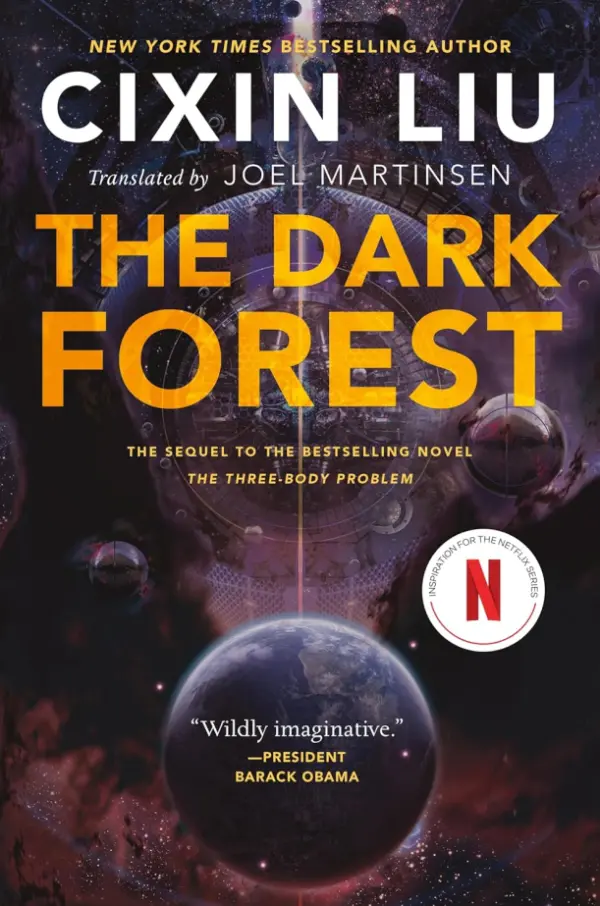
Book 2
Average Goodreads rating4.4
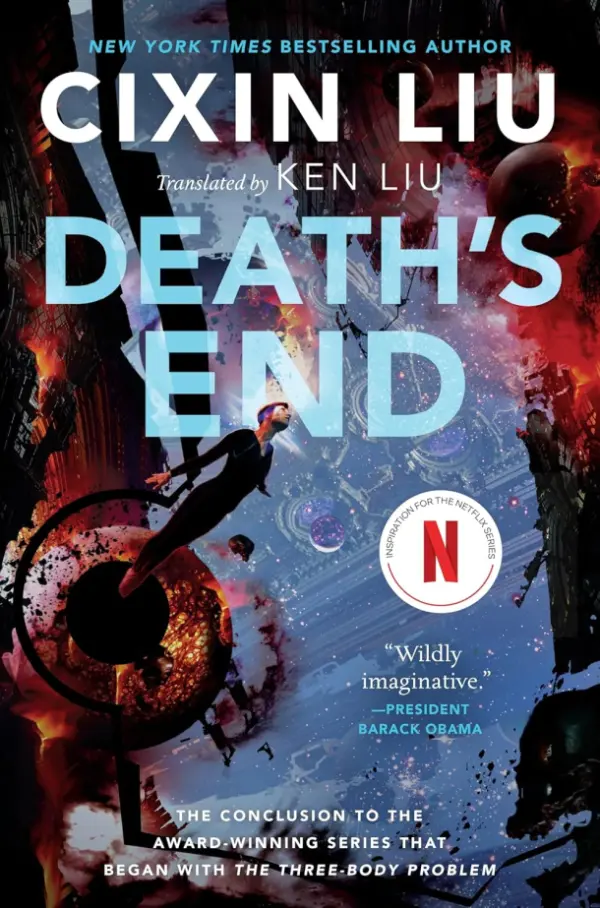
Book 3
Average Goodreads rating4.4
Born in Beijing on 23 June 1963, Liu Cixin grew up in Yangquan, Shanxi, where his parents worked in the mines. During the violence of the Cultural Revolution, he was sent to live with family in Luoshan County, Henan - an upheaval that would leave a permanent impression on his fiction. He later graduated from the North China University of Water Conservancy and Electric Power and spent years working as a senior engineer at a power plant in Shanxi province, writing in the evenings and at weekends.
His first published short story, "Whale Song", appeared in Science Fiction World in June 1999, and the Galaxy Award followed almost immediately that same year. For eight consecutive years from 1999 to 2006, and again in 2010, he received the Galaxy Award - China's most prestigious science fiction prize - cementing his standing as the country's leading voice in the genre long before Western audiences had any idea he existed. His publisher Macmillan describes him as "the most prolific and popular science fiction writer in the People's Republic of China."
The novel that changed everything was The Three-Body Problem, first serialised in Science Fiction World in 2006 and published in standalone form in 2008. The story roots itself firmly in the Cultural Revolution before expanding outward to first contact, orbital mechanics, and the fate of civilisation across centuries. When Ken Liu's English translation was published by Tor Books in 2014, it won the 2015 Hugo Award for Best Novel - making Liu Cixin the first author from Asia to receive that honour. The book had already sold over 1.2 million copies in China before that recognition arrived. Worldwide sales have since surpassed 30 million copies, and the trilogy has been translated into more than 26 languages.
The Three-Body Problem is the opening volume of the Remembrance of Earth's Past trilogy, completed by The Dark Forest (2008) and Death's End (2010). The third volume, translated by Ken Liu and published in English in 2016, was nominated for the 2017 Hugo Award and won the 2017 Locus Award for Best Science Fiction Novel. Taken together, the three books span millennia and multiple civilisations, grappling with the Fermi Paradox, game theory, and the terrifying logic of what Liu terms the dark forest hypothesis - a theory that advanced civilisations must conceal themselves to survive.
Beyond the trilogy, Liu's back catalogue is substantial. Ball Lightning and Supernova Era are standalone novels. The Wandering Earth, originally a short story from 2000 that also won a Galaxy Award, was adapted into a Chinese blockbuster film in 2019 that grossed $675 million at the box office. His short fiction has been collected in volumes including To Hold Up the Sky, and several of his stories have received graphic novel adaptations published in the United Kingdom by Head of Zeus.
His writing is firmly in the tradition of hard science fiction. Astrophysics, orbital dynamics, the mathematics of game theory - these aren't decorative details but load-bearing structures of his plots. He has cited Arthur C. Clarke as his single greatest influence, alongside George Orwell and Jules Verne. Like Clarke, he tends to position humanity not at the centre of the universe but as a small, precarious presence within something far larger and more indifferent. His characters often encounter forces so vast that human morality and individual significance shrink against them - a philosophical stance he holds deliberately, believing that science and the cosmos matter on a scale that dwarfs human experience.
Posthumanism and large-scale social critique run through much of his work, though he has consistently resisted easy political readings in interviews. The Cultural Revolution is not background colour in his fiction; it is a wound the narratives press against repeatedly, examining how ideology distorts science, trust, and survival instinct. His engineer's precision with technical ideas sits alongside an almost classical Chinese sense of historical sweep - decades and centuries treated with the same narrative patience as individual scenes.
In 2024, a television adaptation of the trilogy was released, on which Liu served as a consulting producer. The series brought his work to an enormous new global audience and prompted fresh waves of readers to the source novels. He is a member of the China Science Writers Association and vice president of the Shanxi Writers Association. Awarded the Chinese Nebula Award in addition to his many Galaxy Awards, his career spans over two decades of prolific output - and his influence on science fiction, both within China and internationally, is difficult to overstate.

Christopher Ruocchio
The Sun Eater, book 1
Average Goodreads rating4.3

Christopher Ruocchio
The Sun Eater, book 2
Average Goodreads rating4.4

Christopher Ruocchio
The Sun Eater, book 3
Average Goodreads rating4.6

Christopher Ruocchio
The Sun Eater, book 4
Average Goodreads rating4.5

Christopher Ruocchio
The Sun Eater, book 5
Average Goodreads rating4.6

Christopher Ruocchio
The Sun Eater, book 6
Average Goodreads rating4.6
If The Three-Body Problem left you questioning humanity's place in the universe, discover 13 hard sci-fi books with the same cosmic scale, terrifying ideas, and unforgettable scientific concepts.
Occasional emails with new recommendations, series news and trope round-ups.