
Empire of Silence
Christopher Ruocchio
The Sun Eater, book 1
Average Goodreads rating4.3

Book 3 in The Three-Body Problem
by Liu Cixin
We independently select and recommend books. Purchases made through our links may earn us a commission, at no extra cost to you. Prices and availability are set by each retailer.
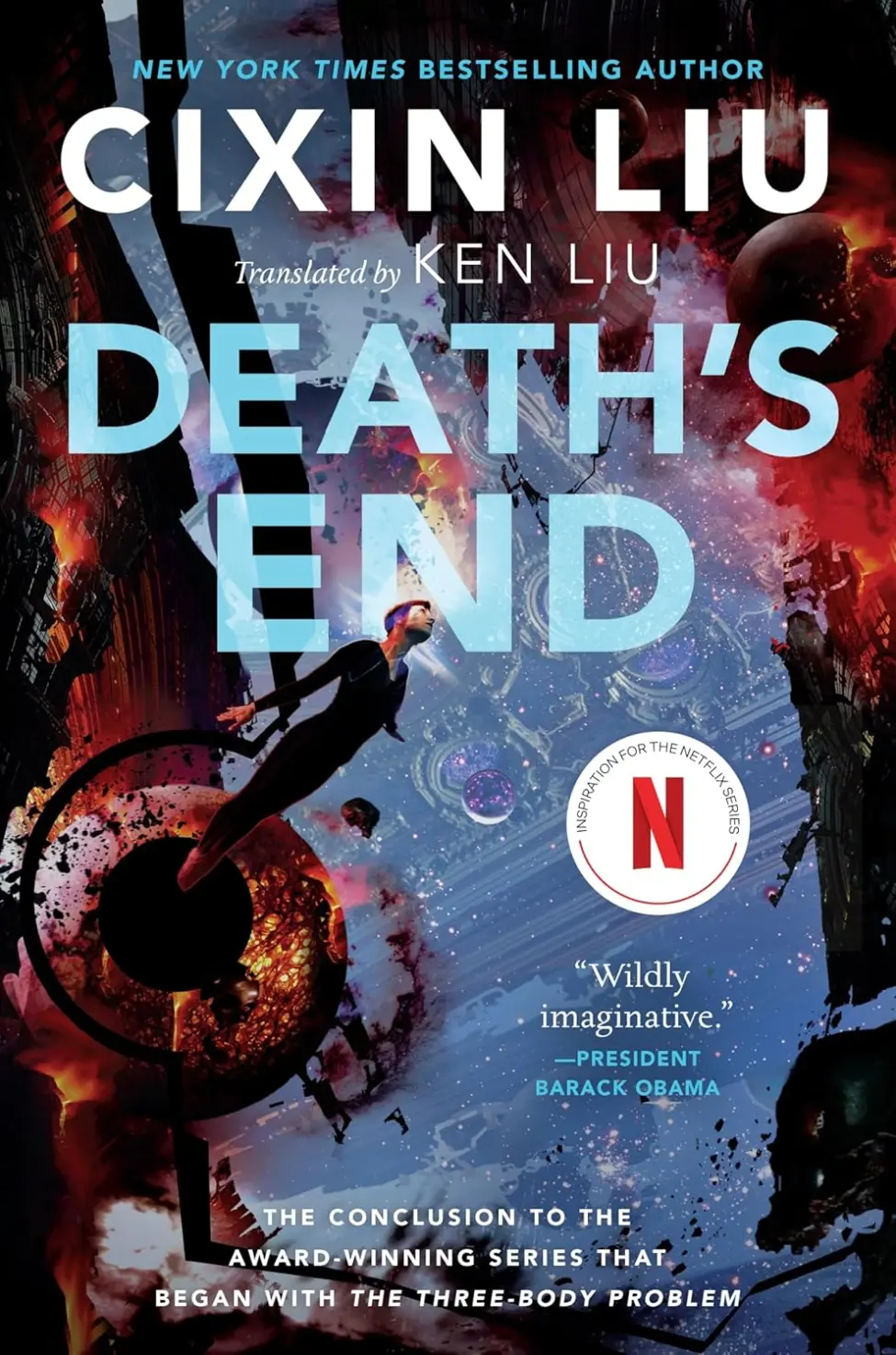
Death's End by Liu Cixin is the epic finale of The Three-Body Problem series, spanning centuries of uneasy peace between Earth and Trisolaris. Humanity's fate - and the universe's - hangs on one engineer's impossible choices.
Tagged on the series as a whole, so not every book will feature each one.
Death's End is Liu Cixin's 2010 third and final instalment in The Three-Body Problem series, translated into English by Ken Liu in 2016. It was a finalist for the Hugo Award and winner of the Locus Award for Best Science Fiction Novel. Following on from where The Dark Forest left things, a precarious balance has settled between Earth and Trisolaris - one built on mutual vulnerability rather than trust, and one that the opening chapters make clear is far less stable than anyone involved would like to believe.
Decades after the standoff that closed the previous book, Earth enjoys a strange kind of prosperity, enriched by Trisolaran knowledge and technology even as the Alien Threat that defined the trilogy's first two instalments never fully recedes. Into this uneasy peace steps Cheng Xin, an aerospace engineer from the early Crisis era who awakens from long hibernation to find herself entrusted with decisions that will shape the fate of both civilisations. Liu structures the novel across Multiple Timelines spanning centuries - flashing as far back as the fall of Constantinople and forward into timescales that dwarf human history entirely - and the scale only keeps widening as the book progresses, eventually drawing the Extinction-Level Event at its centre out to a genuinely cosmic register.
What makes Cheng Xin's arc so compelling, and so difficult, is the recurring Moral Dilemma Liu builds the entire novel around: the tension between cold, survival-driven logic and a more recognisably human compassion, with the stakes of that choice escalating every time it resurfaces. It's a question the series has been circling since The Three-Body Problem, but Death's End is the instalment that finally forces it into the open, again and again, at scales that range from a single relationship to the Survival After Extinction of entire civilisations. The Philosophical Exploration of Humanity here is the most expansive in the trilogy - questions of identity, sacrifice, and what a species owes its own future thread through every timeline the book visits.
This is Hard Science Fiction taken to its most ambitious extreme: ideas drawn from relativity, higher-dimensional physics, and Multiverse Theory are woven through the narrative with a confidence that's earned the trilogy comparisons to the genre's most towering works. Liu doesn't shy away from Existential Danger on a scale most science fiction never attempts, and the final stretch of the novel reframes the entire trilogy's emotional core around something readers may not expect from a series this unflinching: a quiet, persistent argument for Love & Mortality as humanity's most defining qualities, for better and worse.
Reception has been more divided than for the first two books - some readers find this the trilogy's most emotionally rewarding entry, others its most uneven - but nearly all agree on its sheer ambition. For readers who've followed Earth's crisis from Red Coast to the Wallfacer Project, Death's End is the only way the story could end: vast, unflinching, and entirely unwilling to look away from what it's built towards.
Christopher Ruocchio
The Sun Eater, book 1
Average Goodreads rating4.3
Liu Cixin
The Three-Body Problem, book 1
Average Goodreads rating4.1
Frank Herbert
Dune, book 1
Average Goodreads rating4.3

Megan O'Keefe
The Protectorate, book 1
Average Goodreads rating4.1

Octavia E. Butler
The Xenogenesis Trilogy, book 1
Average Goodreads rating4.3

Adrian Tchaikovsky
Children of Time, book 1
Average Goodreads rating4.5
Still Looking?
Further down our similarity list, but still sharing tropes and genres with this book.

Neal Shusterman
Arc of a Scythe, book 1
Average Goodreads rating4.5
Buy from Amazon (opens Amazon in a new tab)
Andy Weir
Average Goodreads rating4.6
Neal Stephenson
Average Goodreads rating4.4
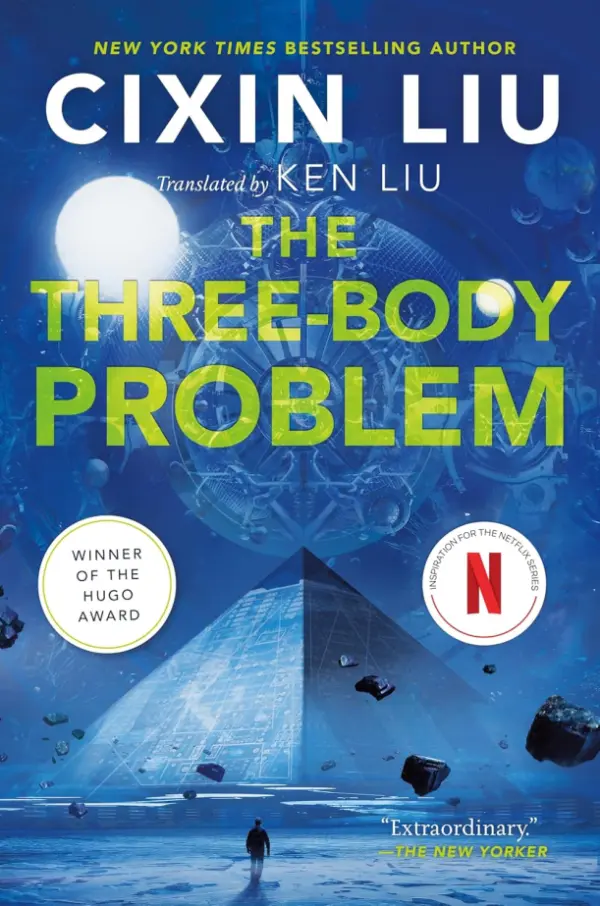
Chinese hard sci-fi author Liu Cixin wrote The Three-Body Problem, the first Asian novel to win the Hugo Award for Best Novel.
Books, series and tropes by Liu CixinDeath's End
Buy from Amazon (opens Amazon in a new tab)Occasional emails with new recommendations, series news and trope round-ups.