Empire of Silence
Christopher Ruocchio
The Sun Eater, book 1
Average Goodreads rating4.3

Book series · 3 books
by Liu Cixin
The Three-Body Problem trilogy by Liu Cixin is the Hugo Award-winning hard sci-fi saga spanning centuries, following humanity's first contact with an alien civilisation and the fight to survive it.
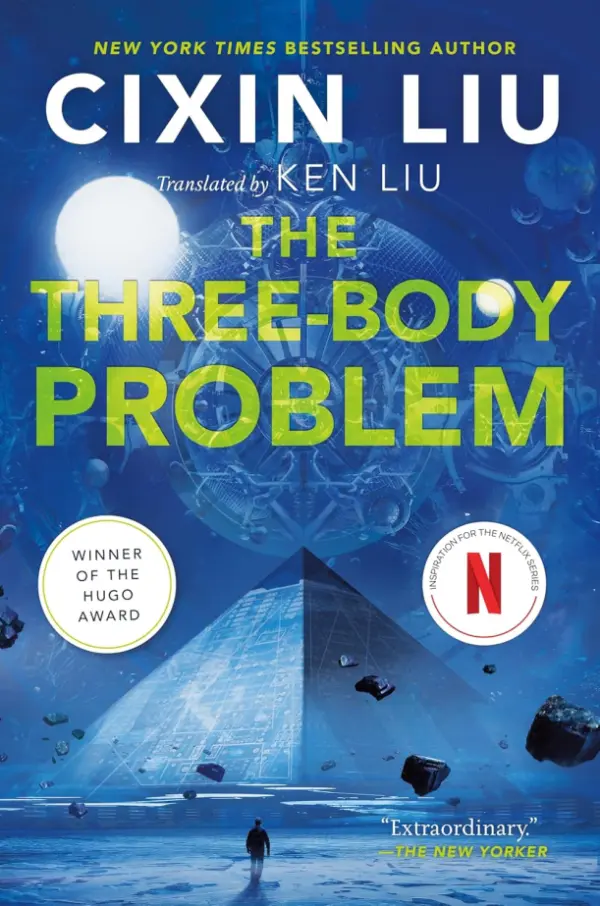
Start the series here · book 1
The Three-Body Problem by Liu Cixin is a science fiction epic spanning China's Cultural Revolution and the present day, where a secret signal into space brings first contact - and an existential threat to Earth.
416 pages
Retailer links may earn Trope Trove a commission, at no extra cost to you.
Start here 416 pages Goodreads rating4.1
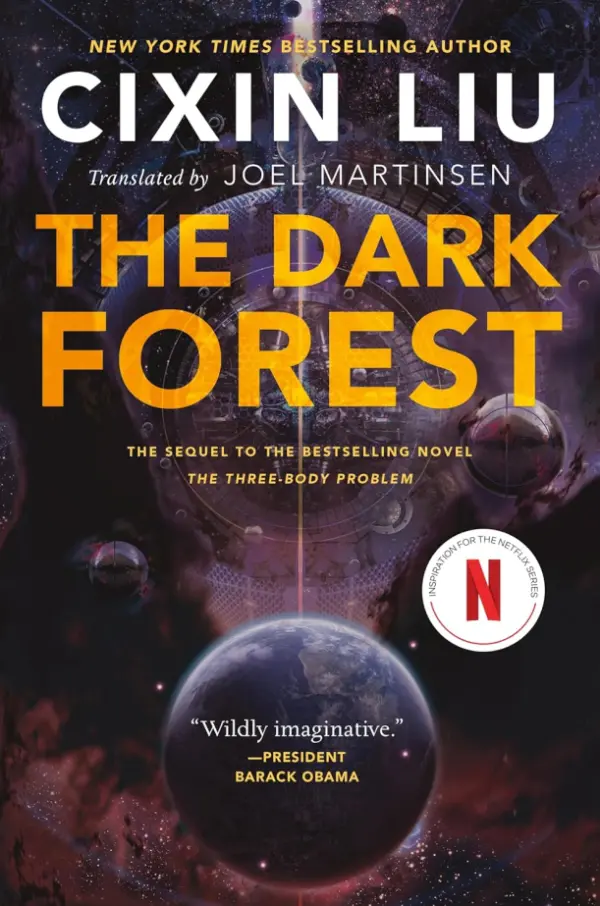
528 pages Goodreads rating4.4
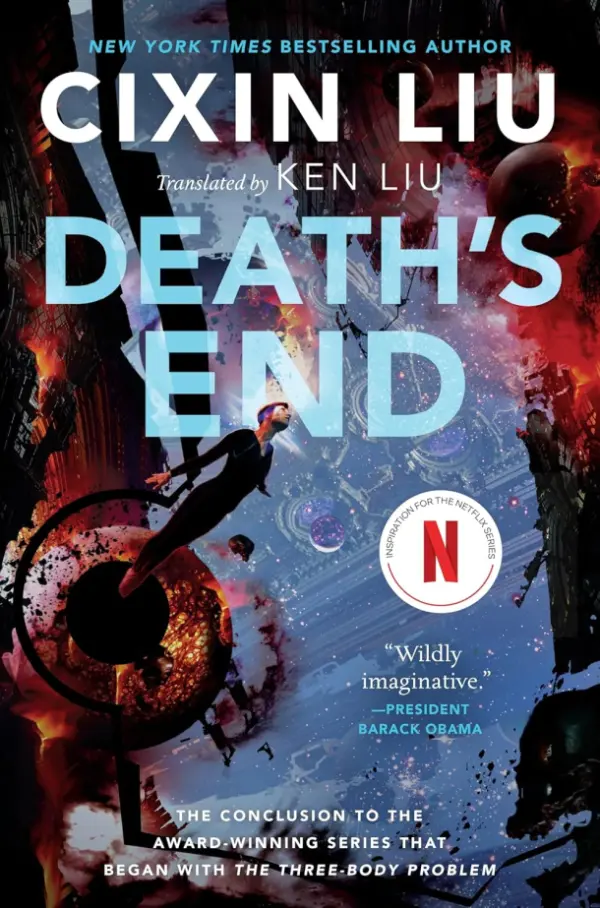
624 pages Goodreads rating4.4
Few science fiction series have reshaped global conversation about the genre quite like Liu Cixin's Three-Body Problem trilogy (officially titled Remembrance of Earth's Past). Originally published in Chinese between 2008 and 2010, and brought to English-language readers via acclaimed translations, the trilogy became the first work by an Asian author to win the Hugo Award for Best Novel - a milestone that opened the door for an enormous wave of international interest in Chinese science fiction. Liu, a former power-plant engineer, brings genuine scientific rigour to a story built around one of the genre's oldest, most unsettling questions: what happens when humanity finally makes contact with something else out there - and what if that something else isn't friendly?
The series begins against the backdrop of China's Cultural Revolution, where a personal tragedy sets one woman on a path that will determine the fate of the entire species. From there, the story expands outward across decades and then centuries, following the political, scientific, and philosophical fallout of humanity's discovery that it is not alone in the universe - and that the universe itself may be a far more dangerous place than anyone imagined.
The Three-Body Problem (2008) is the first book in the trilogy and introduces the secret history behind humanity's discovery of an alien signal. As a present-day nanomaterials scientist is drawn into a string of unexplained deaths and a mysterious online game, the novel slowly reveals the existence of an advanced civilisation under existential threat of its own - and the fractured response on Earth to the looming prospect of contact. It's a meticulous, slow-building opener that rewards patience with a genuinely staggering scope.
The Dark Forest (2008) picks up the fallout of first contact, introducing the Wallfacer programme - a desperate strategic initiative granting a small handful of individuals near-total authority and secrecy to devise humanity's defence against an enemy that can monitor virtually all human communication. Among them is an ordinary academic whose selection makes little sense to anyone, including himself. The novel introduces the trilogy's most influential idea, a chilling theory of cosmic sociology that has gone on to shape science fiction discourse well beyond the books themselves.
Death's End (2010) closes out the trilogy on its grandest scale yet, introducing aerospace engineer Cheng Xin, whose decisions ripple across multiple future eras as the fragile balance keeping humanity safe comes under renewed strain. Spanning the widest timeline of any book in the series, it pushes the trilogy's hard science fiction concepts and cosmic stakes to their absolute limit.
Across all three books, Liu sustains a Multiple Timelines structure that moves fluidly between past, present, and increasingly distant futures, using each leap forward to examine how individual choices made under extraordinary pressure can alter the fate of the species centuries later. The Political Intrigue woven through the series - government secrecy, international rivalry, and the question of who gets to make irreversible decisions on humanity's behalf - runs alongside a relentless commitment to Hard Science Fiction, grounding extraordinary ideas in genuinely rigorous physics, astronomy, and game theory.
What elevates the trilogy above more conventional First Contact with Alien Species stories is its refusal to offer easy answers. Liu uses the alien threat as a lens for examining humanity itself - its capacity for both cooperation and self-destruction - producing a Philosophical Exploration of Humanity that lingers long after the final page. A live-action English-language adaptation has since brought the story to an enormous new audience, but the source material remains the definitive way to experience Liu's vision in full.
Chinese hard sci-fi author Liu Cixin wrote The Three-Body Problem, the first Asian novel to win the Hugo Award for Best Novel.
Books, series and tropes by Liu Cixin
Christopher Ruocchio
The Sun Eater, book 1
Average Goodreads rating4.3

Christopher Ruocchio
The Sun Eater, book 2
Average Goodreads rating4.4

Christopher Ruocchio
The Sun Eater, book 3
Average Goodreads rating4.6

Christopher Ruocchio
The Sun Eater, book 4
Average Goodreads rating4.5

Christopher Ruocchio
The Sun Eater, book 5
Average Goodreads rating4.6

Christopher Ruocchio
The Sun Eater, book 6
Average Goodreads rating4.6
Sarah J. Maas
5 books
Brandon Sanderson
4 books
Pierce Brown
6 books · complete series
James Islington
2 books · complete series
Neal Shusterman
3 books
Susan Dennard
3 books
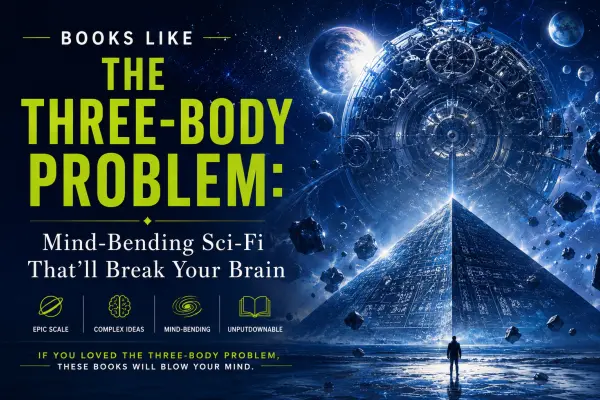
If The Three-Body Problem left you questioning humanity's place in the universe, discover 13 hard sci-fi books with the same cosmic scale, terrifying ideas, and unforgettable scientific concepts.
Occasional emails with new recommendations, series news and trope round-ups.