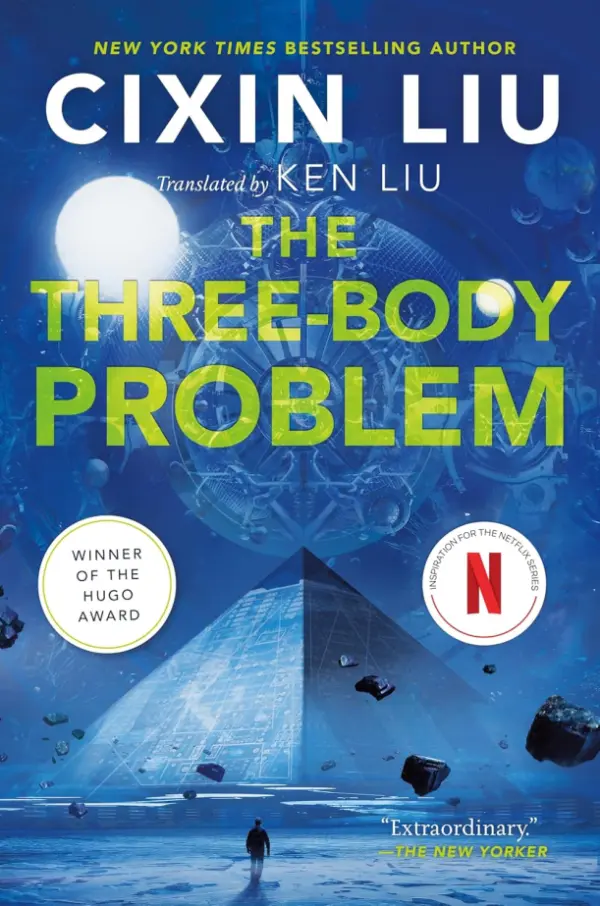
The Three-Body Problem
Liu Cixin
The Three-Body Problem, book 1
Average Goodreads rating4.1
- Systemic Injustice
- Secret Society

· Updated
If The Three-Body Problem left you questioning humanity's place in the universe, discover 13 hard sci-fi books with the same cosmic scale, terrifying ideas, and unforgettable scientific concepts.
Liu Cixin's The Three-Body Problem introduced millions of readers to a uniquely unsettling vision of first contact - one where the universe itself is revealed as a "dark forest" where every civilisation is a silent predator, where game theory determines survival, and where humanity's worst political instincts get amplified to cosmic stakes. If you finished the trilogy reeling from concepts like sophons, dimensional weapons, and the Fermi Paradox's most chilling possible answer, you're part of a global community of readers desperately seeking their next dose of hard sci-fi that genuinely changes how you see the night sky.
What makes The Three-Body Problem so distinctive is its fearless commitment to scientific rigour married to genuinely unsettling philosophical ideas. Liu doesn't write comforting science fiction - humanity is frequently outmatched, outsmarted, and forced into impossible moral compromises, with individual characters often feeling small against civilisational and cosmic timescales. The trilogy treats readers as intelligent adults capable of following complex physics whilst delivering emotional gut-punches and ideas that linger for weeks after finishing.
We've gathered thirteen books that capture different aspects of what made the trilogy so unforgettable. Some share its unflinching look at first contact gone wrong. Others deliver the same scale-bending cosmic perspective or game-theory thinking under existential pressure. Many feature the hard sci-fi rigour where the science is the point, not just set dressing. All promise the kind of reading experience that reshapes your perspective on humanity, civilisation, and our vanishingly small place in an indifferent universe. So prepare your sophons, brace for dark forest theory, and get ready for science fiction that doesn't flinch.
Liu Cixin's The Dark Forest is the essential next step for any Three-Body Problem reader - the trilogy's second instalment, where humanity faces the Trisolaran invasion fleet with centuries to prepare but no way to keep secrets from an enemy that can monitor every word spoken on Earth. The Wallfacer Project gives four individuals enormous resources and total secrecy to develop strategies inside their own minds. With over 235,000 Goodreads ratings and widely considered the trilogy's strongest entry, this delivers the dark forest theory that gives the series its philosophical core.
This is essential reading because it's where Liu's most famous concept fully crystallises: the dark forest theory, which proposes that the universe's silence (the Fermi Paradox) exists because every civilisation must assume others are potential threats, making revealing your location an act of suicide. The book's exploration of this idea through Luo Ji's Wallfacer arc is genuinely chilling, reframing the entire premise of science fiction's typical optimism about contact.
Liu's command of scale is breathtaking - from intimate human moments to fleet battles spanning centuries, from individual psychology to civilisational strategy. The novel's central question of how you can possibly plan strategy when your enemy can read your thoughts (except when you're truly alone with them) creates fascinating narrative constraints. The Wallfacers' different approaches to this problem - deception, technology, cynicism, faith - provide multiple fascinating character studies.
The ending delivers one of science fiction's most quietly devastating reveals, recontextualising everything readers thought they understood about strategy and survival. For readers who haven't continued past book one, this is required reading - many consider it superior to the first instalment, with tighter plotting and the series' most memorable theoretical contribution to science fiction's conversation about first contact.
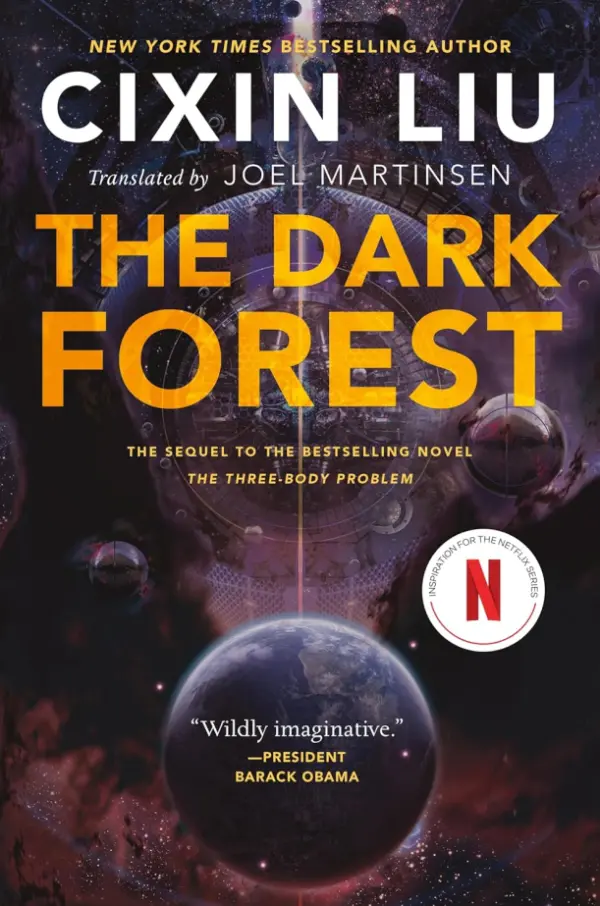
by Liu Cixin
The Three-Body Problem (Book 2)
The Dark Forest by Liu Cixin is Book 2 of The Three-Body Problem series, set four centuries before an alien invasion. A secret defence project may be humanity's only hope - if its own chosen architects can be trusted.
Adrian Tchaikovsky's Children of Time alternates between humanity's last survivors fleeing a dying Earth aboard the ark ship Gilgamesh, and an uplifted spider species evolving across millennia on what was meant to be humanity's new home. As both civilisations develop independently across vast timescales, their inevitable meeting could mean war or unprecedented cooperation. With over 150,000 Goodreads ratings and the Arthur C. Clarke Award, this delivers the same civilisational-scale thinking that defines Liu's trilogy.
This appeals to Three-Body Problem fans through its rigorous exploration of how civilisations develop, make first contact, and navigate mutual incomprehension across truly alien timescales and biology. Like Liu's exploration of how human and Trisolaran societies clash due to fundamentally different values and communication styles, Tchaikovsky makes the spiders' civilisation feel genuinely alien whilst remaining comprehensible - a remarkable achievement that mirrors Liu's depiction of the Trisolarans' unfamiliar logic.
The novel's structure - jumping across centuries to track both civilisations' development - creates the same vertiginous sense of deep time that makes The Three-Body Problem trilogy so memorable. Tchaikovsky doesn't shy from showing both species making catastrophic mistakes, learning slowly, and grappling with existential threats that dwarf individual concerns. The hard science underlying the spider evolution and uplift technology is meticulously researched and explained.
What makes this essential is how both authors use science fiction to interrogate what survival actually requires - cooperation versus competition, trust versus paranoia, communication versus mutual destruction. The sequel Children of Ruin continues exploring first contact with equally fascinating results. For readers who want civilisation-spanning scope, genuinely alien perspectives rendered comprehensible, and rigorous science underlying speculative biology, this is essential.

Children of Time (Book 1)
Children of Time by Adrian Tchaikovsky is an epic science fiction novel exploring evolution, artificial intelligence, and humanity’s future. Spanning millennia, it follows the rise of an unexpected civilisation and a desperate struggle for survival among the stars.
Dan Simmons's Hyperion follows seven pilgrims travelling to the mysterious Time Tombs on the planet Hyperion, guarded by the legendary, possibly mythical creature called the Shrike. Structured like The Canterbury Tales, each pilgrim tells their story explaining why they're undertaking this dangerous journey, gradually revealing an interstellar civilisation on the brink of war and a mystery spanning centuries. With over 250,000 Goodreads ratings and Hugo Award win, this became one of science fiction's most acclaimed epics.
This is perfect for Three-Body Problem fans through its ambitious scope and willingness to tackle big philosophical questions through hard science fiction. Simmons creates a galaxy-spanning civilisation with its own complex politics, technology, and history, similar to how Liu builds out humanity's centuries-long response to the Trisolaran threat. Each pilgrim's story functions almost as a self-contained novella exploring different science fiction subgenres - horror, military SF, cyberpunk - unified by the central mystery.
The Shrike itself, a seemingly unstoppable killing machine from beyond time, creates the same sense of incomprehensible, possibly civilisation-ending threat that the Trisolarans represent. Simmons weaves in poetry (specifically Keats), theology, and philosophy alongside rigorous technological speculation, creating a richly layered text that rewards careful reading. The book's structure means readers piece together the larger mystery gradually, much like uncovering the true nature of the Trisolaran threat across Liu's trilogy.
The ending is deliberately a cliffhanger, requiring the sequel The Fall of Hyperion for resolution - be prepared for that structural choice. For readers who want sprawling space opera with genuine philosophical weight, mysterious cosmic threats, and prose that aims for literary ambition alongside scientific speculation, this is essential genre reading that rewards the investment.
Ann Leckie's Ancillary Justice follows Breq, the last fragment of consciousness from a starship AI that once controlled thousands of ancillary soldier-bodies, now seeking revenge against the ruler who destroyed her ship and crew. As Breq navigates a vast interstellar empire, questions of identity, justice, and what makes someone a person (or many people) drive the narrative. With over 130,000 Goodreads ratings and a historic sweep of the Hugo, Nebula, and Clarke Awards, this redefined space opera for a new generation.
This appeals to Three-Body Problem fans through its rigorous exploration of consciousness, identity, and civilisational structures across vast scales. Like Liu's exploration of how Trisolaran hive-mind communication fundamentally differs from human individual consciousness, Leckie creates a genuinely alien perspective through Breq - a being who was once thousands of bodies sharing one consciousness, now reduced to a single fragment grappling with singular identity for the first time.
Leckie's worldbuilding rigorously explores how a multi-body, networked consciousness would actually think, perceive, and make decisions differently from singular humans - precisely the kind of careful philosophical and technical extrapolation that makes Liu's Trisolarans compelling. The Radch Empire's culture, with its ungendered language and complex social hierarchies, requires the same kind of attentive reading that rewards careful Three-Body Problem readers parsing dark forest theory.
The novel interrogates colonialism, empire, and what justice means when committed across centuries and countless bodies - themes that resonate with Liu's exploration of how human civilisation's worst tendencies might doom us during first contact. The trilogy (Ancillary Justice, Ancillary Sword, Ancillary Mercy) expands the political intrigue whilst maintaining philosophical depth. For readers who want rigorous space opera examining consciousness and identity, complex political worldbuilding, and prose that rewards careful attention, this is essential.
James S.A. Corey's Leviathan Wakes (the first Expanse novel) follows ice miner Jim Holden and detective Joe Miller as they investigate a conspiracy involving a mysterious substance that could change the balance of power across the solar system - and potentially threaten all of humanity. Set in a believably developed solar system where Earth, Mars, and the Belt are locked in political tension, this hard sci-fi epic became a bestseller and acclaimed television series. With over 300,000 Goodreads ratings, this launched one of modern sci-fi's most celebrated series.
This appeals to Three-Body Problem fans through its commitment to scientific plausibility and political complexity. Like Liu's careful attention to how humanity's nations would realistically respond to an alien threat (with all the political infighting and short-sightedness that implies), Corey creates a solar system where Earth, Mars, and the Belt have genuinely different cultures, priorities, and grievances that complicate any unified response to crisis. The politics feel earned rather than simplified for plot convenience.
The hard science - orbital mechanics, the physical realities of space travel, the believable technology of a near-future solar system - grounds the increasingly strange protomolecule plot in rigorous plausibility, similar to how Liu's physics-based concepts (sophons, dimensional weapons) feel scientifically grounded even when conceptually mind-bending. Corey balances large-scale political thriller elements with genuine character development and mystery.
The series (nine novels plus novellas) expands dramatically in scope, eventually encompassing questions about humanity's relationship with truly alien intelligence that echo Liu's themes. For readers who want hard sci-fi with political complexity, believable near-future technology, and a slow-build mystery that escalates to genuinely cosmic stakes, this is essential - particularly satisfying for readers who want long-term series investment.
Frank Herbert's Dune follows Paul Atreides as his noble family takes control of the desert planet Arrakis, the only source of the universe's most valuable substance. After betrayal and his family's destruction, Paul must survive among the planet's native Fremen, where prophecy, politics, and his own transformation into something beyond human collide. With over 1.2 million Goodreads ratings and status as perhaps the most influential science fiction novel ever written, this needs little introduction.
This is essential for Three-Body Problem fans through its unflinching examination of how political power, religion, and ecology intersect at civilisational scale. Like Liu's exploration of how desperate circumstances reshape human institutions and morality, Herbert examines how scarcity (water on Arrakis, just as astrophage threatens resources in other hard sci-fi) drives political calculation and how individuals become instruments of forces beyond their control or full understanding.
Herbert's worldbuilding rigour - the ecology of Arrakis, the politics of the Imperium, the various forces (Bene Gesserit, Spacing Guild, noble houses) with competing agendas - creates the same sense of a fully realised, internally consistent universe that makes Liu's trilogy so immersive. Both authors trust readers to follow complex political and philosophical ideas without excessive hand-holding, rewarding careful attention with deeper appreciation.
The novel's exploration of prescience, determinism, and whether Paul can escape the terrible future he foresees parallels Liu's fatalistic elements about humanity's choices under existential threat. For readers who haven't experienced this foundational text, or want to revisit it through the lens of cosmic-scale stakes and political complexity, this remains essential reading that influenced virtually everything that followed in ambitious science fiction.
Andy Weir's Project Hail Mary follows Ryland Grace, who wakes from a coma with no memory aboard a spacecraft, gradually realising he's humanity's last hope to solve an extinction-level threat to the sun itself. As he reconstructs his memories and the mission's purpose, he discovers an unexpected ally that changes everything about how he understands his impossible task. With over 800,000 Goodreads ratings and massive crossover success, this delivers hard science wrapped in genuine warmth.
This appeals to Three-Body Problem fans through its commitment to scientifically rigorous problem-solving under extinction-level pressure. Like Liu's characters calculating humanity's survival odds against impossible odds, Weir's Grace must use real physics, chemistry, and biology to solve problems with civilisational stakes - the science isn't decoration but the actual mechanism of the plot, exactly as Liu treats sophons and dimensional collapse as genuine plot-driving mechanics rather than technobabble.
Weir's optimism contrasts interestingly with Liu's more fatalistic tone, but both share fundamental respect for hard science fiction's core promise: ideas matter, and working through them rigorously creates genuine narrative tension and satisfaction. The first-contact elements (which become significant later in the novel) explore communication across radical difference in ways that complement Liu's examination of how human and Trisolaran logic fundamentally diverge.
For readers who want the hard science fiction rigour of Three-Body Problem with a different emotional register - warmer, more hopeful about cooperation rather than dark forest paranoia - this provides a fascinating contrast whilst sharing the core DNA of science-driven, stakes-are-civilisational storytelling. It's proof that hard sci-fi can be optimistic without sacrificing scientific integrity.
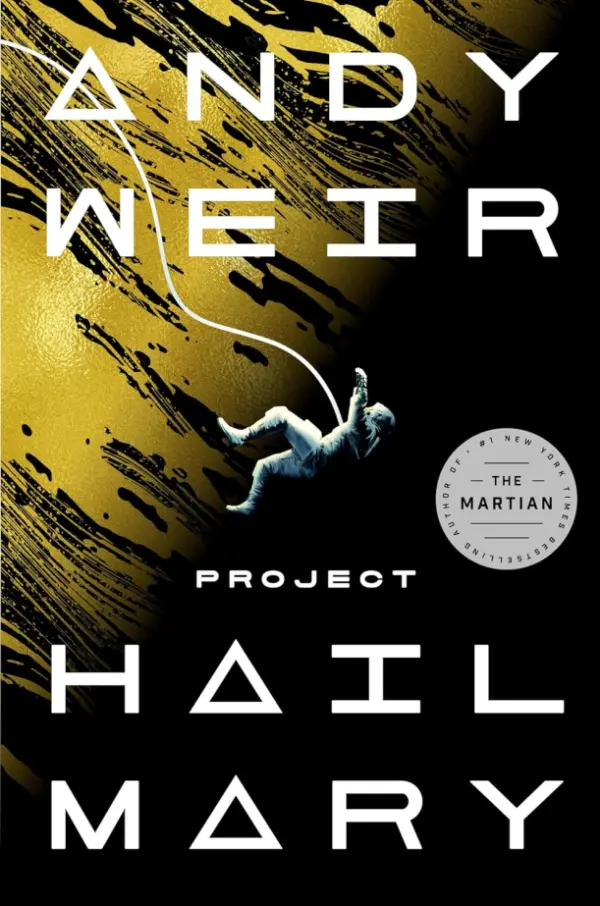
by Andy Weir
Project Hail Mary by Andy Weir follows Ryland Grace, who wakes aboard a spaceship with amnesia, gradually remembering he's humanity's last hope to save Earth from extinction. This hard sci-fi novel combines problem-solving, first contact, and cross-species friendship.
Ursula K. Le Guin's The Left Hand of Darkness follows Genly Ai, an envoy from a federation of planets, sent to the ice-bound world of Gethen to convince its inhabitants to join. Gethenians are ambisexual, only taking on male or female characteristics briefly each month - a biological difference that fundamentally reshapes their society, politics, and Genly's ability to understand them. With over 110,000 Goodreads ratings and Hugo and Nebula Award wins, this remains one of science fiction's most influential works.
This is perfect for Three-Body Problem fans through its rigorous exploration of how fundamentally different biology and culture create genuine communication barriers between intelligent beings. Like Liu's depiction of Trisolaran communication methods that humans struggle to comprehend, Le Guin creates a society whose basic assumptions about gender, family, and politics differ so fundamentally from Genly's that true understanding requires him to question his own cultural assumptions entirely.
Le Guin's anthropological approach to science fiction - treating cultural difference with the same rigour hard sci-fi typically reserves for physics - creates a different but complementary kind of "hard" speculation. The novel's structure, weaving Gethenian myths and reports alongside Genly's narrative, creates layered understanding similar to how Liu builds Trisolaran civilisation through multiple narrative approaches across the trilogy.
The journey across Gethen's ice sheets, undertaken by Genly and the disgraced politician Estraven, provides both physical adventure and deepening mutual understanding that transcends their initial communication barriers. For readers who want science fiction that treats sociology and anthropology with the same rigour as physics, examines first contact through cultural rather than purely technological lenses, and rewards patient, careful reading, this classic remains essential and surprisingly modern.
Isaac Asimov's Foundation introduces psychohistorian Hari Seldon, who predicts the impending collapse of the Galactic Empire and establishes a plan spanning centuries to preserve civilisation through the coming dark age. The novel follows the Foundation he creates as it navigates political crises across generations, with Seldon's psychohistorical predictions guiding (or constraining) their choices. With over 380,000 Goodreads ratings and status as a genre-defining classic, this launched one of science fiction's most influential series.
This appeals to Three-Body Problem fans through its civilisational-scale thinking and the central conceit that mathematics can predict and guide humanity's future - similar to how Liu's characters attempt to calculate survival strategies against overwhelming odds using game theory and physics. Asimov's psychohistory, which treats human societies as predictable through sufficiently sophisticated mathematics, parallels Liu's exploration of dark forest theory as a kind of cosmic game theory determining civilisational survival.
The novel's structure - jumping across generations to show how Seldon's plan unfolds through different crises - creates the same deep-time perspective that makes Liu's trilogy memorable. Asimov's focus on ideas over individual characters (a hallmark of Golden Age SF) means readers experience history at civilisational scale, watching individuals become temporary instruments of larger historical forces, much as Liu's characters often serve as vehicles for examining humanity's collective choices under existential pressure.
The series expands dramatically across multiple books, eventually connecting to Asimov's robot novels in an ambitious unified future history. For readers who want science fiction that treats civilisational mathematics and historical prediction as central conceits, multi-generational scope, and ideas-driven storytelling where concepts matter more than individual character arcs, this foundational text remains essential reading.
Joe Haldeman's The Forever War follows William Mandella, drafted into Earth's war against the alien Taurans. Due to relativistic time dilation from faster-than-light travel, Mandella experiences mere months of subjective time whilst centuries pass on Earth, returning from each tour to a society that's become increasingly alien to him. With over 130,000 Goodreads ratings and sweep of the Hugo, Nebula, and Locus Awards, this became a definitive military science fiction classic.
This appeals to Three-Body Problem fans through its rigorous treatment of relativistic physics as a core plot mechanism - similar to how Liu uses real physics concepts (quantum entanglement, dimensional theory) as load-bearing elements of his narrative rather than mere background flavour. The time dilation creates genuine emotional and social consequences, with Mandella becoming a stranger to his own civilisation through the simple mechanics of near-light-speed travel, mirroring how Liu's characters grapple with vast timescales separating present action from ultimate consequences.
Haldeman, a Vietnam veteran, infuses the novel with genuine commentary about the absurdity and trauma of warfare, creating science fiction that's simultaneously about alien conflict and very human cost. The eventual revelation about the war's true nature and the Taurans' perspective adds devastating irony that recontextualises everything Mandella has sacrificed, similar to how Liu's reveals about Trisolaran society and motives reshape readers' understanding of the conflict's stakes.
The novel's unflinching look at how war changes society and individuals across time provides a different but complementary examination of humanity's relationship with conflict and otherness compared to Liu's trilogy. For readers who want hard sci-fi that uses real physics as narrative engine, military science fiction with genuine emotional and philosophical weight, and a classic that influenced countless subsequent works, this remains essential and surprisingly moving.
The Strugatsky brothers' Roadside Picnic presents the aftermath of a mysterious alien visitation that left behind "Zones" filled with inexplicable, often deadly phenomena and valuable artefacts that defy human science. Stalkers risk their lives entering these Zones to retrieve artefacts for profit, including protagonist Red Schuhart, whose repeated visits change him in ways he doesn't fully understand. With over 50,000 Goodreads ratings and massive influence on subsequent science fiction (inspiring the Stalker film and video games), this Soviet-era classic remains hauntingly relevant.
This is perfect for Three-Body Problem fans through its portrayal of alien intelligence so incomprehensible that humans can't even determine if contact was intentional or if humanity merits any attention at all - the title references how a roadside picnic leaves behind debris that local animals find inexplicable and dangerous without ever understanding the picnickers who left it. This radical alien indifference creates a different but complementary horror to Liu's more directly hostile dark forest universe.
The Strugatskys write with spare, atmospheric prose that creates dread through suggestion rather than exposition, with the Zone's physics-breaking phenomena never fully explained or understood by characters or readers. This commitment to genuine alien incomprehensibility - rather than aliens who think like humans with different appearances - mirrors Liu's more successful attempts to render truly non-human logic and motivation.
The novel's bleak, morally compromised world, where desperate people risk everything for fragments of incomprehensible alien technology, creates the same sense of humanity grappling with forces beyond full understanding that defines Liu's trilogy. For readers who want atmospheric, philosophically rich science fiction that embraces alien incomprehensibility, morally complex protagonists, and prose that rewards careful reading, this Soviet classic remains essential and surprisingly contemporary in its concerns.
Jeff VanderMeer's Annihilation follows an unnamed biologist joining an expedition into Area X, a mysterious zone where the normal laws of nature seem suspended and previous expeditions have ended in death, madness, or worse. As her team investigates increasingly inexplicable phenomena, the biologist must confront not just Area X's mysteries but her own fracturing identity and motivations. With over 200,000 Goodreads ratings and a film adaptation, this launched the acclaimed Southern Reach trilogy.
This appeals to Three-Body Problem fans through its commitment to genuine cosmic horror and incomprehensibility - Area X operates by rules that resist human scientific frameworks entirely, creating dread through what can't be explained rather than elaborate exposition. Like Liu's Trisolarans, whose logic and motivations remain genuinely alien even when partially understood, VanderMeer's Area X resists the typical science fiction move of eventually explaining its mysteries in satisfying technical detail.
VanderMeer's prose is hypnotic and unsettling, creating atmosphere through careful, precise language that makes the biologist's scientific observations feel simultaneously rigorous and inadequate to the phenomena she's documenting. This tension between scientific methodology and genuinely alien incomprehensibility echoes Liu's exploration of how human logic and game theory, however sophisticated, may be fundamentally inadequate to truly alien threats.
The trilogy (Annihilation, Authority, Acceptance) expands the mystery without fully resolving it, frustrating some readers whilst satisfying others who appreciate genuine ambiguity. For readers who want science fiction that embraces cosmic horror and incomprehensibility, atmospheric prose that creates dread through suggestion, and stories that resist tidy explanation in favour of genuine alien strangeness, this is haunting and unforgettable - a perfect companion to Liu's darker philosophical implications.
Arkady Martine's A Memory Called Empire follows Mahit Dzmare, the new ambassador from a small mining station to the vast Teixcalaanli Empire, arriving with an outdated neural implant containing her predecessor's memories - only to discover he's died under suspicious circumstances. As Mahit navigates deadly imperial politics whilst her implant malfunctions, she must solve a murder whilst preventing her station's annexation. With over 50,000 Goodreads ratings and Hugo Award win, this became a critically acclaimed space opera debut.
This appeals to Three-Body Problem fans through its sophisticated political worldbuilding and exploration of cultural incomprehension between vastly different civilisations. Like Liu's careful attention to how different societies' fundamental assumptions create communication barriers even during direct contact, Martine creates an Empire whose poetry-obsessed political culture, citizenship requirements, and historical assumptions create genuine barriers to Mahit's understanding despite her extensive study of their culture.
Martine's worldbuilding rigour extends to the neural implant technology (imago-machines) that allow memory transfer between station citizens, creating interesting parallels to questions about identity and consciousness that echo throughout serious hard science fiction. The political intrigue requires careful reader attention to track multiple factions' competing interests, rewarding the same close reading that Liu's trilogy demands for tracking dark forest implications.
The novel balances personal stakes (Mahit's investigation and survival) with civilisational ones (her station's potential annexation, larger imperial politics), creating multiple layers of tension. For readers who want sophisticated space opera with genuine political complexity, exploration of memory and identity through speculative technology, and prose that respects readers' intelligence whilst delivering propulsive plotting, this acclaimed series opener is essential and rewarding.

Teixcalaan (Book 1)
A Memory Called Empire by Arkady Martine is a space opera of political intrigue and cultural survival, following an ambassador navigating imperial power, identity, and memory in a vast galactic empire.
These thirteen books capture different facets of what made The Three-Body Problem trilogy so unforgettable: rigorous scientific speculation that drives rather than decorates the plot, genuine alien incomprehensibility that resists easy resolution, civilisational-scale stakes that dwarf individual concerns, and ideas substantial enough to reshape how you think about humanity's place in the universe. Whether you're drawn to first contact gone catastrophically wrong, deep-time civilisational thinking, or simply hard science fiction that trusts readers to follow complex concepts, these books promise the same kind of mind-expanding reading experience. So calculate your dark forest strategy, prepare for incomprehensible alien logic, and get ready for science fiction that will keep you awake contemplating the stars long after you've turned the final page.
Liu Cixin
The Three-Body Problem, book 1
Average Goodreads rating4.1
Arkady Martine
Teixcalaan, book 1
Average Goodreads rating4.3
Liu Cixin
The Three-Body Problem, book 2
Average Goodreads rating4.4
Adrian Tchaikovsky
Children of Time, book 1
Average Goodreads rating4.5
Occasional emails with new recommendations, series news and trope round-ups.