
The Secret History
Donna Tartt
Average Goodreads rating4.1
- Coming of Age
- Morally Grey Characters

· Updated
Candlelit libraries, secret societies, forbidden knowledge, and characters who are brilliant, beautiful, and utterly dangerous. The best dark academia books, from gothic classics to modern obsessions.
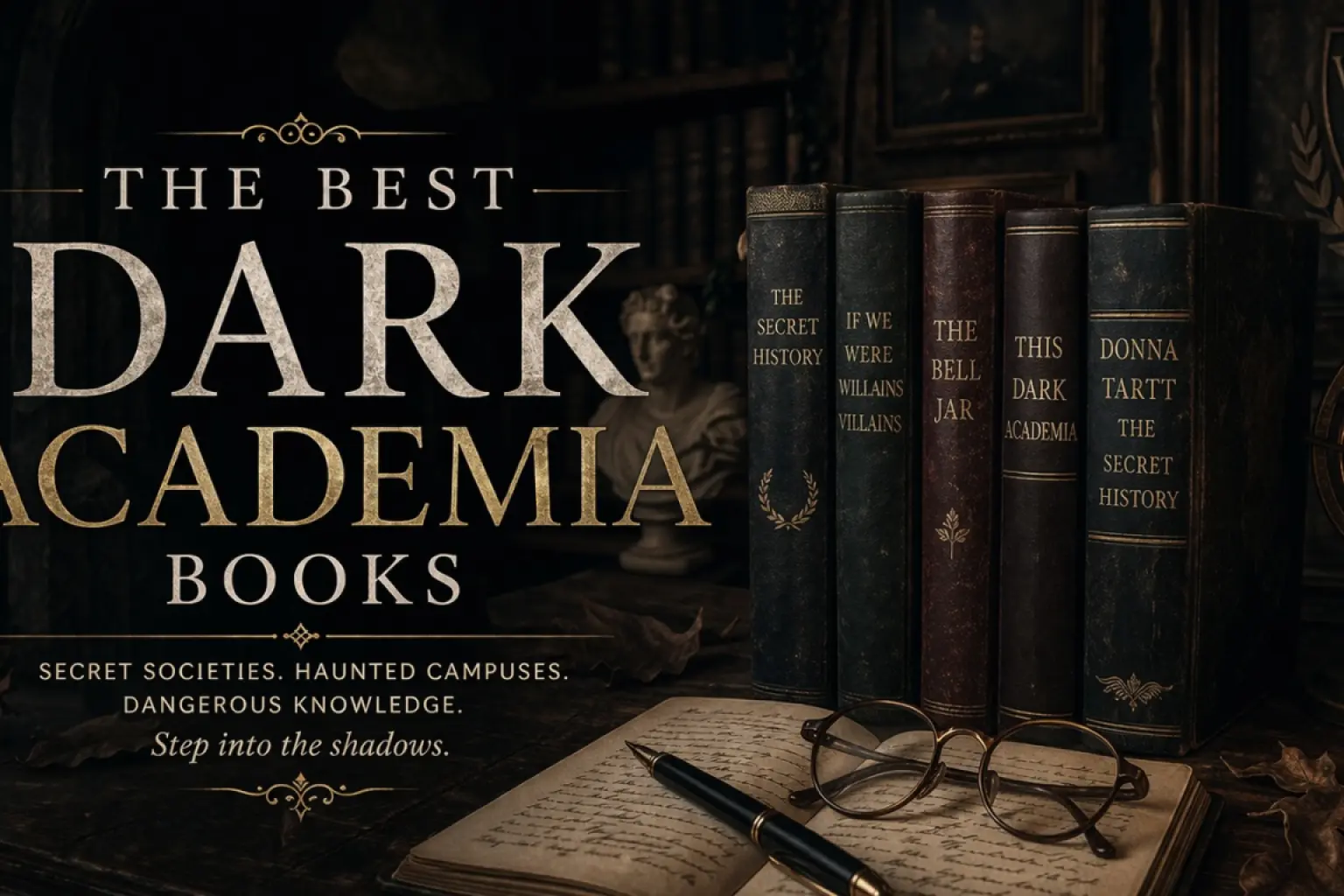
There is a reason dark academia has billions of social media posts dedicated to it, and it is not just the aesthetic - though the aesthetic is impeccable. It is something older and more instinctive than tweed and candlelight and beautifully cracked spines. It is the idea that knowledge is dangerous. That institutions of learning conceal something beneath their polished surfaces. That brilliance and darkness are not opposites but neighbours, and that the most interesting people have always known it. Dark academia, as a genre, is the literary home of everyone who has ever suspected that the most prestigious room in the building has something to hide.
The books on this list share a specific gravity. They are set in places of learning - boarding schools, ancient universities, elite conservatories - where the pursuit of knowledge curdles, slowly or suddenly, into something that cannot be walked away from. Characters here are clever enough to be dangerous and self-aware enough to be fascinating. The atmosphere is as much a character as any of the people in it: all autumn light through leaded windows, Latin conjugations whispered in candlelit dining halls, and the particular dread of knowing something you should not know. Whether you arrived here via the aesthetic or via a specific book that hollowed you out and left you staring at the ceiling, these are the books the genre is built on - and the ones that will keep it growing.
The setting does half the work - ancient universities, elite boarding schools, and crumbling institutions of learning create an atmosphere of inherited prestige and concealed rot that no other backdrop can replicate
Knowledge as danger - the genre is built on the idea that some things should not be learned, and that the people most likely to learn them are also the people least likely to stop once they have started
Morally grey characters as the default - dark academia does not produce heroes or villains so much as brilliant, flawed, self-destructive people making choices that the reader cannot quite condemn because they understand the logic too well
Obsession as a love language - whether the obsession is academic, romantic, or directed at a dangerous secret, these books are written for readers who understand what it is to want something with an intensity that overrides reason
Class and privilege as subtext - the institutions at the heart of dark academia are never neutral; the darkness is often structural, embedded in the systems that created the beautiful rooms and the rarefied air
The slow unravelling - dark academia rarely begins in crisis; it begins in ordinary ambition and academic excitement, and the horror of watching that curdle is inseparable from the pleasure of the genre
Atmosphere as plot - the best dark academia books make the setting feel inevitable; the story could not have happened anywhere else, and the reader understands this from the first paragraph
The benchmark of the entire genre, The Secret History is the book that every dark academia list begins with because it is, functionally, the book that named what the genre was doing. Richard Papen arrives at Hampden College in Vermont and finds himself drawn into a small, exclusive group of classics students presided over by a magnetic and deeply unsettling professor. He wants, desperately, to belong to them. The novel opens with the knowledge that these students have killed one of their own - and then spends five hundred pages explaining, with terrible clarity, how they arrived there.
What Donna Tartt achieves is something that sounds impossible: she makes the reader complicit. Richard wants to be part of this group badly enough that the reader wants it too, even as the evidence accumulates that wanting it is a form of moral surrender. The obsessive fixation on classical antiquity, the closed world of a small intellectual elite, the way beauty and rot are made inseparable - this is the novel that established the DNA of the entire genre. With over a million readers rating it among the most significant books they have encountered, The Secret History is not just a starting point. It is the reason dark academia exists as a category.
by Donna Tartt
The Secret History by Donna Tartt is a compulsive dark academia thriller set at a Vermont liberal arts college, where a group of Classics students' intellectual obsessions lead them inexorably towards violence and moral collapse.
The second title every dark academia list reaches for, and with good reason: If We Were Villains does for Shakespeare what The Secret History does for classical antiquity, and it does it with a theatricality that elevates every scene. Seven final-year students at an elite performing arts conservatory live and breathe Shakespeare - they think in his language, argue in his cadences, perform his plays and, gradually, begin to inhabit his tragedies in ways that cannot be contained by a stage. When one of them is found dead, the question of who did it is almost secondary to the question of how the environment made it possible.
Rio writes with a poet's precision and a dramatist's instinct for escalating tension, and the found family forged under the pressure of shared ambition and shared guilt is one of the most intricately constructed in the genre. The relationship between the seven students - the ways their assigned Shakespearean roles shape and distort their actual selves - is a study in how completely an institution can colonise an identity. With over 400,000 readers and a devoted following that treats it as something close to a sacred text, this is the dark academia novel that readers most consistently describe as the one that wrecked them. Reader be warned: the ending is not kind, and it is exactly right.
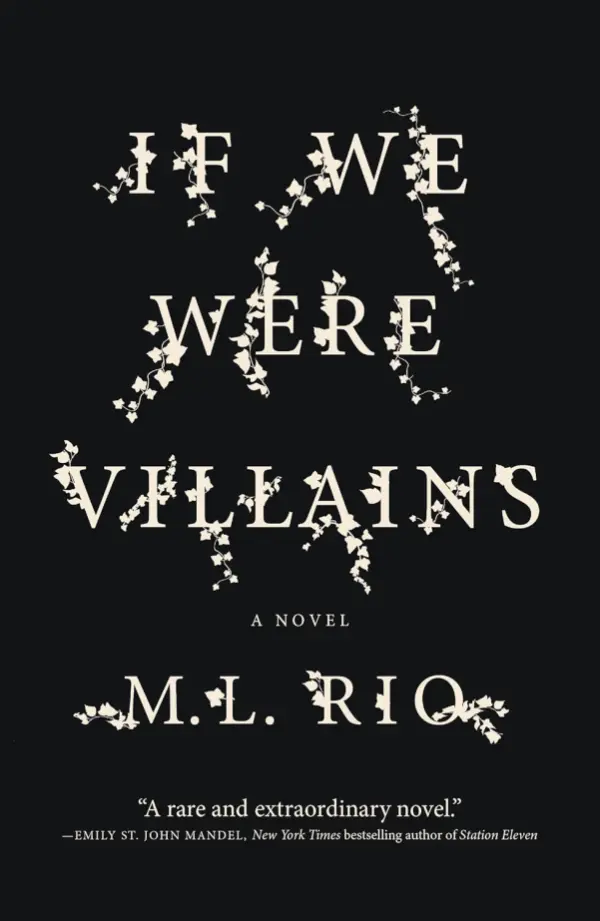
by M. L. Rio
If We Were Villains by M.L. Rio is a gripping dark academia thriller set at an elite Shakespeare conservatory, where seven young actors' onstage roles begin to bleed dangerously into their real lives - and one of them ends up dead.
Leigh Bardugo's adult debut announced itself as something distinct from the YA fantasy that made her name, and it delivered on that promise with considerable force. Galaxy "Alex" Stern is a young woman with a violent past and an unusual ability - she can see the dead, the lingering spirits that most people walk through without noticing. This ability earns her a full scholarship to Yale, where she is recruited into Lethe House, the ninth of the university's secret societies, whose job is to oversee and police the occult activities of the other eight. Alex uncovers sinister, forbidden goings on - and the question of whether the dead are still dead, and whether the living are safe, drives the book to its gut-punch conclusion.
What distinguishes Ninth House from other dark academia fantasy is the class politics running beneath every scene: Alex is not a scholarship student who wishes she belonged; she is a scholarship student who never for a moment forgets that the institution does not belong to her, and her outsider perspective cuts through the romanticisation of elite academic culture that the genre sometimes indulges. The secret society architecture, the morally grey characters including Alex herself, and the atmospheric horror of a Yale that is both real and deeply wrong - all of it is executed with the kind of confidence that comes from a writer at the peak of their powers. The sequel, Hell Bent, deepens everything the first book established.

Alex Stern (Book 1)
Ninth House by Leigh Bardugo is a dark fantasy novel blending Yale secret societies, occult magic, and crime investigation. It follows Galaxy “Alex” Stern as she uncovers supernatural secrets while navigating danger, privilege, and morally complex choices.
R.F. Kuang's Babel is wildly inventive, imaginative and whip-smart - a must-read set at a fictionalised version of Oxford University in the 1830s. Robin Swift, an orphan from Canton, is brought to England by a mysterious professor and raised to attend the Royal Institute of Translation - Babel - a tower at the heart of Oxford whose silver-working magic literally powers the British Empire. The book that Robin and his fellow students must eventually face is not an academic question but a moral one: what do you owe an institution that educated you in order to use you?
Kuang writes dark academia as postcolonial critique without softening either dimension - the romanticism of Oxford, the candlelit tutorials, the ancient rituals, are all present and genuinely beautiful, and the violence done within and by that beauty is rendered with equal clarity. The political intrigue that runs beneath the academic surface is not background but foreground; this is a novel about how knowledge serves power, and what it costs to refuse that service. With nearly 500,000 readers and a level of critical esteem rare for genre fiction, Babel is the book that expanded what dark academia could do and who it could speak to. It is not comfortable reading. It is essential reading.
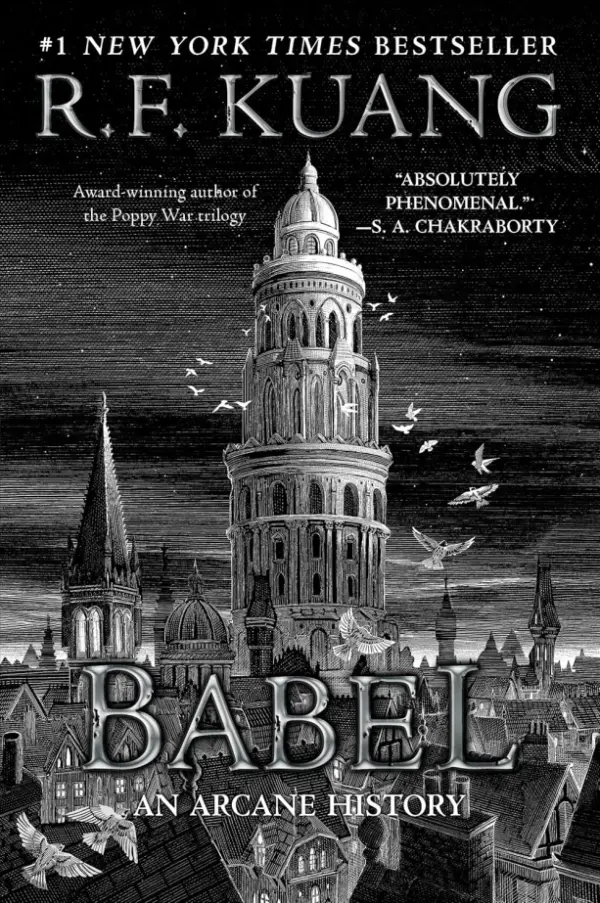
by R. F. Kuang
Babel by R.F. Kuang is an alternate history dark academia fantasy set in 1830s Oxford, where translation magic fuels empire and a group of scholars must choose between the institution that made them and the people it exploits.
Six of the world's most gifted magicians are recruited by the Alexandrian Society - a secret organisation that has preserved the world's most dangerous knowledge since the ancient library itself - with the understanding that only five will be initiated. The sixth will not survive. The Atlas Six began as a self-published phenomenon before its mainstream success, and the reason readers found it so compulsively readable is the ensemble: six brilliantly realised characters, each defined by a different relationship to ambition, morality, and the specific hunger that comes from being the smartest person in every room until now.
The secret society at the heart of the novel is constructed with real imagination - the Alexandrian Society is not a backdrop but a world with its own logic, its own history, and its own agenda that the reader spends the entire book trying to decipher. The morally grey characters here are grey in genuinely interesting ways; Olivie Blake does not soften her ensemble into likeability, and the tension between six people who are simultaneously each other's competitors and each other's most significant intellectual companions gives the book a charged, unstable energy that is enormously hard to put down. The series continues with The Atlas Paradox and The Atlas Complex.

by Olivie Blake
Atlas (Book 1)
The Atlas Six by Olivie Blake is a dark fantasy novel where six elite magicians compete for a place in a secret society. The story combines forbidden knowledge, morally grey characters, and intense rivalry in a high-stakes, psychologically charged magical setting.
The novelisation of Peter Weir's film earns its place on this list not despite being adapted from a screenplay but because of how completely it captures the emotional core of what dark academia, as a genre, is reaching for: the idea that a great teacher can show you something about life that the institution around them is trying to suppress, and that the cost of that revelation may be more than the students who receive it are able to bear. Welton Academy in 1950s New England is all conformity and expectation and the weight of inherited ambition. John Keating arrives and tells his students to seize the day.
The secret society the boys form - the Dead Poets - is romanticism in its purest literary form, and the tragedy that follows is a study in how institutions punish those who take beauty seriously at the expense of propriety. With over 160,000 readers and a cultural footprint that extends far beyond its page count, Dead Poets Society is the dark academia text that has introduced more readers to the genre's emotional territory than perhaps any other. It is not the most sophisticated entry on this list. It is one of the most devastating.
Mona Awad's Bunny is dark academia filtered through surrealism and body horror, and it is among the most genuinely strange and unsettling books the genre has produced. Samantha is a scholarship student at a small New England university who usually prefers the company of her eccentric friend Ava to that of her classmates. When she is invited to join a clique of girls who call each other "Bunny," she is drawn into their sinister off-campus activities - and as she joins in the rituals, she plunges further and further into their saccharine, lonely, and terrible world.
What Awad does is use the MFA programme setting - the workshop, the reading, the literary self-seriousness - as both subject and weapon. Bunny is a novel about what happens when the romantic narratives of literary culture collide with female desire, loneliness, and the horror of wanting to belong. The obsessive fixation here is turned on the question of who gets to create and what they are willing to destroy to do it. It is not a comfortable book. It is not meant to be. With over 340,000 readers it has developed a cult following among readers who want their dark academia to go somewhere genuinely unsettling rather than merely atmospheric.
Àbíké-Íyímídé's debut takes the dark academia formula and subjects it to a pointed critique that gives the novel a charge entirely its own. Chiamaka and Devon are the two highest-achieving Black students at Niveus Private Academy - a school where excellence is expected, legacy is currency, and the social hierarchy is both elaborate and merciless. When an anonymous figure begins sending messages threatening to expose their secrets, the investigation reveals something far more systemic than individual malice.
This is dark academia with a structural argument embedded in its plot: the darkness here is not incidental but institutional, rooted in the specific ways elite academic environments weaponise belonging and exclusion. The secret society element and the political intrigue that drives the thriller plot are executed with real skill, and the dual-perspective narration lets Àbíké-Íyímídé develop two fully realised protagonists whose experiences of the same institution are completely different and equally true. With over 100,000 readers and a level of critical recognition that its commercial position underplays, Ace of Spades is the dark academia novel most likely to change how you think about the institutions the genre romanticises.
Ava Reid's novel takes the dark academia template into fantasy territory with an elegance that makes the genre crossover feel inevitable. Effy Sayre is a student of architecture at an elite institution where women are barely tolerated and the most prestigious scholarship in the country goes, by tradition, to men. When she enters a competition to restore the estate of her favourite author - a writer whose fantasy world, she suspects, may be based on something real - she finds herself in a manor that does not behave like a building should, alongside a literary student named Preston who has his own reasons for investigating the author's legacy.
What Reid does beautifully is use the dark academia scaffolding to examine the particular experience of being a woman in an institution that was built without you in mind. The atmosphere of the crumbling coastal estate is among the most effectively rendered settings in recent genre fiction, the slow burn between Effy and Preston is built with patience and care, and the mystery at the heart of the novel - what is real, what is story, what is haunting - is genuinely unsettling. With over 100,000 readers and a devoted following that has made Reid one of the most watched voices in literary fantasy, this is the dark academia novel for readers who want their gothic with a feminist spine.
Maggie Stiefvater's series sits at the edge of dark academia's formal definition - it is set partly at Aglionby Academy, a prestigious boys' school in rural Virginia, and the student ensemble at its centre are defined by exactly the combination of privilege, obsession, and emotional complexity the genre runs on. Blue Sargent is the non-psychic daughter of a family of clairvoyants who has been told her whole life that if she kisses her true love, he will die. The Raven Boys she meets - Gansey, Adam, Ronan, Noah - are searching for a sleeping Welsh king buried somewhere in the Virginia hills, and the search is pulling them all toward something they cannot yet understand.
The found family forged between Blue and the boys is among the most beloved in contemporary fantasy, and the obsessive fixation that drives each character - Gansey's centuries-spanning quest, Adam's furious determination to belong, Ronan's relationship with his own dreams - gives the series an emotional depth that exceeds its gothic genre trappings. With over 400,000 readers on the first book and a fandom that has remained devoted across a decade, The Raven Boys is the dark academia-adjacent series for readers who want the atmosphere and the obsession without the body count.
Every book on this list is built on the same conviction: that the places we go to learn are never neutral, that knowledge has consequences, and that the most interesting stories happen in the gap between what an institution promises and what it actually delivers. If dark academia is the genre you have been looking for - or the one you already love and want to go deeper into - Trope Trove has pages dedicated to the tropes that run through every book above: secret societies, morally grey characters, obsessive fixation, forbidden knowledge, found family, slow burn, and political intrigue.
The library is open. Mind the shadows.
Donna Tartt
Average Goodreads rating4.1
Olivie Blake
Atlas, book 1
Average Goodreads rating4.0
Leigh Bardugo
Alex Stern, book 1
Average Goodreads rating4.3
R. F. Kuang
Average Goodreads rating4.2
M. L. Rio
Average Goodreads rating4.1
Occasional emails with new recommendations, series news and trope round-ups.