Book 1
Parable of the Sower
Average Goodreads rating4.4


Photo: octaviabutler.com / The Octavia E. Butler Estate
Author · American
Grand Dame of Science Fiction. First sci-fi writer to win a MacArthur "Genius" Grant. Hugo, Nebula, PEN Lifetime Achievement winner. Afrofuturism pioneer exploring race, power, and hybridity. Dyslexic visionary who changed the genre forever.
New to Octavia E. Butler? A popular place to start
Book 1 of Parable
Parable of the Sower by Octavia E. Butler is a dystopian sci-fi novel following Lauren Olamina as she navigates a collapsing society, discovers her Earthseed philosophy, and fights to survive in a dangerous, chaotic world.
Picked from Octavia E. Butler’s most widely rated books on Goodreads, starting at the beginning of its series.
Retailer links may earn Trope Trove a commission, at no extra cost to you.
2 books in reading order
Book 1
Average Goodreads rating4.4

Book 2
Average Goodreads rating4.5
3 books in reading order

Book 1
Average Goodreads rating4.3

Book 2
Average Goodreads rating4.4

Book 3
Average Goodreads rating4.4
4 books in reading order

Book 1
Average Goodreads rating4.6

Book 2
Average Goodreads rating4.6

Book 3
Average Goodreads rating4.4

Book 4
Average Goodreads rating4.6
Octavia Estelle Butler (June 22, 1947 – February 24, 2006) was an American science fiction and speculative fiction writer who won several awards for her works, including Hugo, Locus, and Nebula awards. In 1995, Butler became the first science-fiction writer to receive a MacArthur Fellowship. Born in Pasadena in 1947, she was raised by her mother and her grandmother after her father died when she was young. Her mother worked as a housekeeper to ensure Octavia received an education - sacrifices that would later inspire Kindred.
Octavia Butler was an award-winning author of thirteen books. She was a pioneer in the science fiction genre, breaking through barriers as one of the few African Americans and the first woman to be a successful full-time writer in an arena of white males. Despite being dyslexic - teachers interpreted her slow reading as unwillingness to work - she discovered refuge in words. By age ten, she carried a notebook everywhere, writing to escape loneliness. Her mother's gift of a library card at age six opened worlds beyond Dick and Jane books.
Encouraged by Harlan Ellison, she began her writing career in 1970. The first of her novels, Patternmaster (1976), was the beginning of her five-volume Patternist series about an elite group of mentally linked telepaths ruled by Doro, a 4,000-year-old immortal African. Her breakthrough came in 1979 with Kindred, where a contemporary Black woman travels to a pre-Civil War plantation and must save her white slave-owning ancestor. The Xenogenesis trilogy explored human-alien reproduction and genetic hybridity, while the Parable series tackled climate change, religious fundamentalism, and dystopian futures with prescient accuracy.
Butler's short story "Speech Sounds" won a Hugo in 1984, and "Bloodchild" - about human males incubating alien eggs - won both Hugo and Nebula awards. Though the MacArthur Grant made life easier in later years, she struggled for decades when her dystopian novels exploring themes of Black injustice, global warming, women's rights and political disparity were, to say the least, not in commercial demand. She received the PEN Lifetime Achievement Award in 2000 and was inducted into the National Women's Hall of Fame in 2021. NASA named the Mars Perseverance rover landing site "Octavia E. Butler Landing" in her honor.
Butler died from a fall outside her Seattle home on February 24, 2006, but her legacy only grows. Ava DuVernay is developing Dawn for television, Parable of the Sower became an opera, and Kindred was adapted as an award-winning graphic novel and Hulu series. Her work opened science fiction to African American and female writers, proving the genre could tackle humanity's deepest questions about power, identity, survival, and what it means to be human.

Neal Shusterman
Arc of a Scythe, book 1
Average Goodreads rating4.5

Adrian Tchaikovsky
Children of Time, book 1
Average Goodreads rating4.5

Adrian Tchaikovsky
Children of Time, book 2
Average Goodreads rating4.3

Adrian Tchaikovsky
Children of Time, book 3
Average Goodreads rating4.2

Jay Kristoff
LIFEL1K3, book 1
Average Goodreads rating4.3

Jay Kristoff
LIFEL1K3, book 2
Average Goodreads rating4.6
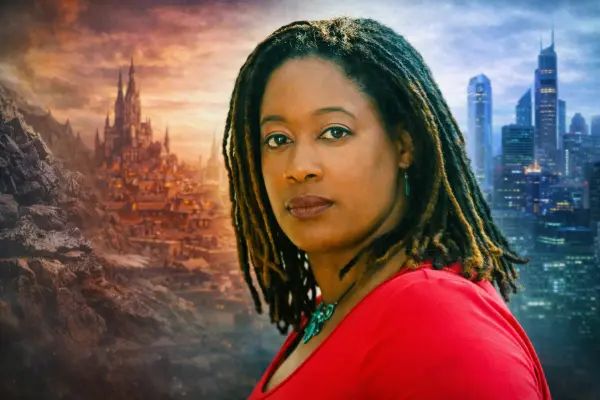
Three-time Hugo Award winner N.K. Jemisin revolutionized fantasy. Discover her epic series, standalone novels, common themes, and books for fans to read next.
Occasional emails with new recommendations, series news and trope round-ups.