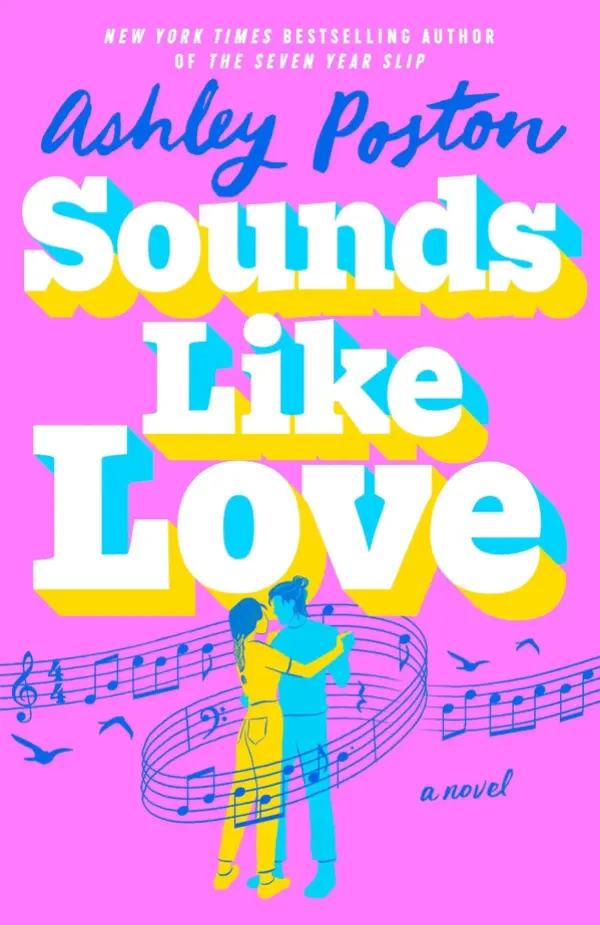
Sounds Like Love
Ashley Poston
Average Goodreads rating3.8
- Found Family
- Witty Banter & Sharp Dialogue

Book trope · 5 books
Telepathy is the ability to read, send, or share thoughts directly between minds, bypassing speech entirely. In fantasy and romance fiction, it functions as far more than a neat magical trick.
More about the Telepathy trope1 is tagged with Telepathy individually. The others belong to a series tagged with it, which doesn’t mean every book in it features the trope, so they’re marked “Matched via its series”.
Updating books…
5 books found
Ashley Poston
Average Goodreads rating3.8

Octavia E. Butler
The Patternist Series, book 1
Average Goodreads rating4.6
Matched via its series

Octavia E. Butler
The Patternist Series, book 3
Average Goodreads rating4.4
Matched via its series

Octavia E. Butler
The Patternist Series, book 2
Average Goodreads rating4.6
Matched via its series

Octavia E. Butler
The Patternist Series, book 4
Average Goodreads rating4.6
Matched via its series
Tropes that share the most books with Telepathy
Telepathy is the ability to read, send, or share thoughts directly between minds, bypassing speech entirely. In fantasy and romance fiction, it functions as far more than a neat magical trick. It's a source of profound intimacy, catastrophic vulnerability, and moral complexity all at once. When one character can hear another's unfiltered inner voice, every social convention that keeps people safely distant from one another simply collapses.
The appeal is immediately obvious. We spend so much of our lives wondering what someone else is really thinking, and telepathy cuts straight through that uncertainty — though not always with comfortable results. Characters who possess this ability often find it as much a burden as a gift.
The trope is most compelling when authors think carefully about what telepathy actually costs. Hearing every stray thought in a crowded room, accidentally picking up grief or rage from a stranger, being unable to switch off — these are the details that make the ability feel real rather than convenient. The best telepathic characters aren't omnipotent; they're overwhelmed, exhausted, or desperately lonely precisely because they know too much.
In romantic storylines, telepathy creates a particular tension. A character might hear that their love interest finds them attractive before either of them has admitted anything aloud. Or they might overhear a thought that's meant to stay private — a fear, a resentment, a longing — and have to decide what to do with it. The question of consent is rarely far away. Can you truly fall for someone if you've been hearing their thoughts all along? And what happens when they discover you have?
Telepathy appears in several recognisable forms across the genre. Shared bond telepathy — where two specific characters can only hear each other — is especially popular in romance, because it creates a soulmate-adjacent connection without making characters feel dangerously all-knowing. It's a private channel, charged with intimacy from the first moment it opens.
Then there's the reluctant telepath: someone who never asked for the ability, often manifesting it at the worst possible moment. These characters tend to drive stories rooted in self-acceptance, control, and the ethics of knowing things you weren't supposed to know. Contrast that with practised telepaths who've learned to manage their gift, sometimes becoming spies, healers, or diplomats — people whose inner lives are disciplined and heavily guarded precisely because they understand what exposure means.
In epic fantasy, telepathy frequently shapes entire political systems. If rulers or advisors can read minds, governance looks very different. Secrets become almost impossible to keep, and the people who can shield their thoughts become extraordinarily powerful.
At its core, telepathy is a trope about being truly known by another person — and whether that's something to crave or to fear. Romance readers in particular respond to the idea that two people might be connected in a way that bypasses every defence and pretence. But the trope earns its emotional weight precisely because that kind of exposure isn't automatically safe or welcome. The best telepathy stories sit with that discomfort rather than resolving it too quickly.
It also lends itself beautifully to slow-burn dynamics. When thoughts can be overheard, the gap between what's said and what's felt becomes the engine of a story — and there are few engines more reliable than that.
Occasional emails with new recommendations, series news and trope round-ups.