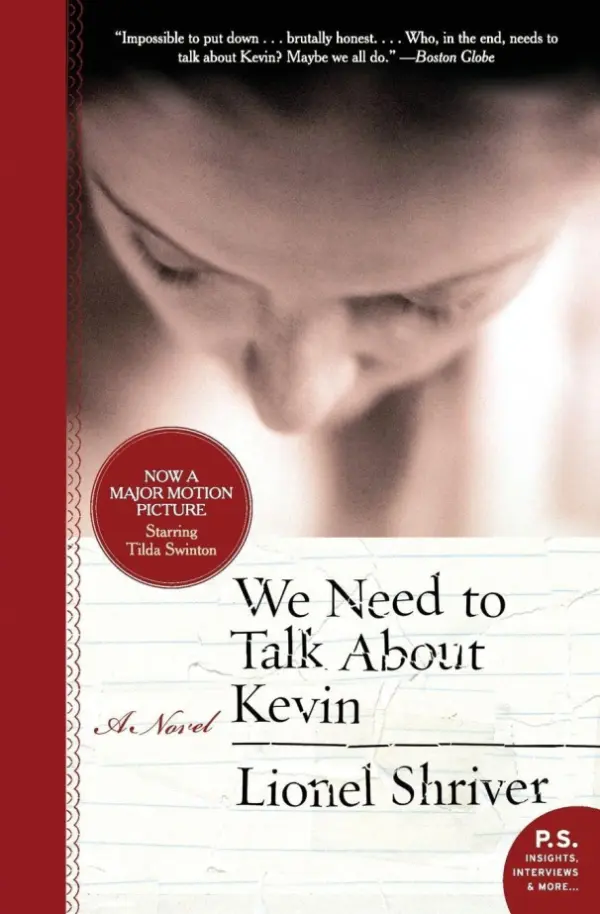
We Need to Talk About Kevin
Average Goodreads rating4.1
- Gaslighting
- Trauma and Healing

Author · American
American author best known for We Need to Talk About Kevin, winner of the 2005 Orange Prize for Fiction. Known for sharp, provocative literary fiction.
New to Lionel Shriver? A popular place to start
We Need to Talk About Kevin by Lionel Shriver is a literary thriller told through letters a mother writes to her estranged husband, working backwards through her son's childhood in the aftermath of a school massacre he committed at sixteen.
Picked from Lionel Shriver’s most widely rated books on Goodreads, starting at the beginning of its series.
Retailer links may earn Trope Trove a commission, at no extra cost to you.
Not part of a series listed on Trope Trove
Average Goodreads rating4.1
Born Margaret Ann Shriver in Gastonia, North Carolina in 1957, Lionel Shriver adopted her now-familiar name at the age of fifteen, a deliberate act of self-invention that set the tone for a career built on refusal to conform. Her father was a Presbyterian minister who later became president of the Union Theological Seminary in New York, and the moral and ethical seriousness of that upbringing is visible throughout her work, even when she is at her most combative. After attending Barnard College, she went on to earn both a BA and an MFA from Columbia University, graduating in 1982.
The years that followed were peripatetic. Shriver lived in Nairobi, Bangkok, and Belfast, where she spent roughly twelve years reporting on the Troubles. That immersion in real political violence and human fallibility fed directly into her fiction, which has never been content to stay at a comfortable distance from difficult material. She eventually settled in London, a city that has remained a kind of home base, alongside periods in New York and, more recently, Portugal.
Her debut novel, The Female of the Species, appeared in 1987 and drew on her time at Columbia, where she had studied under anthropologist Margaret Mead. A string of further novels followed through the late 1980s and 1990s, among them Checker and the Derailleurs, Game Control, A Perfectly Good Family, and Double Fault, a study of professional tennis and the corrosive dynamics of ambition between a married couple. The books gathered strong critical notices but limited readership. Shriver supported herself through journalism during those years, writing for publications including The Wall Street Journal, the Financial Times, The Guardian, and The Economist.
Everything changed with We Need to Talk About Kevin, published in 2003. Narrated through a series of letters from a mother trying to make sense of her teenage son's massacre of nine people at his high school, the novel is structured around a question that has no comfortable answer: what, if anything, did she contribute to what he became? It was rejected by around thirty publishers before finding a home, and then it quietly accumulated readers through word of mouth. The 2005 Orange Prize for Fiction brought it to far wider attention, and it has since sold well over a million copies worldwide. A film adaptation starring Tilda Swinton followed in 2011.
The novels since Kevin have continued to place large, uncomfortable social questions inside tightly observed domestic situations. So Much for That (2010) took the American healthcare system apart through the story of a man whose retirement plans are derailed by his wife's terminal illness, and was named a finalist for the National Book Award. The Post-Birthday World (2007) used parallel timelines to explore a woman's life as it diverges from a single moment of choice, spending several weeks on the New York Times bestseller list. Big Brother (2013) drew on Shriver's own family history to examine obesity, loyalty, and the limits of what we can do for the people we love. The Mandibles: A Family, 2029–2047 (2016) projected a near-future America facing sovereign debt collapse, and was described as an acid satire. Should We Stay or Should We Go (2021) played out twelve alternate futures for a couple who made a pact about how they would die. Mania, published in 2024, continued her interest in near-future social satire.
In 2014, Shriver won the BBC National Short Story Award for 'Kilifi Creek', and her work has been translated into more than thirty languages. Her essay collection Abominations: Selected Essays from a Career of Courting Self-Destruction appeared in 2022, gathering journalism from The Spectator, The Guardian, and elsewhere on subjects ranging from free speech and identity politics to illness and the purpose of fiction.
As a prose stylist, Shriver is precise and economical, with a tendency to use pitch-perfect detail where other novelists might reach for sentiment. Her narrators tend to be intelligent, self-aware, and deliberately unreliable in ways that require the reader to do real work. She is not a writer who gestures at moral complexity; she constructs it, brick by brick, inside the fabric of everyday life.

Ashley Audrain
Average Goodreads rating4.0
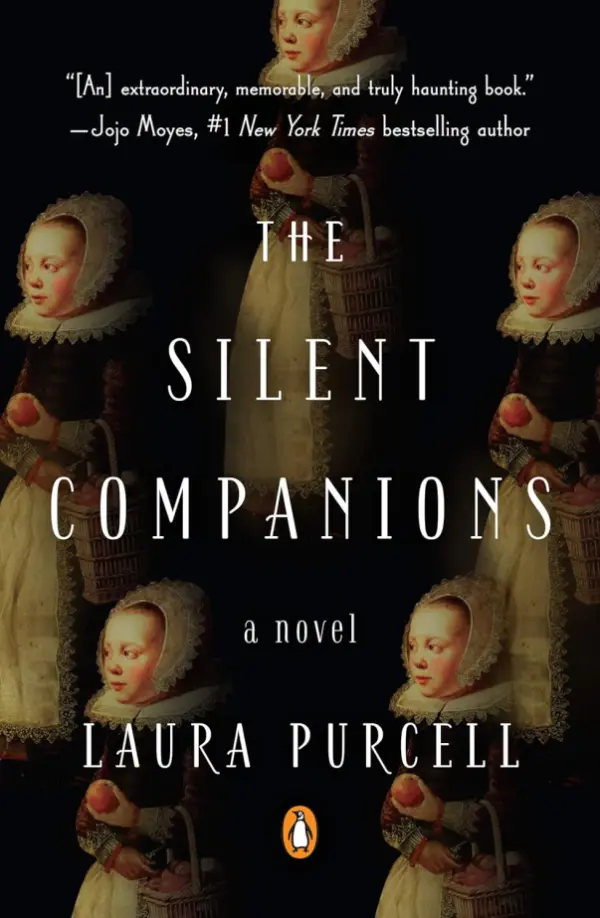
Laura Purcell
Average Goodreads rating3.9

Alice Feeney
Average Goodreads rating4.3
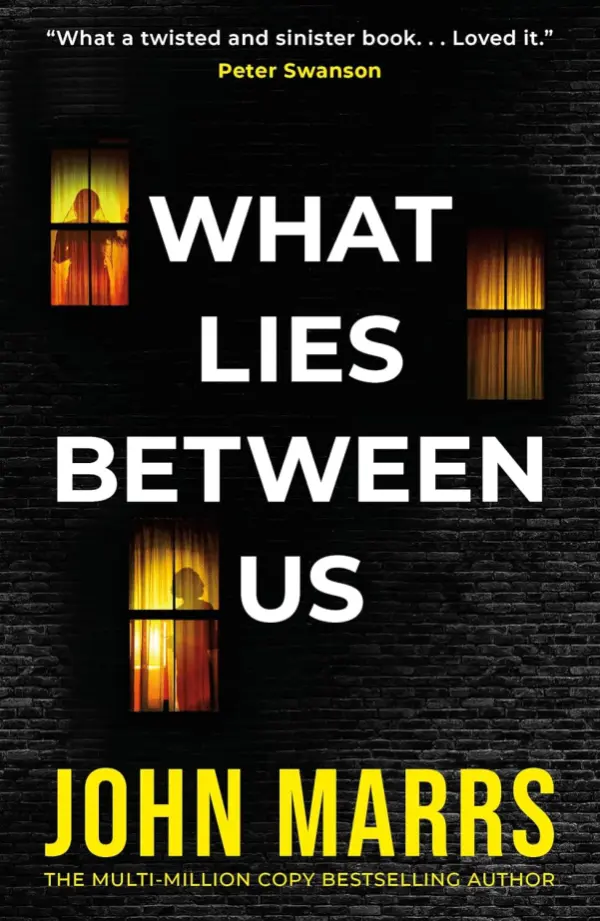
John Marrs
Average Goodreads rating4.0

J. P. Delaney
Average Goodreads rating3.7
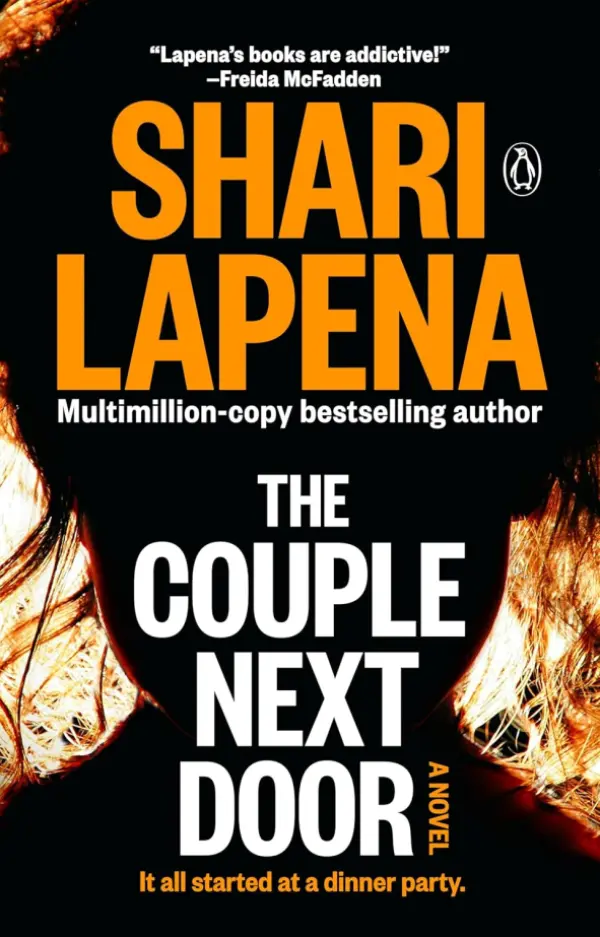
Shari Lapena
Average Goodreads rating3.8
If The Silent Patient's twist left you reeling, discover 13 psychological thrillers with the same unreliable narrators, therapy-room tension, and gasp-out-loud reveals.
Occasional emails with new recommendations, series news and trope round-ups.