Book 1
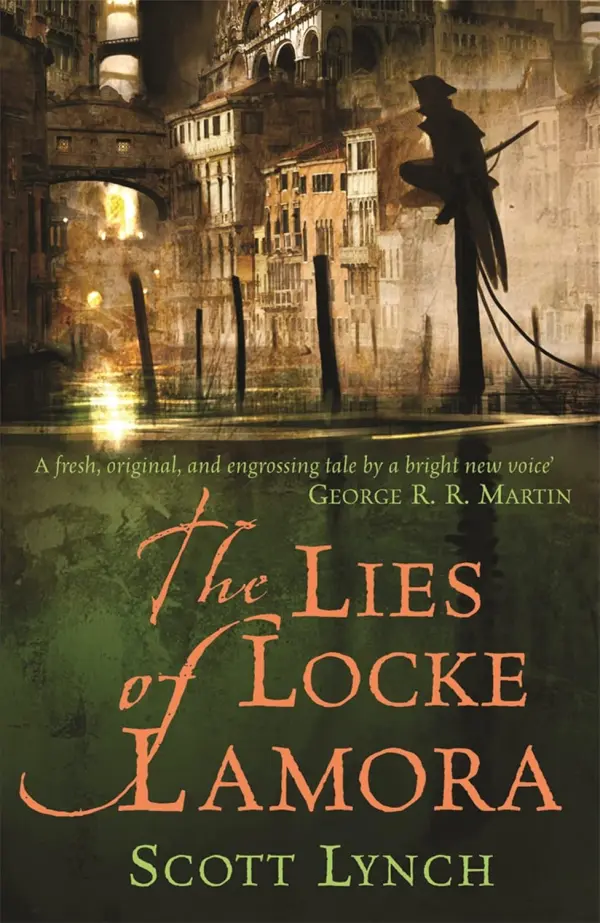
The Lies of Locke Lamora
Average Goodreads rating4.6

Author · American
Scott Lynch is an American fantasy author celebrated for the Gentleman Bastards series. Known for elaborate heists, morally complex thieves, found family, dark wit, intricate plotting, and richly detailed secondary worlds, he crafts compulsively readable epic fantasy.
New to Scott Lynch? A popular place to start
Book 1 of The Gentleman Bastard Sequence
The Lies of Locke Lamora by Scott Lynch follows master thief Locke Lamora running elaborate cons against Camorr's nobility whilst a deadly threat emerges. This 2006 debut delivers heist fantasy, found family, dark wit, and Renaissance Venice atmosphere brilliantly.
Picked from Scott Lynch’s most widely rated books on Goodreads, starting at the beginning of its series.
Retailer links may earn Trope Trove a commission, at no extra cost to you.
3 books in reading order
Book 1
Average Goodreads rating4.6
Book 2
Average Goodreads rating4.5
Book 3
Average Goodreads rating4.4
Scott Lynch is an American fantasy author who achieved immediate critical and popular success with The Lies of Locke Lamora (2006), launching the Gentleman Bastards series and establishing himself as one of contemporary fantasy's most distinctive voices through heist-driven plotting, morally complex protagonists who operate outside conventional heroism, found family dynamics providing emotional grounding alongside elaborate criminal schemes, and richly detailed secondary worlds that feel genuinely inhabited rather than constructed for narrative convenience. Known for dark wit balanced with genuine emotional stakes, intricate plotting that rewards careful reading, and the ability to make readers deeply invested in characters whose professions involve deception, Lynch crafts fantasy that appeals to readers seeking something beyond standard epic fantasy templates whilst delivering the immersive worldbuilding and character investment that define the genre's best work.
Lynch's signature series follows Locke Lamora - an orphan raised as a thief who becomes the leader of the Gentleman Bastards, an elite group of con artists operating in Camorr, a city inspired by Renaissance Venice whose canal networks, noble houses, and criminal underworld provide backdrop for schemes of extraordinary ambition and complexity. The series is structured around elaborate cons and heists that Locke and his companions execute against targets whose wealth and power make them seemingly untouchable, with Lynch revealing his plots through dual timelines - present-day action and flashbacks to the Bastards' training and earlier schemes - that create structural sophistication alongside propulsive plotting.
The Lies of Locke Lamora (2006) launches the series with the Bastards running an elaborate long con against Camorr's nobility whilst a mysterious figure called the Grey King begins eliminating the criminal underworld's leadership with terrifying efficiency. The debut establishes Lynch's world, his characters, and his approach to fantasy crime fiction - morally grey protagonists, elaborate plotting, genuine stakes including character deaths, dark humor, and found family dynamics that make the Bastards' relationships as compelling as any scheme they execute.
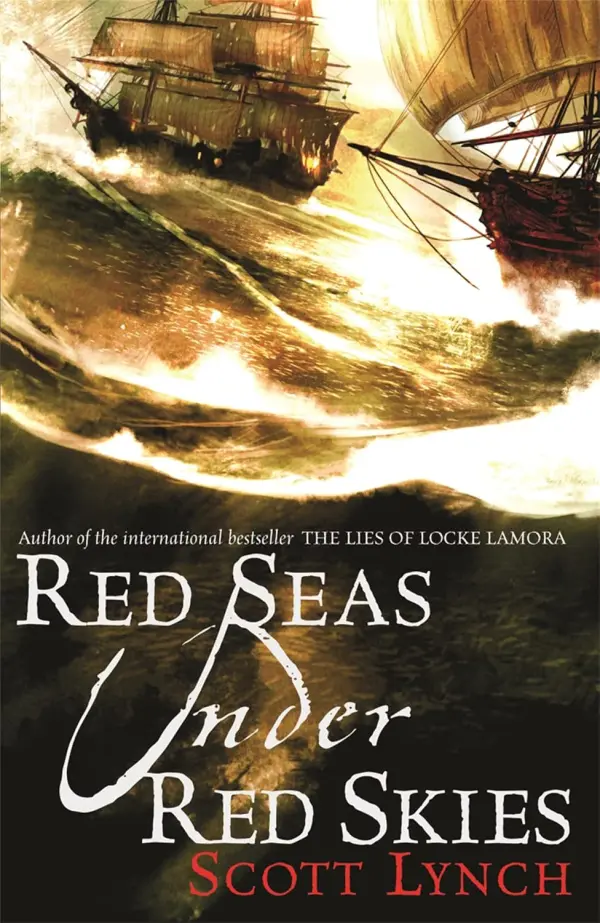
Red Seas Under Red Skies (2007) continues with Locke and his closest companion Jean navigating a different city, a casino heist, and forced involvement with pirates whose politics threaten to consume their plans. The sequel demonstrates Lynch's range whilst maintaining the series' core appeal.
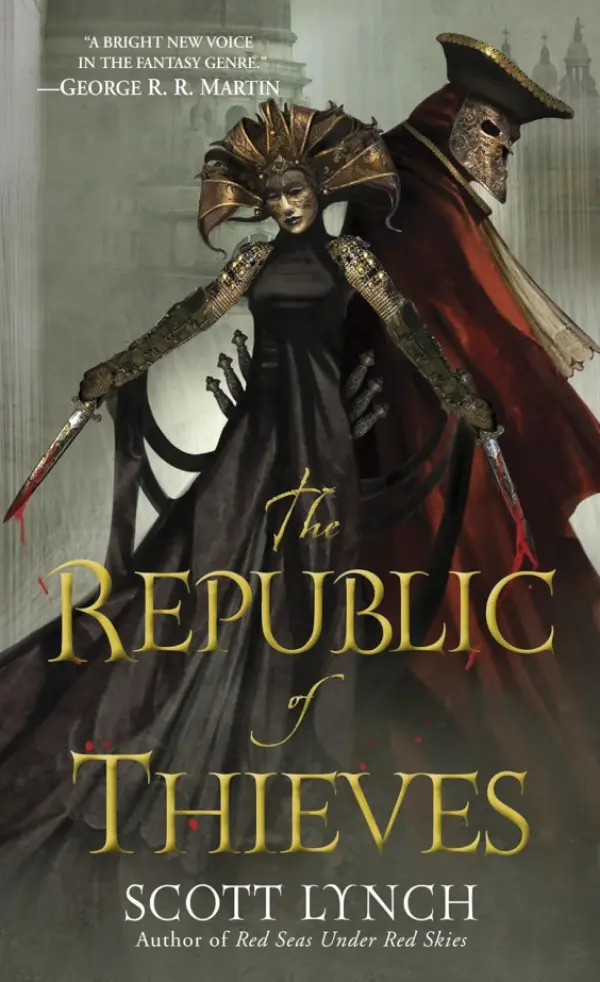
The Republic of Thieves (2013) advances the series further whilst exploring Locke's complicated history with Sabetha - the Bastards' only female member whose relationship with Locke provides romantic tension across the series. Subsequent books have faced longer gaps between publication, with Lynch open about struggles with mental health affecting his writing timeline.
Lynch's writing is characterized by elaborate heist plotting, morally grey protagonists, Renaissance-inspired secondary worlds, found family dynamics, dark humor, dual timeline structure, genuine emotional stakes, intricate worldbuilding, and the sense that every detail serves a purpose eventually revealed.
Common themes include loyalty tested by impossible circumstances, family chosen rather than born into, the gap between reputation and reality, systems of power exploited by those operating outside them, friendship as the only reliable constant, and what people sacrifice for those they love.
What distinguishes Lynch is his ability to make readers root completely for protagonists whose moral codes would be alarming in reality, creating investment through character chemistry, wit, and genuine emotional stakes rather than conventional heroism.

Brandon Sanderson
Mistborn (The Original Trilogy), book 1
Average Goodreads rating4.6

Shannon Chakraborty
Amina al-Sirafi Adventures, book 1
Average Goodreads rating4.4

Leigh Bardugo
Six of Crows, book 1
Average Goodreads rating4.6

Brent Weeks
Lightbringer, book 1
Average Goodreads rating4.5
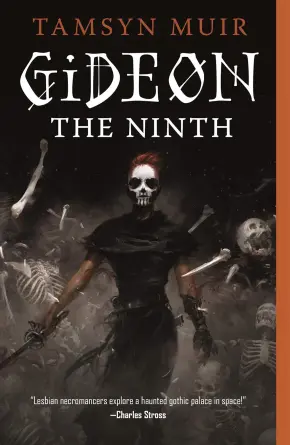
Tamsyn Muir
The Locked Tomb Series, book 1
Average Goodreads rating4.5
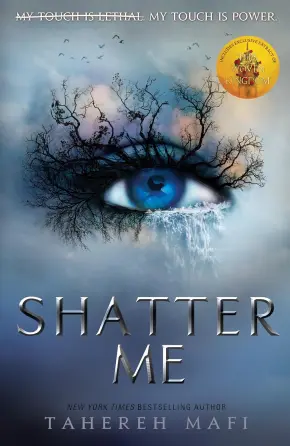
Tahereh Mafi
Shatter Me, book 1
Average Goodreads rating4.2

Not all fantasy is created equal - and "it's a fantasy novel" tells you almost nothing about whether you'll love it. Choosing by trope is the smartest way to find your next obsession. Here's how to do it.
Occasional emails with new recommendations, series news and trope round-ups.