
The Secret History
Average Goodreads rating4.1
- Coming of Age
- Morally Grey Characters

Author · American
Donna Tartt is an American novelist known for richly atmospheric literary fiction. Her three novels - including The Secret History and The Goldfinch - are landmark works of dark academia, psychological depth, and moral complexity.
New to Donna Tartt? A popular place to start
The Secret History by Donna Tartt is a compulsive dark academia thriller set at a Vermont liberal arts college, where a group of Classics students' intellectual obsessions lead them inexorably towards violence and moral collapse.
Picked from Donna Tartt’s most widely rated books on Goodreads, starting at the beginning of its series.
Retailer links may earn Trope Trove a commission, at no extra cost to you.
Not part of a series listed on Trope Trove
Average Goodreads rating4.1
Donna Tartt is one of the most distinctive and celebrated novelists in contemporary American fiction - a writer whose output is deliberately, almost defiantly small, and whose three novels have each arrived as a significant literary event. Working at her own pace and entirely on her own terms, Tartt produces books that are long, immersive, and impossible to rush: densely imagined worlds in which atmosphere is as important as plot, and in which the moral and psychological interior lives of her characters are given the time and space they require to become fully real. She is, in the truest sense, a novelist's novelist - and also, given the extraordinary reach of her readership, a phenomenon.
Born in 1963 in Greenwood, Mississippi, Tartt grew up in the American South in a family environment that she has described as bookish and unconventional. She enrolled at the University of Mississippi before transferring to Bennington College in Vermont, where she studied under the novelist Bret Easton Ellis and began work on what would become her debut novel. She has spoken about writing as a total vocation - something that demands everything and returns accordingly - and her publication rate of roughly one novel per decade reflects not a lack of industry but the depth of the commitment she brings to each book.
The Secret History, published in 1992, announced Tartt's arrival with a confidence that was almost shocking for a debut. Set at a small, rarefied liberal arts college in Vermont, it follows a group of Classics students whose intellectual obsessions and elite institutions insularity carry them, by degrees, toward catastrophe. The novel opens with its central crime already committed - a structural inversion that transforms the expected murder mystery into something closer to a sustained meditation on moral dilemma and the psychology of complicity. The narrator, Richard Papen, is one of fiction's great unreliable narrator creations: sympathetic, self-deceiving, and quietly devastating in the gap between who he believes himself to be and what the reader can see. The Secret History is widely credited with defining the dark academia subgenre, and its influence on subsequent fiction - and on the aesthetic sensibility of a generation of readers - is difficult to overstate.
Between The Secret History and her second novel, Tartt spent eleven years in silence. The Little Friend, published in 2002, was a departure in setting and tone - a Mississippi Gothic novel centred on a twelve-year-old girl's obsessive, dangerous attempt to solve the childhood murder of her brother. Where The Secret History was cold and cerebral, The Little Friend was hot and swampy and suffused with the particular menace of the American South. It divided critics and readers, some finding it a rich and underrated achievement, others missing the dark secrets and claustrophobic group dynamics of its predecessor. In retrospect it reads as exactly what it is: a writer refusing to repeat herself, and exploring the full range of what her sensibility can do.
The Goldfinch, published in 2013, won the Pulitzer Prize for Fiction and became one of the most discussed novels of the decade. Its protagonist, Theo Decker, survives a bombing at a New York museum as a child and escapes in the chaos with a small, priceless Dutch Golden Age painting - a theft that shapes the entire course of his subsequent life. The novel is vast in scope, moving from Manhattan to Las Vegas to Amsterdam and spanning decades of Theo's coming of age alongside the obsession and desire that the painting comes to represent. It is a book about art, loss, beauty, and the ways that dark secrets lodge themselves in a life and refuse to let go. The psychological thriller undercurrent that runs through all of Tartt's work is here at its most expansive, and the novel's willingness to take its time - to dwell in character and place and feeling rather than hurrying toward resolution - is both its great strength and, for some readers, its central challenge.
Across all three novels, Tartt's distinguishing characteristics are unmistakable. Her prose is lush without being indulgent, precise without being cold; she writes physical sensation and atmosphere with an almost painterly attentiveness, and her dialogue - when it comes - lands with witty banter and sharp dialogue quality that makes her characters feel like people rather than constructions. Her interest is always in the moral dilemma: in the choices that cannot be taken back, the knowledge that cannot be unlearned, and the way that guilt and beauty and longing coexist inside the same consciousness. She is a writer for whom ideas and emotion are not separate concerns, and reading her novels feels like an encounter with a genuinely original mind.
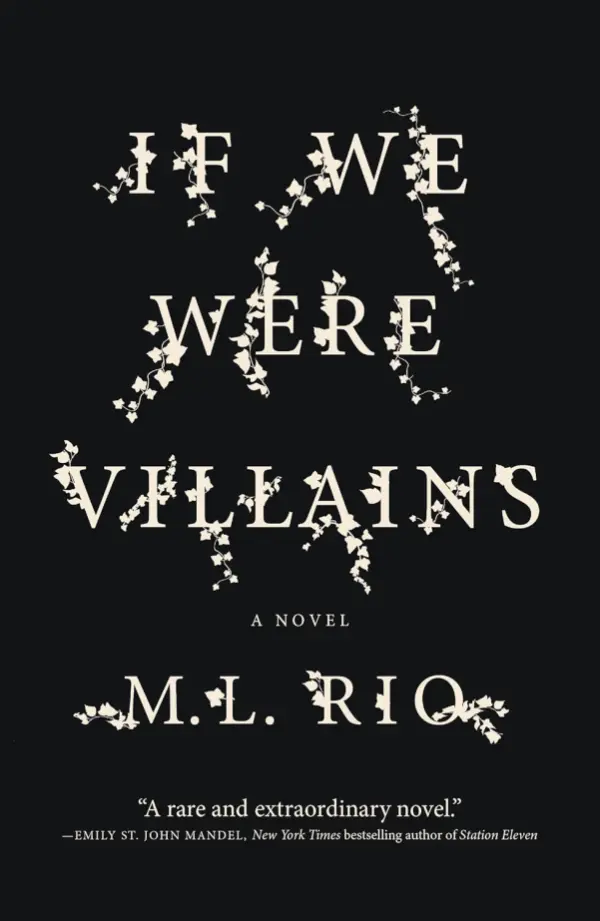
M. L. Rio
Average Goodreads rating4.1

Tana French
Dublin Murder Squad, book 5
Average Goodreads rating3.8

Freida McFadden
The Housemaid, book 1
Average Goodreads rating4.5
Colleen Hoover
Average Goodreads rating4.5
Caroline Kepnes
You, book 1
Average Goodreads rating4.2

Caroline Kepnes
You, book 2
Average Goodreads rating4.3
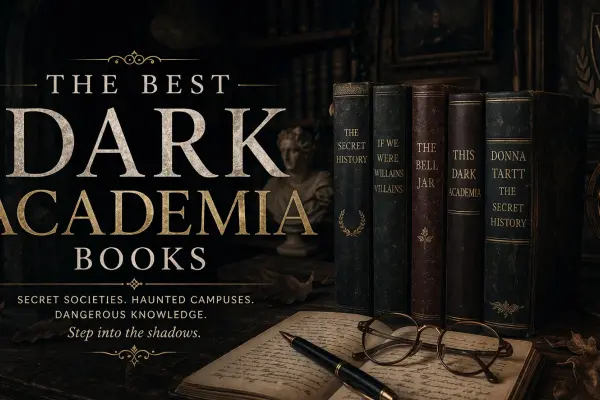
Candlelit libraries, secret societies, forbidden knowledge, and characters who are brilliant, beautiful, and utterly dangerous. The best dark academia books, from gothic classics to modern obsessions.
Occasional emails with new recommendations, series news and trope round-ups.