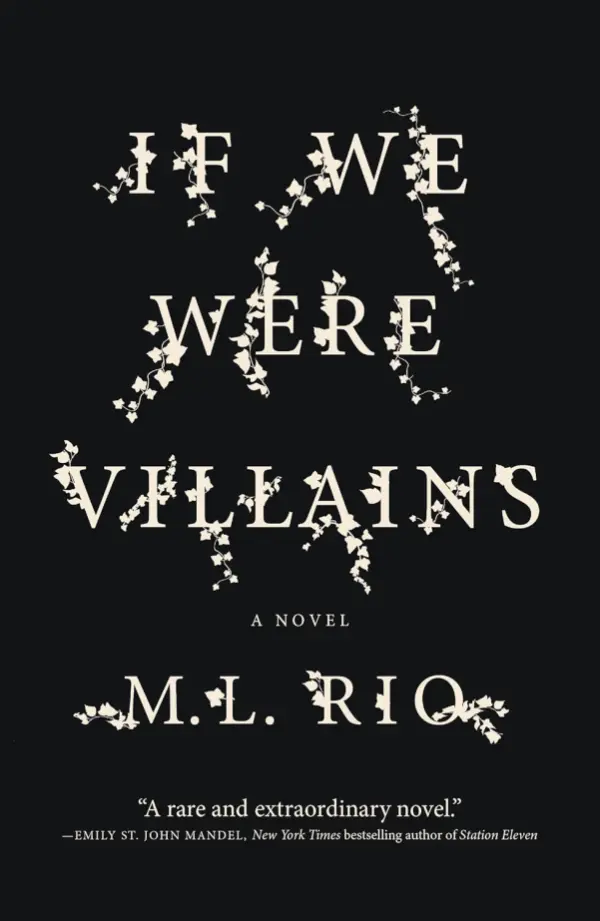
If We Were Villains
M. L. Rio
Average Goodreads rating4.1
- Coming of Age
- Morally Grey Characters

Book trope · 7 books
Locked gates. Ancient stone. A student body where every surname carries a history. The elite institutions trope places characters inside schools, academies, guilds, or training grounds that are deliberately exclusive — places where admission itself is an achievement, and survival is the real test.
More about the Elite Institutions trope4 are tagged with Elite Institutions individually. The others belong to a series tagged with it, which doesn’t mean every book in it features the trope, so they’re marked “Matched via its series”.
Updating books…
7 books found
M. L. Rio
Average Goodreads rating4.1

N. H. Kleinbaum
Average Goodreads rating4.2

Lynn Painter

Tana French
Dublin Murder Squad, book 5
Average Goodreads rating3.8

Olivie Blake
Atlas, book 1
Average Goodreads rating4.0
Matched via its series

Olivie Blake
Atlas, book 3
Average Goodreads rating3.4
Matched via its series

Olivie Blake
Atlas, book 2
Average Goodreads rating3.1
Matched via its series
Tropes that share the most books with Elite Institutions
Locked gates. Ancient stone. A student body where every surname carries a history. The elite institutions trope places characters inside schools, academies, guilds, or training grounds that are deliberately exclusive — places where admission itself is an achievement, and survival is the real test. Whether it's a magical college that only accepts one candidate per generation or a boarding school where old money and older grudges run the corridors, these settings do something specific: they concentrate ambition, privilege, and danger in a single contained space.
Fantasy and romance readers are drawn to these settings because the institution becomes almost a character in its own right. It has rules, hierarchies, secrets, and a reputation to protect. Characters don't just attend — they navigate.
Part of the appeal is the pressure cooker effect. When your protagonist is surrounded by rivals who are equally talented, equally desperate, and far better connected, every interaction carries weight. Friendships form fast and fracture faster. Romantic tension is almost inevitable when you're sharing cramped study halls and high-stakes examinations with someone infuriating and magnetic in equal measure.
There's also something deeply satisfying about watching an outsider — the scholarship student, the scholarship student, the unexpected recruit, the person who wasn't supposed to be there — learn the unwritten rules of an institution that wasn't built for them. The elite setting makes the underdog story feel earned rather than convenient. The obstacles are structural, not just personal.
Most elite institution stories share a handful of recognisable elements. A strict hierarchy, usually tied to bloodline, ability, or both. Trials or tests that thin the ranks as the story progresses. A mentor figure whose loyalties are ambiguous. Forbidden wings, restricted texts, or training grounds where students aren't supposed to go. And almost always, a scandal or secret at the institution's founding that the current generation is about to uncover.
The social architecture matters enormously here. Cliques, legacy students, and longstanding rivalries between houses or factions give authors enormous structural latitude. A protagonist can move through multiple social strata within a single chapter, which keeps pacing dynamic and the world feeling genuinely lived-in.
In fantasy, the institution is often a school of magic, a warrior academy, or a guild that trains assassins, healers, or spies. The more specialised the curriculum, the higher the stakes tend to feel — because graduates aren't just educated, they're dangerous. In romance, elite boarding schools or prestigious universities provide the social claustrophobia that makes slow-burn tension almost unbearable in the best possible way. Enemies-to-lovers thrives here; you can't avoid someone you share a timetable with.
The trope also appears in darker registers, where the institution conceals something predatory beneath its polished exterior, and the protagonist must decide how far they'll compromise to survive inside it — and whether the prize of belonging is worth the cost.
Few settings reward character-driven storytelling quite so efficiently: put ambitious people in a confined, high-stakes environment, and the drama writes itself.
Occasional emails with new recommendations, series news and trope round-ups.