Blood Meridian
Average Goodreads rating4.2
- Survival and Resilience
- Post-Apocalyptic

Author · American
Cormac McCarthy was an acclaimed American author known for stark prose and morally intense novels exploring violence, survival, and humanity across crime, western, and post-apocalyptic landscapes.

New to Cormac McCarthy? A popular place to start
The Road by Cormac McCarthy is a haunting post-apocalyptic novel following a father and son’s journey through a ruined world, exploring survival, love, and moral endurance.
Picked from Cormac McCarthy’s most widely rated books on Goodreads, starting at the beginning of its series.
Retailer links may earn Trope Trove a commission, at no extra cost to you.
Not part of a series listed on Trope Trove
Average Goodreads rating4.2

Average Goodreads rating4.4

Average Goodreads rating4.3
Average Goodreads rating4.4
Cormac McCarthy was one of the most influential and uncompromising voices in modern literature, renowned for his stark prose, philosophical depth, and unflinching exploration of violence and morality. Over a career spanning more than five decades, McCarthy produced novels that stripped humanity down to its most primal instincts, confronting readers with survival, cruelty, and the fragile line between civilisation and chaos.
Born in 1933, McCarthy built a reputation as a literary minimalist, favouring sparse punctuation, biblical rhythms, and brutally precise language. His stories often unfold in harsh, unforgiving landscapes - deserts, borderlands, and post-apocalyptic wastelands - where law and morality are tenuous at best. Rather than offering comfort or resolution, McCarthy’s fiction forces readers to grapple with existential questions about fate, free will, and the nature of evil.
Many of McCarthy’s most famous works sit at the intersection of Crime Fiction and Thriller & Mystery, blending pursuit narratives with psychological tension and philosophical inquiry. Violence in his novels is rarely sensationalised; instead, it is presented as an inevitable force, shaping both victims and perpetrators. Antagonists are often embodiments of chaos or inevitability rather than traditional villains, reinforcing the sense that evil is systemic rather than personal.
A defining theme across McCarthy’s work is moral ambiguity. His protagonists are rarely heroic in a conventional sense, often driven by survival, guilt, or resignation rather than noble purpose. These morally grey characters exist in worlds where ethical choices carry no guarantee of reward, and where innocence is fleeting. Redemption, when it appears at all, is quiet, incomplete, and deeply personal.
McCarthy’s later novels expanded into bleak speculative territory, most notably through post-apocalyptic storytelling that examines humanity after societal collapse. These works focus on parental bonds, memory, and the persistence of love in a world stripped of structure. Even in total devastation, McCarthy’s writing insists on the importance of human connection, however fragile it may be.
His influence extends far beyond genre labels. McCarthy reshaped how crime, thriller, and survival narratives could be written - slower, darker, and more philosophical than mainstream conventions. His work has inspired countless authors across literary fiction, crime, and speculative storytelling, and several of his novels have been adapted into critically acclaimed films.
Cormac McCarthy’s legacy lies in his refusal to simplify the human condition. His novels challenge readers to confront uncomfortable truths, offering stories that linger long after the final page - not because they reassure, but because they endure.

Freida McFadden
The Housemaid, book 1
Average Goodreads rating4.5

Freida McFadden
The Housemaid, book 2
Average Goodreads rating4.4

Freida McFadden
The Housemaid, book 3
Average Goodreads rating4.3

Blake Crouch
The Wayward Pines Trilogy, book 1
Average Goodreads rating4.1

Blake Crouch
The Wayward Pines Trilogy, book 2
Average Goodreads rating4.4
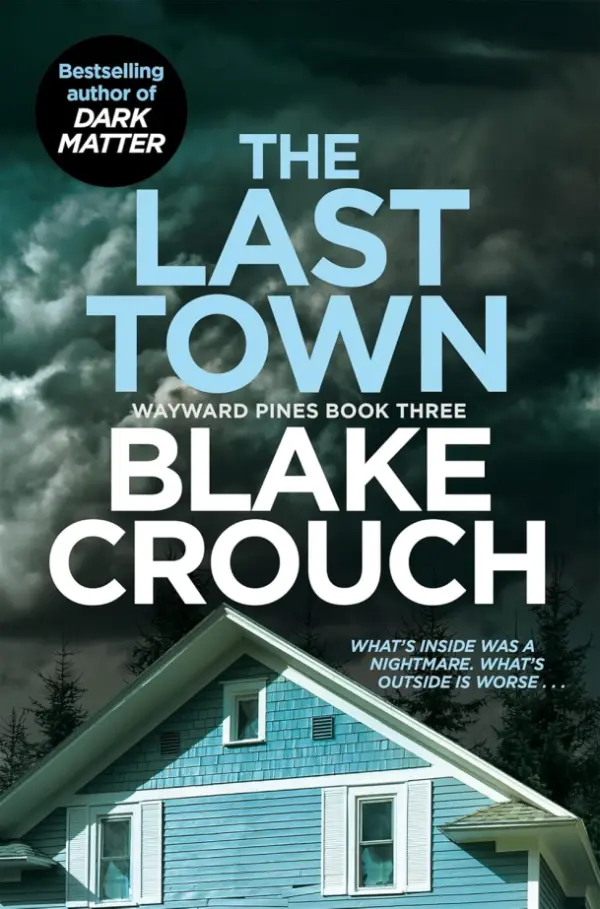
Blake Crouch
The Wayward Pines Trilogy, book 3
Average Goodreads rating4.4
Occasional emails with new recommendations, series news and trope round-ups.