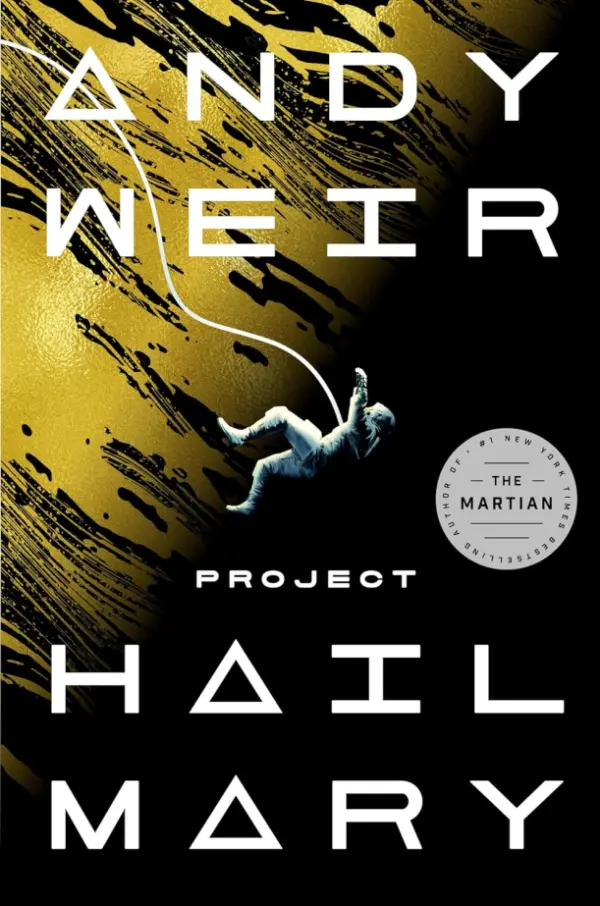
Project Hail Mary
Andy Weir
Average Goodreads rating4.6
- First Contact with Alien Species
- Memory Loss

· Updated
If you devoured Project Hail Mary's brilliant science, loveable protagonist, and unexpected friendship, discover 13 hard sci-fi books with the same addictive blend of problem-solving and heart.
Andy Weir's Project Hail Mary captivated millions of readers with its perfect blend of hard science, genuine humour, high stakes, and an unexpected friendship that became the emotional heart of the story. If you found yourself staying up until 3 a.m. because you absolutely had to know how Ryland Grace would science his way out of the latest impossible situation, or if Rocky's musical voice made you unexpectedly emotional, you're part of a passionate community of readers desperately seeking their next fix of intelligent, optimistic, problem-solving science fiction.
What makes Project Hail Mary so special is how it balances multiple elements that don't always coexist in science fiction: rigorous scientific accuracy that makes you feel smarter whilst reading, a protagonist whose enthusiasm is infectious even when faced with extinction-level problems, genuine humour that never undercuts the serious stakes, and an alien first-contact story that prioritises communication and cooperation over conflict. Weir proves that hard sci-fi doesn't have to be pessimistic or impenetrable - it can be warm, funny, and deeply human whilst still being scientifically sound.
We've gathered thirteen books that capture different aspects of what made Project Hail Mary so addictive. Some feature lone protagonists using science to survive impossible situations. Others explore first contact and unexpected friendships across species. Many share that distinctive blend of humour and high stakes, competent characters solving problems through intelligence rather than violence, and optimistic belief that human (and alien) ingenuity can overcome extraordinary challenges. All have captivated hundreds of thousands of readers on Goodreads and promise the same kind of compulsive, stay-up-all-night reading experience. So prepare your slide rule, pack your sense of wonder, and get ready to science the hell out of these brilliant books.
Andy Weir's The Martian is the obvious starting point for Project Hail Mary fans - it's Weir's breakout novel that established his signature style. Astronaut Mark Watney is stranded alone on Mars after his crew, believing him dead in a storm, evacuates without him. With limited supplies and no way to communicate with Earth, Mark must use his botany and engineering knowledge to survive on a planet where everything is trying to kill him until rescue becomes possible. With over 1 million Goodreads ratings and a blockbuster film adaptation, this became the defining hard sci-fi survival story.
This is essential reading for Project Hail Mary fans because it's pure Weir DNA: a competent, funny protagonist using science to solve increasingly impossible problems, detailed explanations of the physics and chemistry involved that somehow remain entertaining, life-or-death stakes balanced with wisecracks and pop culture references, and an underlying optimism that intelligence and determination can overcome astronomical odds. Mark's voice in his log entries is hilarious and engaging, making complex problem-solving feel like hanging out with your funniest, smartest friend.
What makes this work so brilliantly is Weir's ability to make you care about potato farming, orbital mechanics, and chemistry experiments. Every challenge Mark faces - producing water, generating heat, communicating with Earth, travelling thousands of kilometres across hostile terrain - is solved through scientific reasoning explained clearly enough for laypeople to follow and cheer for. The supporting cast back on Earth adds human connection without diluting the survival focus.
The stakes are intensely personal rather than species-threatening, but the problem-solving methodology and Weir's trademark humour are identical to Project Hail Mary. For readers who haven't yet experienced where Weir started, this is required reading that proves his later success was no fluke. It's shorter and more straightforward than Project Hail Mary, making it perfect for readers who want Weir's style in a slightly more accessible package. The film starring Matt Damon is also excellent and faithful to the book's spirit.
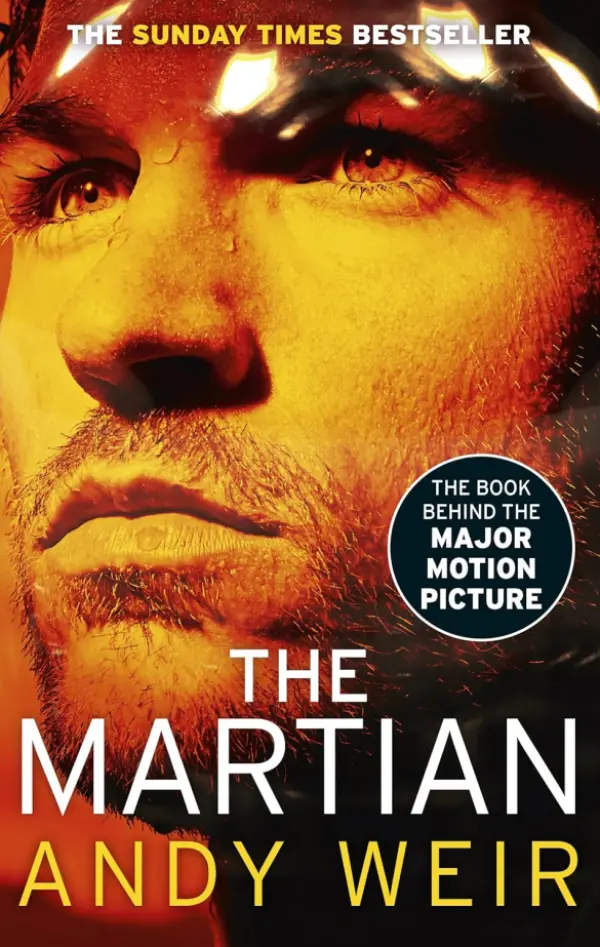
by Andy Weir
The Martian by Andy Weir follows astronaut Mark Watney, stranded alone on Mars after his crew evacuates believing him dead. This hard sci-fi survival story delivers humor, problem-solving through science, and humanity's determination to bring him home.
Becky Chambers's The Long Way to a Small, Angry Planet follows the diverse crew of the Wayfarer, a tunnelling ship that creates wormholes through space. When they accept a lucrative but dangerous job that requires a year-long journey to distant space, the crew - including humans, aliens, and an AI - must work together whilst navigating interpersonal dynamics, species differences, and unexpected crises. With over 300,000 Goodreads ratings and passionate fanbase, this launched Chambers's beloved Wayfarers series.
This appeals to Project Hail Mary fans through its emphasis on communication, cooperation, and found family across species barriers. Like Grace and Rocky's relationship, Chambers focuses on how different species with completely different biologies, cultures, and ways of thinking learn to understand and care for each other. The Wayfarer crew includes species who communicate through colour changes, who have completely different family structures, whose biology requires specific accommodations - and they all figure out how to coexist and become genuine friends.
Chambers writes science fiction that's fundamentally optimistic and humane. Problems are solved through communication and ingenuity rather than violence. Characters approach differences with curiosity rather than fear. The found family dynamic provides the same emotional warmth that Grace and Rocky's friendship delivered, with crew members supporting each other through personal struggles and celebrating each other's differences. The book feels like a warm hug in space - cosy sci-fi that still grapples with serious questions about identity, belonging, and what makes a family.
The science is softer than Weir's hard sci-fi, focusing more on speculative biology and cultural world-building than physics equations. But the spirit - that optimistic belief in cooperation, the delight in problem-solving together, the celebration of curiosity and kindness - mirrors Project Hail Mary's heart. The series continues with three more standalone books in the same universe, each exploring different characters and aspects of Chambers's hopeful vision of the future. For readers who loved Rocky and want more stories about unlikely friendships across species, this is essential.
Adrian Tchaikovsky's Children of Time alternates between the last remnants of humanity desperately searching for a new home aboard the ark ship Gilgamesh, and an uplifted spider species evolving rapidly on a terraformed planet that was supposed to be humanity's salvation. As both civilizations develop across millennia, their eventual meeting becomes inevitable - but whether it will be first contact or war depends on whether they can overcome their mutual fear and incomprehension. With over 100,000 Goodreads ratings and Arthur C. Clarke Award win, this became a modern sci-fi classic.
This is perfect for Project Hail Mary readers because Tchaikovsky does something similar to Weir's Rocky: he makes you genuinely care about and root for an alien species that thinks completely differently from humans. The spider chapters follow their civilization's development across generations, with Tchaikovsky making their perspectives alien yet comprehensible. You'll find yourself emotionally invested in spider scientists, spider civilizations, and spider problem-solving approaches that are fascinatingly different from human methods but equally valid.
The book explores communication across radical difference - how do you negotiate with a species whose biology, evolution, and thought processes are completely alien? The spiders' development of science, technology, and culture parallel humanity's whilst remaining distinctly non-human. Tchaikovsky handles the evolutionary time scales brilliantly, showing how both species must adapt their thinking to accommodate the other's existence. The climax involves problem-solving under pressure with species-level stakes, similar to Project Hail Mary's tension.
What sets this apart is its scope - spanning thousands of years and examining how civilizations evolve - and its willingness to show both species making mistakes and learning. The spiders become fully realised characters whose survival matters as much as humanity's. The sequel Children of Ruin continues exploring first contact with equally fascinating results. For readers who loved the alien perspective and the theme of communication across difference, this is thoughtful, epic, and deeply satisfying hard sci-fi.

Children of Time (Book 1)
Children of Time by Adrian Tchaikovsky is an epic science fiction novel exploring evolution, artificial intelligence, and humanity’s future. Spanning millennia, it follows the rise of an unexpected civilisation and a desperate struggle for survival among the stars.
Blake Crouch's Recursion follows neuroscientist Helena Smith, who's developing technology to preserve memories for Alzheimer's patients, and NYC detective Barry Sutton, investigating a mysterious phenomenon called False Memory Syndrome where people remember entire alternate lives they never lived. As they discover the terrible truth about Helena's invention and its reality-altering consequences, they must work together to prevent the collapse of reality itself. With over 200,000 Goodreads ratings and bestseller status, this became a word-of-mouth phenomenon.
This appeals to Project Hail Mary fans through its emphasis on scientific problem-solving under impossible pressure. Like Grace reverse-engineering alien technology and Rocky's biology, Helena and Barry must understand the rules governing memory and reality well enough to exploit them. Crouch explains the science (theoretical physics, neuroscience, quantum mechanics) clearly enough to follow whilst maintaining breakneck pacing. The protagonists are intelligent people using their expertise creatively to solve problems no one has encountered before.
The book shares Project Hail Mary's optimism about human resilience and ingenuity whilst adding thriller pacing and mind-bending concepts. Crouch writes science fiction that's accessible to general audiences - you don't need a physics degree to follow, but you'll feel smart whilst reading. The emotional core involves characters fighting to save not just humanity but specific relationships and memories, adding personal stakes to the cosmic ones.
What makes this work is Crouch's ability to take complex scientific concepts and make them visceral and emotional. The time-loop elements create puzzle-box plotting where readers piece together what's happening alongside the characters. The ending is both intellectually satisfying and emotionally resonant. For readers who want hard sci-fi concepts with thriller pacing, protagonists who think their way through problems, and optimistic belief that ingenuity can solve even reality-breaking crises, this is propulsive and brilliant.
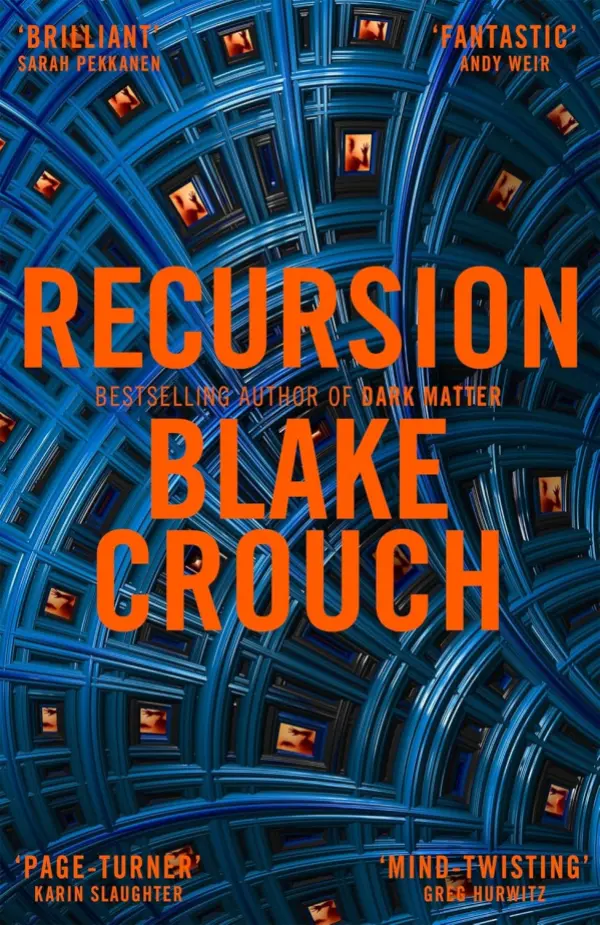
by Blake Crouch
Recursion by Blake Crouch is a mind-bending science fiction thriller where memory reshapes reality, collapsing timelines, identities, and the fabric of the world itself.
Matt Haig's The Humans follows an alien sent to Earth to eliminate all traces of a mathematical breakthrough that would advance humanity beyond acceptable limits. Assuming the identity of Professor Andrew Martin, the alien must destroy the evidence, kill anyone who knows about it, and return home. But as the alien experiences human life - family, love, music, peanut butter - it begins questioning its mission and what makes life worth living. With over 150,000 Goodreads ratings and crossover appeal, this became a beloved exploration of humanity through alien eyes.
This is brilliant for Project Hail Mary readers because it delivers the same delight in showing an alien perspective on humanity whilst celebrating what makes us special. Like Rocky observing Grace's bizarre human behaviours and biological needs, Haig's alien finds humans baffling, inefficient, and oddly endearing. The alien's observations about human customs, emotions, and irrationalities are both funny and surprisingly poignant, making readers see familiar things through fresh eyes.
The book shares Project Hail Mary's fundamental optimism about connection across difference. The alien arrives planning murder but stays for love, friendship, and dogs. Haig explores how forming relationships changes us, how empathy develops through genuine interaction, and how beings from completely different backgrounds can find common ground. The voice is warm and funny whilst grappling with philosophical questions about what makes life meaningful.
What sets this apart is its focus on the everyday rather than cosmic stakes - the alien doesn't need to save Earth from extinction but rather needs to decide whether Earth deserves to be saved, and whether it wants to stay. The mathematical concepts are present but less central than the emotional journey. For readers who loved Rocky and Grace's friendship and want another story about an alien discovering that humans, despite their flaws, are worth knowing and protecting, this is touching, funny, and unexpectedly profound.
Neal Stephenson's Seveneves begins with the Moon exploding into seven pieces, giving humanity two years before debris bombarding Earth makes the surface uninhabitable for thousands of years. The novel follows scientists, engineers, and astronauts racing to preserve human civilization in space whilst the Earth below descends into chaos, then jumps five thousand years forward to show how surviving humans have evolved. With over 100,000 Goodreads ratings and typical Stephenson ambition, this is hard sci-fi on an epic scale.
This appeals to Project Hail Mary fans through its emphasis on scientific problem-solving under species-threatening deadlines. Like Grace figuring out how to save Earth from astrophage, Stephenson's characters must engineer solutions to impossible problems with limited resources and ticking clocks. The orbital mechanics, physics, and engineering are explained in rigorous detail - this is hard sci-fi that shows its work and expects readers to engage with scientific concepts seriously.
Stephenson excels at competence porn - characters who are genuinely good at their jobs using expertise to solve problems. The first two-thirds detail the desperate effort to preserve humanity, with engineers and scientists making hard decisions about what can be saved and what must be sacrificed. The survival scenarios require creativity, technical knowledge, and the ability to adapt plans when reality proves uncooperative - exactly like Weir's protagonists.
The book is significantly denser and longer than Project Hail Mary, requiring more investment from readers. The third section's five-thousand-year time jump divides opinion - some love the payoff, others prefer the immediate crisis. The tone is more serious than Weir's humor-laced approach. But for readers who want hard sci-fi that grapples seriously with physics and engineering, features competent people solving impossible problems, and delivers epic scope alongside scientific rigor, this is Stephenson's masterpiece. Just prepare for a commitment - this is not light reading.
Martha Wells's All Systems Red introduces Murderbot, a self-aware security android who hacked its governor module to gain free will but continues doing its job whilst secretly watching thousands of hours of entertainment serials. When its current contract protecting a planetary survey team goes wrong and someone tries to kill the scientists, Murderbot must decide whether to reveal its independence to protect the humans it claims to find tedious. With over 150,000 Goodreads ratings and Hugo/Nebula wins, this launched the beloved Murderbot Diaries series.
This is perfect for Project Hail Mary readers because Murderbot's voice is similarly engaging - sarcastic, funny, socially awkward, and unexpectedly emotional beneath the sardonic exterior. Like Grace's enthusiasm for science and problem-solving, Murderbot is competent at its job (security and keeping humans alive) whilst being hilariously bad at social interaction and emotional vulnerability. The first-person narration makes Murderbot immediately loveable despite its protests that it hates humans.
Wells writes science fiction that balances action, humor, and genuine emotion. Murderbot solves problems through technical knowledge, strategic thinking, and reluctant heroism. The novellas (this is only 144 pages) are perfectly paced for readers who want complete stories without massive commitments. The found family dynamic develops across the series as Murderbot grudgingly admits that some humans are worth protecting and maybe even caring about.
The science is softer than Weir's physics-focused approach, but the problem-solving methodology is similar - use available technology creatively, think strategically, adapt when plans fail. The stakes escalate across the series whilst maintaining the core appeal of Murderbot's voice and relationships. The series continues with multiple novellas and novels, all maintaining quality. For readers who want protagonists who are competent but awkward, humor that doesn't undercut serious stakes, and found family dynamics with non-human perspectives, this is addictive and delightful.
Blake Crouch's Dark Matter follows physicist Jason Dessen, who's abandoned cutting-edge research for teaching to raise his family. When he's kidnapped and wakes up in a reality where he made different life choices - he's a brilliant researcher who never married or had a son - he must navigate the multiverse to find his way home to the life and family he chose. With over 400,000 Goodreads ratings and bestseller success, this mind-bending thriller explores choices, regret, and what makes life meaningful.
This appeals to Project Hail Mary fans through its scientific protagonist using physics knowledge to solve an impossible problem. Jason must understand the quantum mechanics and multiverse theory well enough to navigate between realities and find the specific version of Earth where his family exists. Crouch explains the science clearly, making theoretical physics accessible whilst maintaining thriller pacing that keeps pages turning frantically.
The book shares Weir's ability to balance complex science with human emotion. Jason's journey isn't just intellectual puzzle-solving but an emotional quest to return to the people he loves. The stakes are intensely personal - he's not saving humanity but fighting to get back to his wife and son. Crouch writes action and suspense brilliantly, with Jason having to think his way through dangers whilst racing against time.
What makes this work is how Crouch uses science fiction concepts to explore universal questions about choices, paths not taken, and what makes a life worth living. The multiverse premise allows him to show Jason confronting the life he might have had whilst desperately wanting the one he chose. For readers who want hard sci-fi concepts with emotional depth, protagonists who solve problems through scientific thinking, and stories that make you think whilst keeping you up all night, this is brilliant and moving.
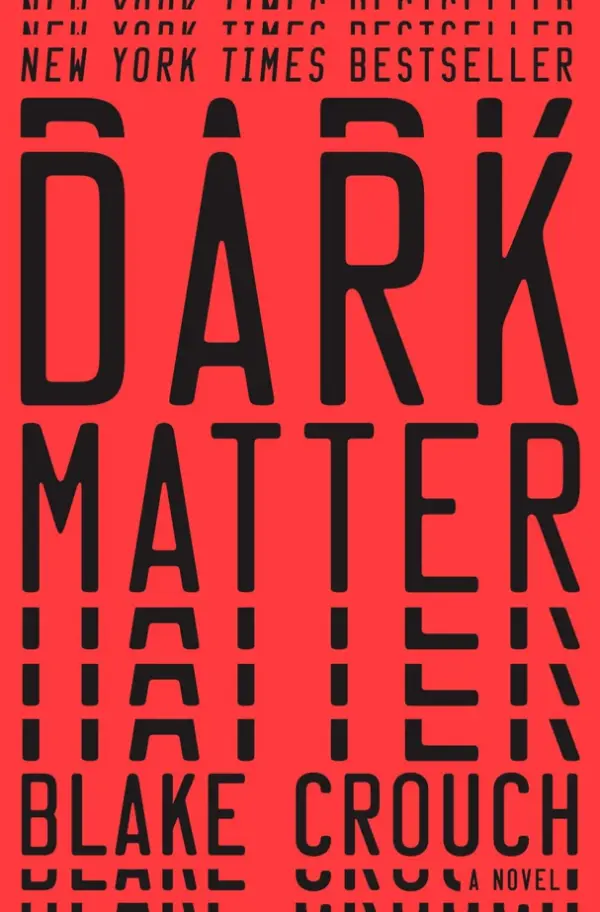
by Blake Crouch
Dark Matter by Blake Crouch is a gripping science fiction thriller where one man is forced to navigate infinite realities to reclaim his life, love, and identity.
Ernest Cline's Ready Player One is set in a dystopian 2045 where most of humanity escapes into the OASIS, a virtual reality universe. When the OASIS creator dies and leaves his fortune hidden in the game, teenager Wade Watts joins millions competing to solve puzzles based on 1980s pop culture. As Wade gets closer to winning, powerful corporations will kill to stop him from claiming the prize that would give him control of the OASIS itself. With over 600,000 Goodreads ratings and Spielberg film adaptation, this became a bestselling love letter to geek culture.
This appeals to Project Hail Mary fans through its puzzle-solving protagonist who succeeds through knowledge, creativity, and refusing to give up against impossible odds. Like Grace reverse-engineering alien technology, Wade must connect disparate pieces of information, think laterally about problems, and apply his extensive knowledge creatively. The challenges require both technical understanding (hacking, gaming systems, virtual reality mechanics) and cultural knowledge.
Cline writes with infectious enthusiasm for his subject matter, similar to Grace's excitement about science. Wade's voice is engaging and funny, making the extensive pop culture references feel like sharing interests with a passionate friend rather than homework. The underdog story - impoverished kid from the stacks taking on powerful corporations - provides satisfying David-vs-Goliath dynamics and emotional investment in Wade's success.
The book is essentially competence porn wrapped in nostalgia - watching Wade apply his expertise to overcome challenges is satisfying in the same way Grace's problem-solving is rewarding. The virtual reality setting allows for creative, video game-like challenges whilst raising questions about escapism, reality, and human connection. For readers who want protagonists who win through knowledge and determination, puzzle-solving adventures with high stakes, and stories celebrating geek culture and passion for learning, this is a fun, fast-paced adventure.
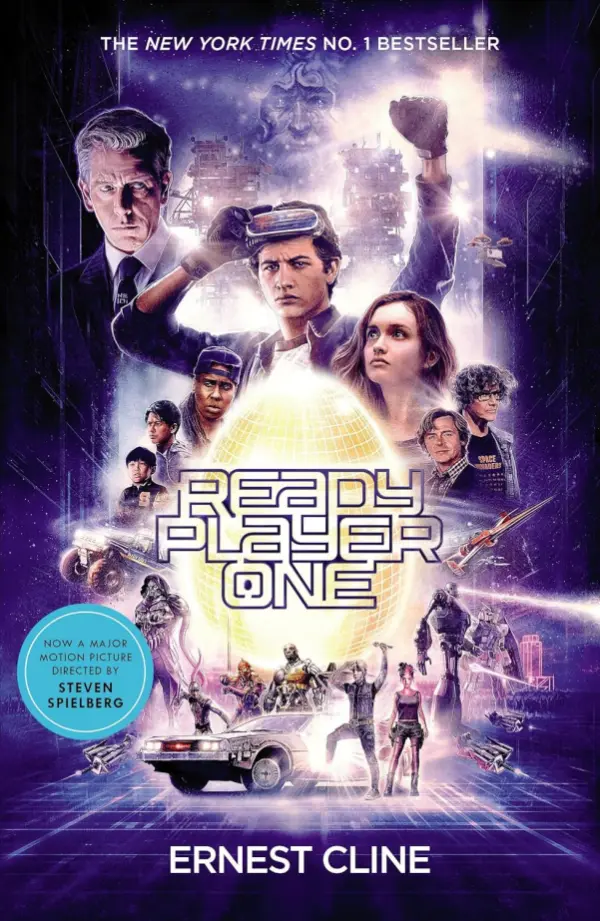
by Ernest Cline
Ready Player One (Book 1)
Ready Player One by Ernest Cline follows Wade Watts hunting for an Easter egg in the OASIS virtual reality universe, requiring mastery of 1980s pop culture. This sci-fi adventure delivers treasure hunts, gaming nostalgia, and underdog-versus-corporation thrills.
Daniel Keyes's Flowers for Algernon follows Charlie Gordon, a man with an intellectual disability who undergoes experimental surgery to increase his intelligence. Through his journal entries, readers watch Charlie transform from simple and eager to brilliant and isolated, then witness the heartbreaking reversal when the treatment proves temporary. With over 700,000 Goodreads ratings and classic status, this Hugo and Nebula winner explores intelligence, humanity, and what makes life valuable.
This is essential for Project Hail Mary readers because it shares the core theme: intelligence isn't about being the smartest but about curiosity, determination, and connection with others. Like Grace, Charlie approaches problems with enthusiasm and creative thinking. As his intelligence increases, Charlie makes scientific breakthroughs, learns languages, and understands complex concepts - but also loses the simple kindness and emotional openness that made him loveable.
The book explores what intelligence means through Charlie's journals, which change dramatically as his IQ shifts. Keyes makes you care deeply about Charlie in all his phases - the simple Charlie eager to learn, the brilliant Charlie pushing boundaries, the Charlie who understands what's coming and can't stop it. The scientific premise raises profound questions about consciousness, humanity, and whether intelligence determines worth.
What makes this relevant is its emotional core about connection and empathy. Charlie's relationship with Algernon (the mouse who underwent the procedure first) provides the same kind of interspecies bond that Grace and Rocky share. The book is ultimately about how we treat others, how we define humanity, and what survives when everything else is stripped away. For readers who appreciated Project Hail Mary's emotional heart beneath the science, this is a classic that proves science fiction can be deeply human.
Robert A. Heinlein's The Moon Is a Harsh Mistress follows a lunar colony's revolution against Earth's oppressive rule, narrated by computer technician Manuel Garcia "Mannie" O'Kelly-Davis. With the help of MYCROFT (Mike), a self-aware computer, political agitator Wyoming Knott, and rational professor Bernardo de la Paz, Mannie helps orchestrate a rebellion built on physics, probability, and the undeniable fact that Luna can drop rocks on Earth but Earth can't efficiently send forces to the Moon. With over 100,000 Goodreads ratings and Hugo Award win, this is one of Heinlein's most beloved works.
This appeals to Project Hail Mary fans through its emphasis on solving political and military problems through science and engineering. Like Grace calculating orbital mechanics and energy requirements, Heinlein's characters use physics, economics, and game theory to wage revolution. The book is filled with characters who think creatively about how to use available resources and scientific principles to achieve seemingly impossible goals - precisely the kind of problem-solving Weir's readers love.
Mike the computer provides an AI perspective that's warm, funny, and increasingly human - similar to how Rocky is alien but relatable. Mike's development from tool to person to friend parallels the book's themes about freedom, consciousness, and what defines humanity. The relationship between Mannie and Mike provides emotional grounding for the larger revolutionary story, with genuine affection developing between man and machine.
Heinlein writes libertarian politics and unconventional social structures (including plural marriage) that some modern readers find challenging, and the book reflects its 1960s publication date in both style and social assumptions. But the core appeal - competent people using science and rational thinking to solve big problems, exploration of consciousness and personhood, emphasis on freedom and self-determination - remains powerful. For readers who want classic hard sci-fi with problem-solving protagonists and AI companionship, this is essential genre reading.
Mary Doria Russell's The Sparrow begins when humanity receives proof of extraterrestrial life through beautiful music broadcast from Alpha Centauri. The Jesuits quickly organize a mission, and linguist Emilio Sandoz joins the expedition to make first contact. The novel alternates between the mission and Sandoz's traumatic return years later - the sole survivor of a disaster he can barely discuss, suffering profound physical and spiritual wounds. With over 70,000 Goodreads ratings and critical acclaim, this thoughtful first contact novel explores faith, communication, and cultural misunderstanding.
This is perfect for Project Hail Mary readers because it's fundamentally about first contact and the challenges of communicating across species barriers. Like Grace and Rocky developing their communication system through music and persistence, Russell's characters must decode an alien language and culture with limited context. The linguistic and anthropological challenges are treated seriously, showing how assumptions based on human experience can lead to catastrophic misunderstandings with truly alien civilizations.
The book balances scientific rigor with profound emotional and philosophical depth. Russell (who has a PhD in biological anthropology) brings expertise to the world-building and first contact protocols whilst exploring how contact with the alien changes everyone involved. The Jesuits bring unique perspectives - they're scientists who also grapple with theological questions about God's purpose in leading them to this encounter and whether faith survives when everything goes wrong.
What distinguishes this from Project Hail Mary's optimism is its unflinching examination of how first contact might go terribly, tragically wrong despite best intentions. The framing device - knowing the mission ended in disaster whilst reading about its hopeful beginning - creates terrible dramatic irony. For readers who want thoughtful first contact fiction that takes communication seriously, explores the philosophical implications of alien life, and features characters using science and intelligence whilst remaining deeply human, this is profound and devastating.
Arthur C. Clarke's Rendezvous with Rama follows a team of explorers boarding Rama, a mysterious cylindrical alien spacecraft passing through the solar system. With limited time before Rama's trajectory takes it back to deep space, Commander Norton and his crew must explore the enormous, seemingly abandoned vessel and understand its purpose before it's gone forever. With over 200,000 Goodreads ratings and multiple Hugo and Nebula wins, this is Clarke's masterpiece of sense-of-wonder science fiction.
This appeals to Project Hail Mary fans through its emphasis on scientific exploration and problem-solving. Like Grace investigating the astrophage or Rocky's biology, Clarke's characters approach the alien artifact methodically, using physics and rational observation to piece together how Rama works. The exploration feels genuinely scientific - they test hypotheses, measure carefully, and draw conclusions based on evidence whilst remaining aware of how little they truly understand.
Clarke excels at creating sense of wonder - the sheer scale and strangeness of Rama feels genuinely alien. The cylindrical world with its own gravity, geography, and mysterious automated systems provides endless fascination. The characters' competence and curiosity mirrors Grace's approach to problems: observe carefully, think creatively, respect what you don't understand. The cooperative multinational crew working together feels refreshingly drama-free compared to many sci-fi crews.
What makes this classic is Clarke's restraint - Rama remains mysterious, with more questions than answers by the end. The aliens never appear; their purpose remains unclear. This frustrated some readers but others find it profound - sometimes the universe doesn't provide tidy explanations, and wonder itself is valuable. The sequels (co-written with Gentry Lee) provide answers but divided opinions. For readers who want classic hard sci-fi focused on exploration and discovery, with competent characters using science to understand the incomprehensible, this is essential reading from a grandmaster.
These thirteen books capture different aspects of what made Project Hail Mary so beloved: the joy of scientific problem-solving, the warmth of unlikely friendships, the optimism that intelligence and cooperation can overcome impossible odds, and the sheer page-turning compulsion of watching competent characters think their way through extraordinary challenges. Whether you're drawn to lone survivors using science to stay alive, first contact stories about communication across difference, puzzle-solving adventures with high stakes, or simply well-explained science wrapped in engaging narratives, these books promise the same kind of addictive reading experience. So grab the next book on your list, settle in somewhere comfortable, and prepare to science your way through your next all-nighter - because once you start, you won't be able to stop until you've solved the mystery, saved humanity, or at least figured out one more impossible problem. Jazz hands!
Andy Weir
Average Goodreads rating4.6
Andy Weir
Average Goodreads rating4.6
Adrian Tchaikovsky
Children of Time, book 1
Average Goodreads rating4.5
Blake Crouch
Average Goodreads rating4.3
Blake Crouch
Average Goodreads rating4.4
Ernest Cline
Ready Player One, book 1
Average Goodreads rating4.6
Occasional emails with new recommendations, series news and trope round-ups.