
Skyward
Brandon Sanderson
Skyward, book 1
Average Goodreads rating4.6

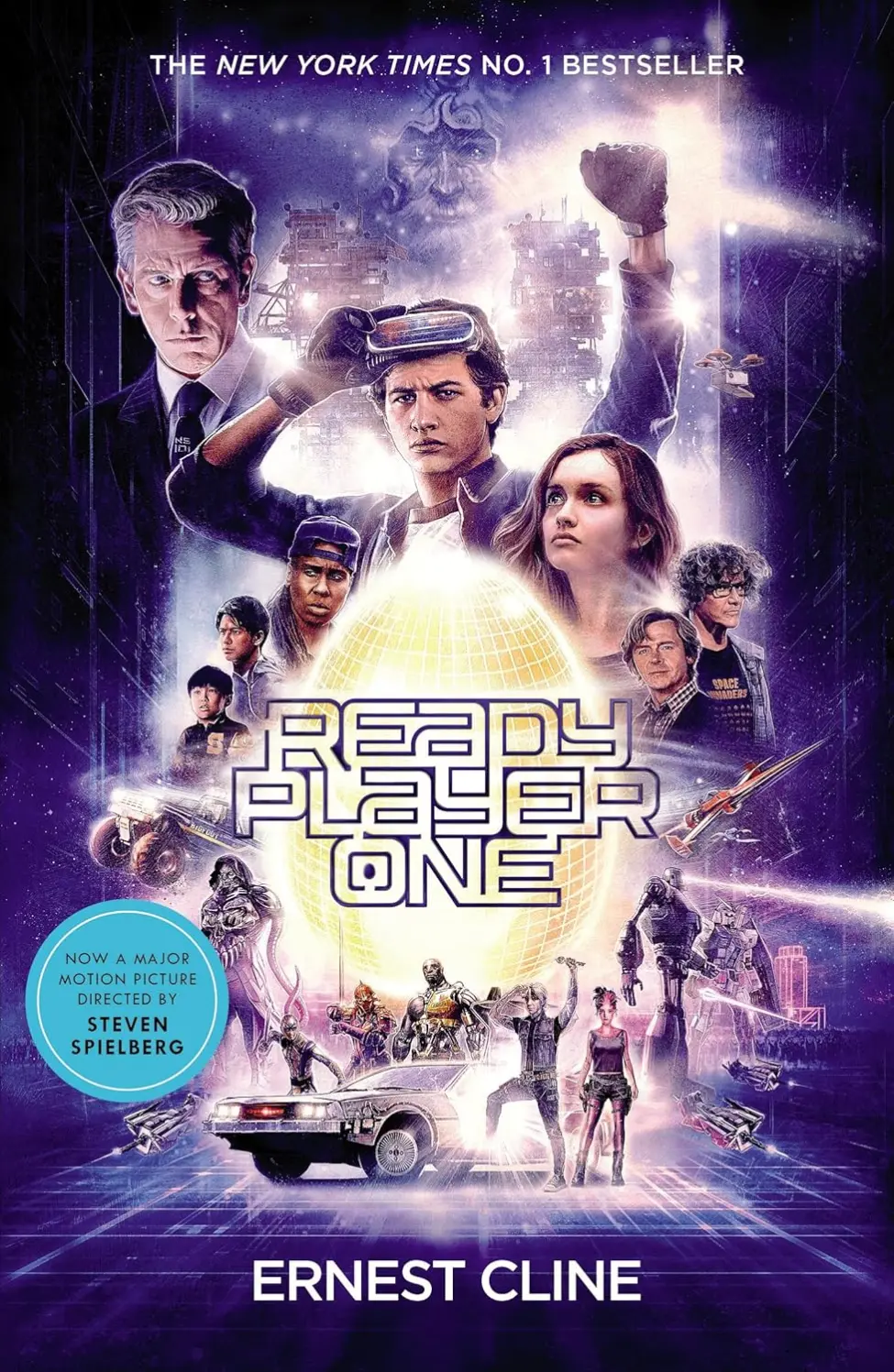
Book 1 in Ready Player One
by Ernest Cline
We independently select and recommend books. Purchases made through our links may earn us a commission, at no extra cost to you. Prices and availability are set by each retailer.
Ready Player One by Ernest Cline follows Wade Watts hunting for an Easter egg in the OASIS virtual reality universe, requiring mastery of 1980s pop culture. This sci-fi adventure delivers treasure hunts, gaming nostalgia, and underdog-versus-corporation thrills.
Tagged on the series as a whole, so not every book will feature each one.
Ready Player One is Ernest Cline's 2011 science fiction novel that became a cultural phenomenon by channeling Gen X nostalgia into a propulsive treasure hunt adventure set in humanity's most immersive virtual reality universe. Following Wade Watts, a teenage orphan living in poverty who finds purpose hunting for the ultimate Easter egg hidden in the OASIS - a prize that includes vast fortune and control of the virtual world where most of humanity now spends their time - the novel combines video game culture, 1980s pop culture references, and underdog-versus-corporation conflict into an accessible sci-fi story that resonated with readers across generations. The 2018 Steven Spielberg film adaptation brought the story to even wider audiences, though Cline's novel offers deeper exploration of the virtual world and more extensive nostalgic references.
The year is 2045, and the world has become a dystopian nightmare - fossil fuels depleted, climate change ravaging the planet, wealth inequality at extremes, and most people living in poverty stacks (literally trailers stacked on top of each other). Escape comes through the OASIS, a massive virtual reality universe created by eccentric genius James Halliday. In the OASIS, people attend school, work jobs, socialize, fall in love, and live entire lives across countless themed worlds where imagination becomes reality through digital immersion.
When Halliday dies, he leaves a video will announcing a contest: he's hidden an Easter egg somewhere in the OASIS, and whoever finds it inherits his fortune (hundreds of billions) and control of the OASIS itself. The hunt requires deep knowledge of Halliday's obsessions - particularly 1980s pop culture including arcade games, adventure games, movies, television, and music. For five years, no one finds the first of three keys required to access the egg, until Wade Watts - using his avatar name Parzival - makes a breakthrough by understanding a clue everyone else missed.
Wade lives in the stacks outside Columbus, Ohio, attending school in the OASIS whilst spending every spare moment studying Halliday's life and favorite media. He's memorized dialogue from WarGames, mastered Pac-Man and Joust, and can quote Monty Python. When he finds the Copper Key, Wade becomes celebrity gunter (egg hunter) whilst painting a target on his back. Innovative Online Industries (IOI) - a sinister corporation that wants to monetize and control the OASIS - will do anything to win, including murder in the real world.
Cline structures the novel as three-part treasure hunt, each key requiring Wade to demonstrate mastery of different aspects of '80s culture - playing perfect games of classic arcade titles, reenacting WarGames, navigating Dungeons & Dragons modules, or proving knowledge of Rush albums and John Hughes films. The challenges allow Cline to lovingly detail the pop culture artifacts whilst creating genuine tension as Wade competes against Art3mis (a famous female gunter he's crushing on), Aech (his best friend whom he's never met in person), and IOI's army of corporate gunters.
The virtual reality world-building is Cline's triumph. The OASIS feels lived-in and detailed - planets themed after specific franchises, schools where avatars attend classes, the economy and culture that's developed. Wade's life is more real in the OASIS than reality, raising questions about escapism's appeal when actual life offers little hope.
Supporting characters include the High Five (top gunters including Wade, Art3mis, and Aech), IOI's villain Nolan Sorrento, and Halliday himself through posthumous clues and autobiography.
Themes of escapism versus reality, nostalgia as comfort, geek knowledge as valuable, corporate control versus individual freedom, and virtual identity run throughout.
The ending provides both treasure hunt resolution and commentary on balancing virtual and real life.
Brandon Sanderson
Skyward, book 1
Average Goodreads rating4.6
Adam Silvera
They Both Die at the End, book 1
Average Goodreads rating4.5

Jay Kristoff
LIFEL1K3, book 1
Average Goodreads rating4.3

Arkady Martine
Teixcalaan, book 1
Average Goodreads rating4.3

Adrian Tchaikovsky
Children of Time, book 1
Average Goodreads rating4.5

Octavia E. Butler
Parable, book 1
Average Goodreads rating4.4
Still Looking?
Further down our similarity list, but still sharing tropes and genres with this book.

Megan O'Keefe
The Scorched Continent, book 1
Average Goodreads rating4.1
Buy from Amazon (opens Amazon in a new tab)
Neal Shusterman
Arc of a Scythe, book 1
Average Goodreads rating4.5
Buy from Amazon (opens Amazon in a new tab)
Pierce Brown
Red Rising, book 1
Average Goodreads rating4.5
Buy from Amazon (opens Amazon in a new tab)Ernest Cline is a bestselling sci-fi author known for nostalgic pop culture-infused stories. Celebrated for Ready Player One and Ready Player Two, he crafts virtual reality adventures, 1980s nostalgia, and treasure hunts in immersive digital worlds.
Books, series and tropes by Ernest Cline
If you devoured Project Hail Mary's brilliant science, loveable protagonist, and unexpected friendship, discover 13 hard sci-fi books with the same addictive blend of problem-solving and heart.
Ready Player One
Buy from Amazon (opens Amazon in a new tab)Occasional emails with new recommendations, series news and trope round-ups.