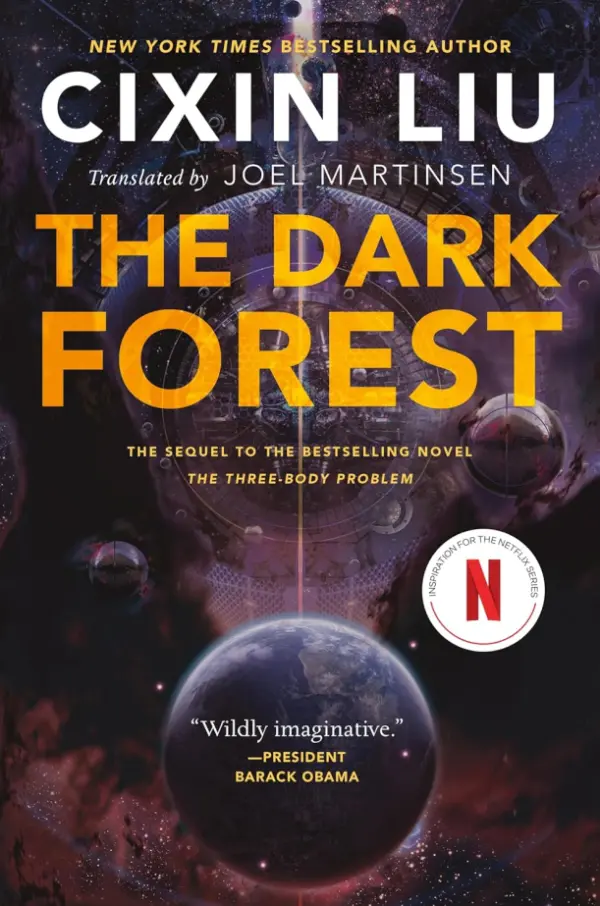
The Dark Forest
Liu Cixin
The Three-Body Problem, book 2
Average Goodreads rating4.4
- Deception
- Twist Ending

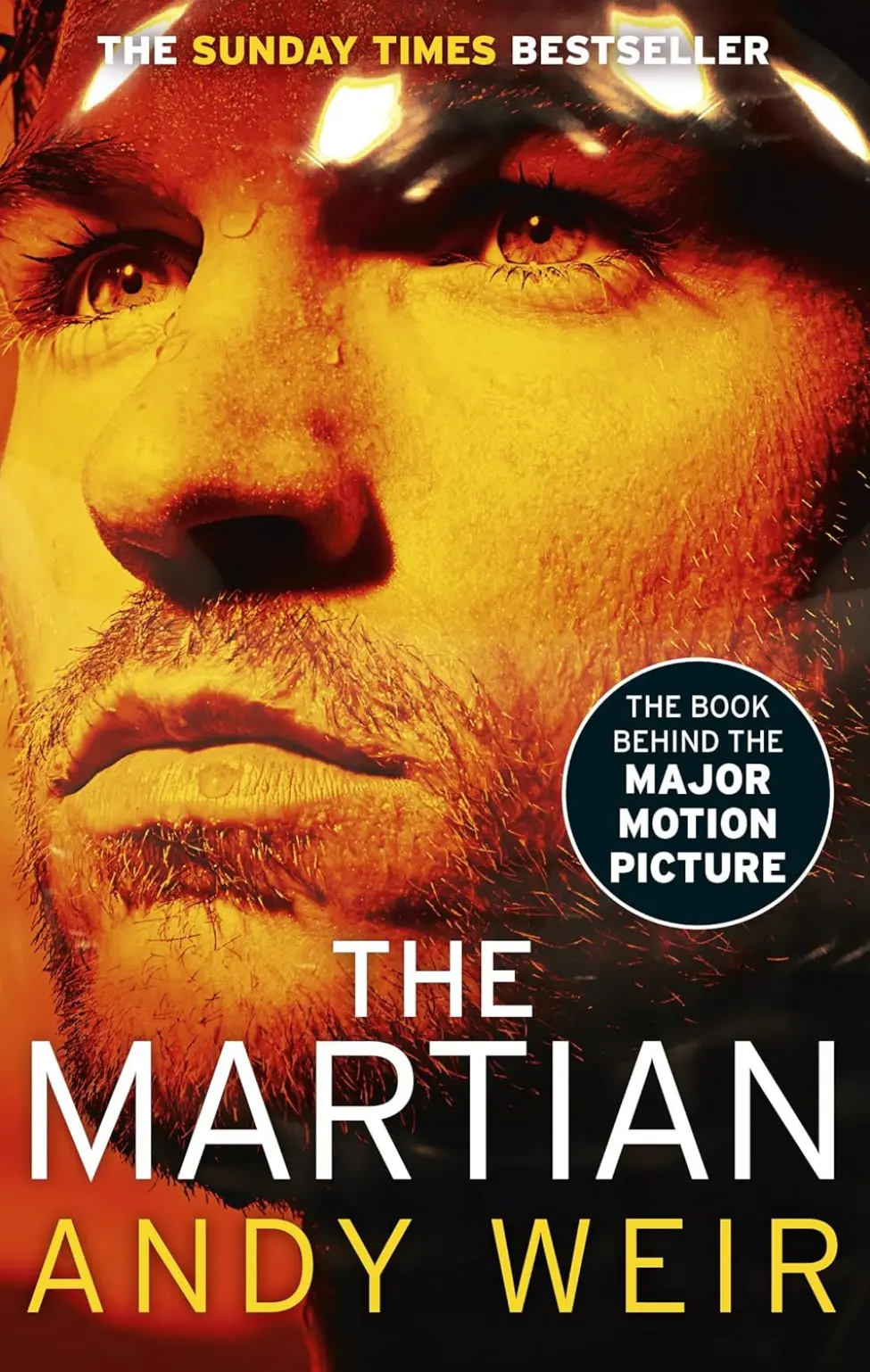
by Andy Weir
We independently select and recommend books. Purchases made through our links may earn us a commission, at no extra cost to you. Prices and availability are set by each retailer.
The Martian by Andy Weir follows astronaut Mark Watney, stranded alone on Mars after his crew evacuates believing him dead. This hard sci-fi survival story delivers humor, problem-solving through science, and humanity's determination to bring him home.
The Martian is Andy Weir's 2011 (self-published) and 2014 (traditionally published) hard science fiction novel that became a cultural phenomenon by proving meticulously researched, scientifically accurate space survival stories could achieve massive mainstream success. Following astronaut Mark Watney as he's stranded alone on Mars after a dust storm forces his crew to evacuate whilst believing him dead, the novel delivers Weir's signature combination of technical problem-solving, humor in the face of impossible odds, and optimistic view of human ingenuity and international cooperation. Originally self-published as a 99-cent Kindle book after being serialized free on Weir's website, it found massive audience through word-of-mouth before Crown Publishing acquired it, leading to the 2015 Ridley Scott film starring Matt Damon that introduced Weir to even wider audiences.
The premise is elegantly simple and terrifying: Mark Watney, botanist and engineer on the Ares 3 Mars mission, is impaled by debris during a massive dust storm. His crew, believing him dead when his biomonitor fails and unable to find his body in the storm, makes the agonizing decision to abort the mission and evacuate. Mark wakes up alone on a planet where the atmosphere will kill him in minutes, where the next Mars mission won't arrive for four years, and where he has supplies designed to last 31 days for six people.
Weir structures the novel primarily through Mark's log entries, creating intimate first-person narration as Mark documents his survival attempts whilst maintaining sanity through humor. Mark's voice - self-deprecating, profane, determinedly optimistic - becomes the novel's greatest strength. He faces each catastrophic problem by breaking it down: he needs food, water, oxygen, heat, and eventually rescue. The botanist skills that made him "least important" crew member become essential as he figures out how to grow potatoes in Martian soil using his own waste as fertilizer.
The "science the shit out of this" approach means Mark applies rigorous methodology to every problem. Weir researched extensively to ensure plausibility - the chemistry for creating water, the calculations for food production, the engineering for modifying equipment all follow real science. The technical explanations are detailed but digestible, delivered through Mark's internal monologue explaining problems and solutions in ways that feel like brilliant friend walking you through fascinating challenges rather than textbook.
The narrative alternates between Mark's logs and third-person sections following NASA's discovery he's alive and their desperate efforts to mount rescue, plus his crew's reactions learning they left him behind. These sections show international cooperation - NASA, China's space agency, and others working together because saving Mark transcends nationalism. The contrast between Mark's isolation (working alone with months between communications due to light-speed lag) and Earth's collective effort creates emotional stakes beyond mere survival.
Supporting characters include Mark's crew dealing with guilt and determination to save him, NASA administrators balancing public relations with genuine crisis, engineers solving impossible problems under deadline, and scientists worldwide contributing expertise.
Themes of human ingenuity triumphing over impossible odds, problem-solving through scientific methodology, humor as survival mechanism, international cooperation, and optimistic view that humans are fundamentally good and will work together to save one person run throughout.
The ending delivers both technical satisfaction and emotional payoff.
Liu Cixin
The Three-Body Problem, book 2
Average Goodreads rating4.4
Robert A. Heinlein
Average Goodreads rating4.4
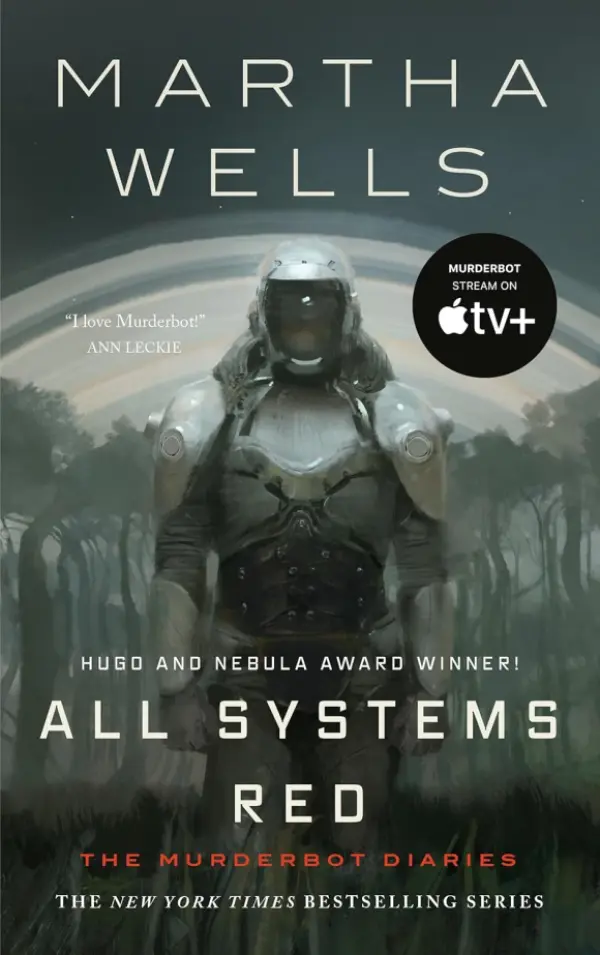
Martha Wells
The Murderbot Diaries, book 1
Average Goodreads rating4.4
Neal Stephenson
Average Goodreads rating4.2
Stephen King & Richard Bachman
Average Goodreads rating4.3
Rebecca Roanhorse
The Sixth World, book 1
Average Goodreads rating4.3
Still Looking?
Further down our similarity list, but still sharing tropes and genres with this book.
Margaret Atwood
The Handmaid's Tale, book 1
Average Goodreads rating4.4
Buy from Amazon (opens Amazon in a new tab)
Blake Crouch
The Wayward Pines Trilogy, book 1
Average Goodreads rating4.1
Buy from Amazon (opens Amazon in a new tab)
Cormac McCarthy
Average Goodreads rating4.4
Andy Weir is a bestselling author known for hard science fiction combining scientific accuracy with humour and survival stories. Famous for The Martian, he crafts technically detailed yet accessible sci-fi featuring problem-solving protagonists and optimistic futures.
Books, series and tropes by Andy Weir
If you devoured Project Hail Mary's brilliant science, loveable protagonist, and unexpected friendship, discover 13 hard sci-fi books with the same addictive blend of problem-solving and heart.
The Martian
Buy from Amazon (opens Amazon in a new tab)Occasional emails with new recommendations, series news and trope round-ups.