
The Atlas Six
Olivie Blake
Atlas, book 1
Average Goodreads rating4.0

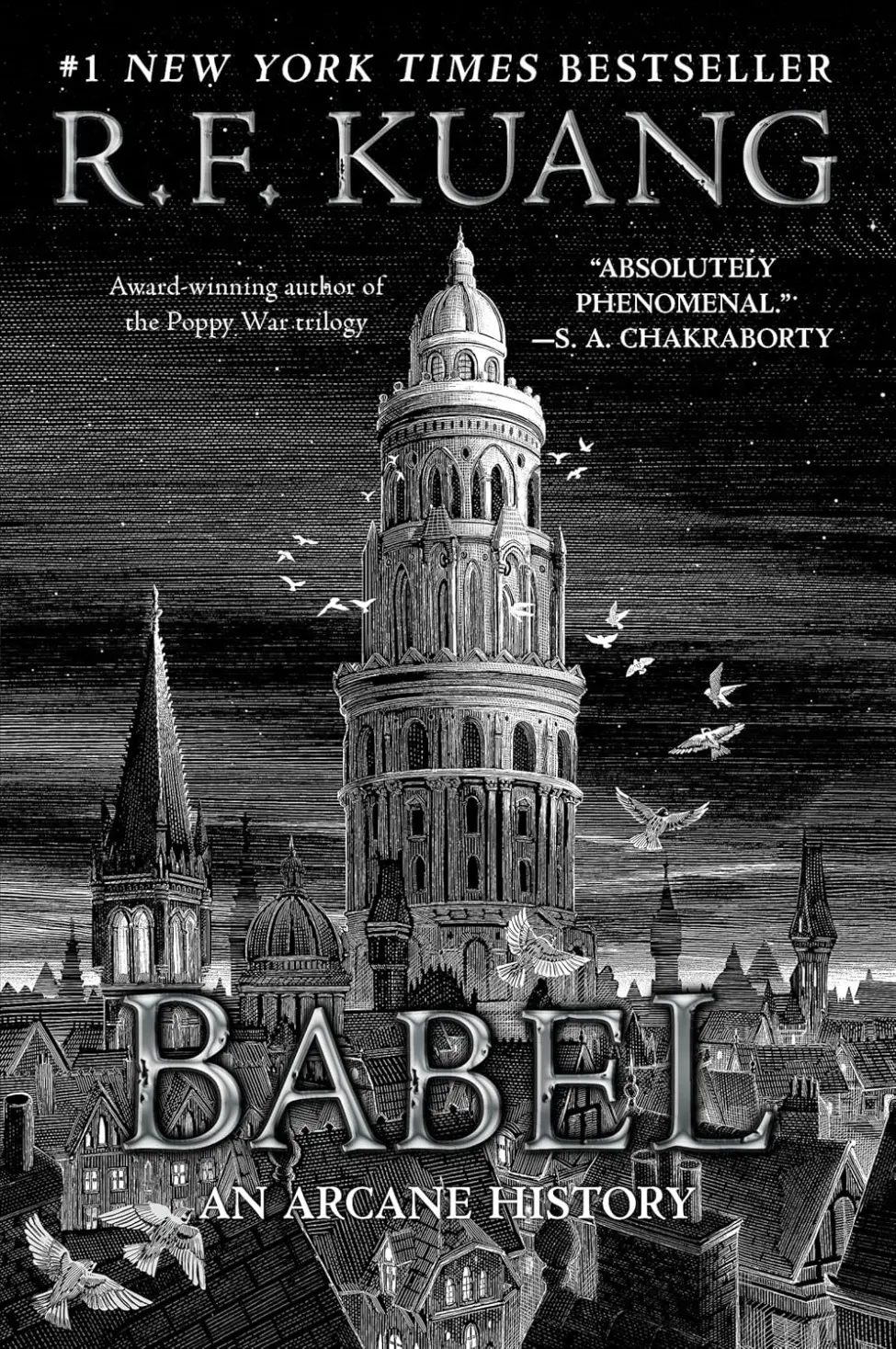
by R. F. Kuang
We independently select and recommend books. Purchases made through our links may earn us a commission, at no extra cost to you. Prices and availability are set by each retailer.
Babel by R.F. Kuang is an alternate history dark academia fantasy set in 1830s Oxford, where translation magic fuels empire and a group of scholars must choose between the institution that made them and the people it exploits.
Babel by R.F. Kuang is a novel that arrives wearing the clothes of a fantasy and turns out to be something considerably more searching - a book about language, empire, complicity, and the violence that elegant institutions require in order to remain elegant. Published in 2022 to enormous critical and popular acclaim, it won the Nebula Award for Best Novel and became one of the most widely discussed works of speculative fiction of the decade, drawing in readers who had never previously picked up a fantasy novel and holding them for every one of its six-hundred-plus pages.
The world of Babel is our own, displaced slightly into an alternate history in which silver-working - a form of translation magic - has become the engine of the British Empire's power. Silver bars engraved with word pairs in different languages generate a force derived from the untranslatable gap between them: the meaning that is always lost when one language becomes another. The Royal Institute of Translation at Oxford, known as Babel, is the centre of this enterprise - the institution that trains the translators who keep empire running, and whose beautiful buildings and ancient traditions exist in direct and carefully unacknowledged relationship with the exploitation of the peoples whose languages they harvest.
Into this world arrives Robin Swift, brought to England from Canton as a child by a silver-tongued Oxford professor, raised in the language and culture of his adopted country, and eventually admitted to Babel itself as one of its rare non-white scholars. Robin's position is the novel's central, irreducible tension: he is precisely valuable to Babel because of what empire has taken from him, because the Chinese he carries in his memory holds untranslatable gaps that English cannot replicate. The dark academia atmosphere of Oxford - its beauty, its traditions, its forbidden knowledge and intoxicating intellectual life - is rendered with real seductiveness, precisely so that the reader can feel what Robin feels: the pull of belonging to something extraordinary, and the growing, sickening awareness of what that belonging costs.
The four scholars at the heart of Babel - Robin and his cohort, each carrying their own double inheritance of colonised language and imperial education - form one of the most vivid and carefully drawn friend groups in recent fiction. Their relationships, their arguments, their loyalties, and the slow fracturing of those loyalties as moral dilemma accumulates around them, give the novel its emotional core. Kuang is unsparing in her depiction of the choices available to people who benefit from a system whilst being damaged by it, and the question of whether complicity and rebellion against oppressive system can coexist in the same person is one the novel refuses to answer easily.
The political and social commentary that runs through every chapter is not subtext - it is text, and deliberately so. Kuang has spoken about writing Babel as a direct engagement with the history of British colonialism and the specific mechanisms by which academic prestige launders exploitation into tradition. The novel is angry, and it earns its anger; but it is also mournful and tender, and the betrayal - of persons, of ideals, of the possibility of a world that might have been otherwise - gives it an emotional weight that lingers long after the story ends.
Babel is a BookTok sensation and award winning book that has drawn comparisons to Susanna Clarke and Kazuo Ishiguro, and it rewards the reader who comes to it prepared to think as well as feel. It is not a comfortable read - it is not designed to be - but it is a deeply, consistently absorbing one. For readers who want fantasy that takes the full measure of history and does not look away, it stands as one of the essential novels of its era.
Olivie Blake
Atlas, book 1
Average Goodreads rating4.0
Adrian Tchaikovsky
The Tyrant Philosophers, book 2
Average Goodreads rating4.5
V. E. Schwab
Villains, book 1
Average Goodreads rating4.2
Jennifer L. Armentrout
Blood And Ash, book 1
Average Goodreads rating4.6
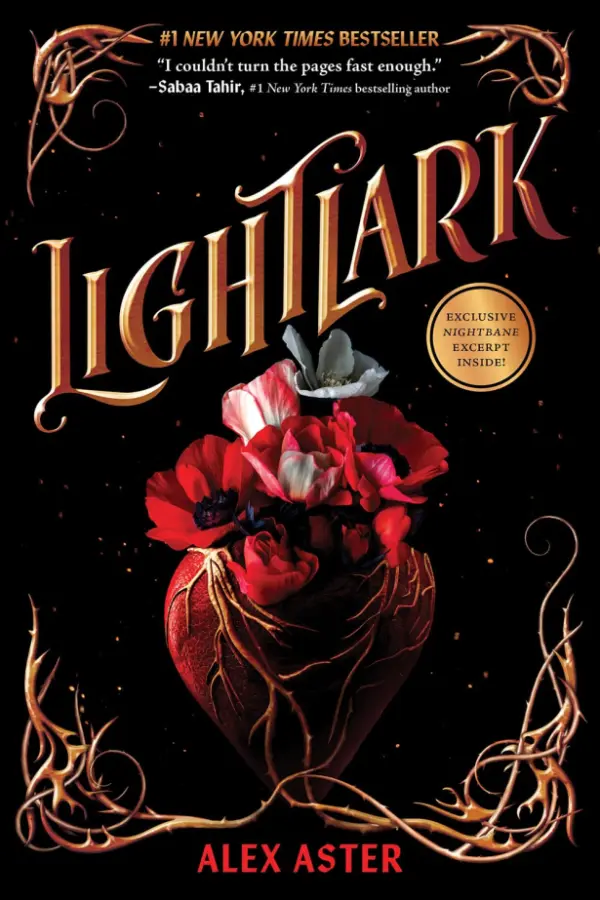
Alex Aster
Lightlark, book 1
Average Goodreads rating4.0

Sarah J. Maas
Crescent City, book 1
Average Goodreads rating4.7
Still Looking?
Further down our similarity list, but still sharing tropes and genres with this book.
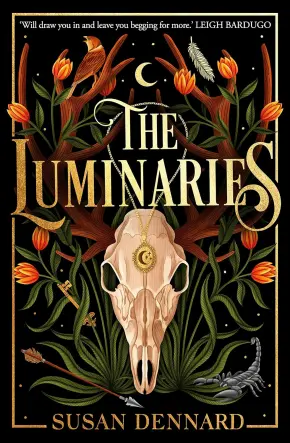
Susan Dennard
The Luminaries, book 1
Average Goodreads rating4.3

N. K. Jemisin
The Broken Earth, book 1
Average Goodreads rating4.4
Buy from Amazon (opens Amazon in a new tab)
James Islington
Hierarchy, book 1
Average Goodreads rating4.7
Buy from Amazon (opens Amazon in a new tab)R.F. Kuang is a Chinese-American author of fantasy and literary fiction. From the brutal Poppy War trilogy to the award-winning Babel and the razor-sharp Yellowface, her books are intelligent, provocative, and impossible to ignore.
Books, series and tropes by R. F. Kuang
Candlelit libraries, secret societies, forbidden knowledge, and characters who are brilliant, beautiful, and utterly dangerous. The best dark academia books, from gothic classics to modern obsessions.
Occasional emails with new recommendations, series news and trope round-ups.