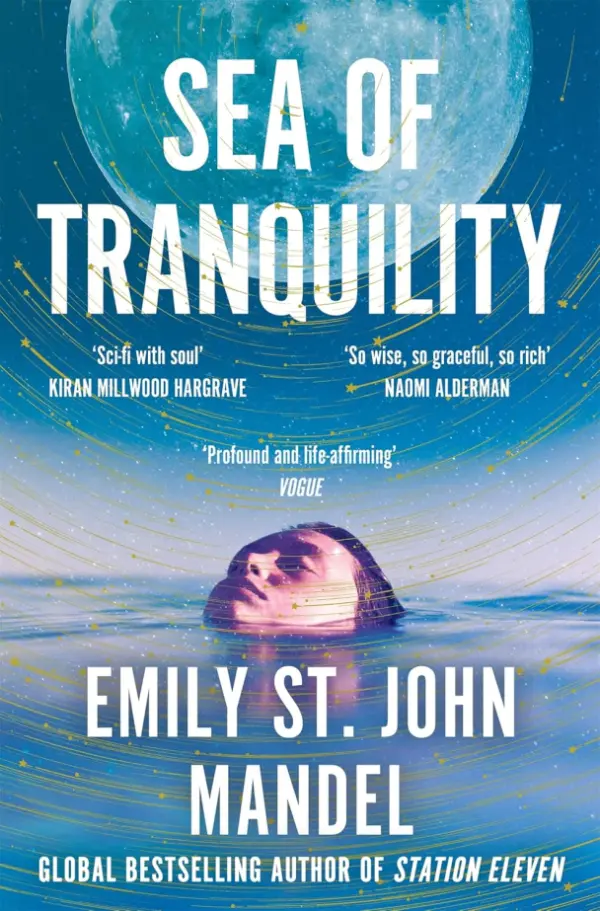
Sea of Tranquility
Average Goodreads rating4.3
- Time Travel

Author · Canadian
Emily St. John Mandel is an acclaimed author of literary speculative fiction, known for elegant, interconnected novels exploring art, memory, and survival.

New to Emily St. John Mandel? A popular place to start
Station Eleven by Emily St. John Mandel is a literary post-apocalyptic novel exploring survival, memory, and art after a global pandemic reshapes the world.
Picked from Emily St. John Mandel’s most widely rated books on Goodreads, starting at the beginning of its series.
Retailer links may earn Trope Trove a commission, at no extra cost to you.
Not part of a series listed on Trope Trove
Average Goodreads rating4.3
Average Goodreads rating4.2

Average Goodreads rating4.1
Emily St. John Mandel is an award-winning Canadian author celebrated for her distinctive blend of literary fiction and speculative storytelling. Her novels are known for their quiet intensity, interconnected narratives, and thoughtful exploration of memory, art, and human resilience in the face of disruption. She is best known for Station Eleven, a modern classic that redefined post-apocalyptic fiction through its focus on culture and connection rather than catastrophe.
Mandel’s writing occupies the space between literary fiction and speculative fiction, often incorporating elements of dystopia, mystery, and science fiction without relying on genre conventions. Her worlds feel intimate and reflective, prioritising atmosphere, character, and theme over spectacle. Even when depicting global collapse or financial ruin, her focus remains firmly on individual lives and the fragile threads that bind them together.
A defining feature of Mandel’s work is her use of nonlinear structure. Timelines shift fluidly, perspectives overlap, and characters reappear across novels in unexpected ways. This interconnected approach creates a sense of a shared literary universe, where events echo across time and stories respond to one another. Rather than presenting a single authoritative narrative, Mandel invites readers to assemble meaning from fragments.
Recurring themes in her fiction include art as survival, memory and identity, and the persistence of beauty in broken worlds. In Station Eleven, a traveling symphony performs Shakespeare after societal collapse, underscoring Mandel’s belief that creativity is not a luxury but a necessity. Art, in her work, becomes a way of preserving humanity when structures fail.
Mandel frequently examines isolation and connection. Her characters are often adrift - geographically, emotionally, or socially - searching for meaning after loss. Yet her novels resist nihilism. Even in bleak circumstances, Mandel foregrounds moments of grace: a performance remembered, a relationship rekindled, a story passed on.
Her prose style is restrained, precise, and lyrical without excess. Mandel favours clarity and emotional resonance over dramatic flourish, allowing small details to carry weight. This understated approach heightens impact, particularly in moments of quiet devastation or fleeting hope.
Although her work often engages with speculative scenarios such as pandemics or societal collapse, Mandel is less interested in the mechanics of disaster than in its aftermath. She explores how people adapt, what they choose to remember, and which values endure. This emphasis on aftermath rather than apocalypse distinguishes her from traditional genre dystopias.
Emily St. John Mandel’s novels are ideal for readers who enjoy Science Fiction and Literary Fiction that are contemplative, character-driven, and thematically rich. Elegant and emotionally resonant, her work offers a meditation on survival that finds meaning not in rebuilding systems - but in preserving stories, art, and human connection.

Octavia E. Butler
Parable, book 1
Average Goodreads rating4.4

Octavia E. Butler
Parable, book 2
Average Goodreads rating4.5

Octavia E. Butler
The Xenogenesis Trilogy, book 1
Average Goodreads rating4.3

Octavia E. Butler
The Xenogenesis Trilogy, book 2
Average Goodreads rating4.4

Octavia E. Butler
The Xenogenesis Trilogy, book 3
Average Goodreads rating4.4

Jay Kristoff
LIFEL1K3, book 1
Average Goodreads rating4.3

From oppressive regimes to survival games and broken futures, these dystopian books and series explore power, rebellion, and control - and why readers can’t stop searching for stories that hit uncomfortably close to home.
Occasional emails with new recommendations, series news and trope round-ups.