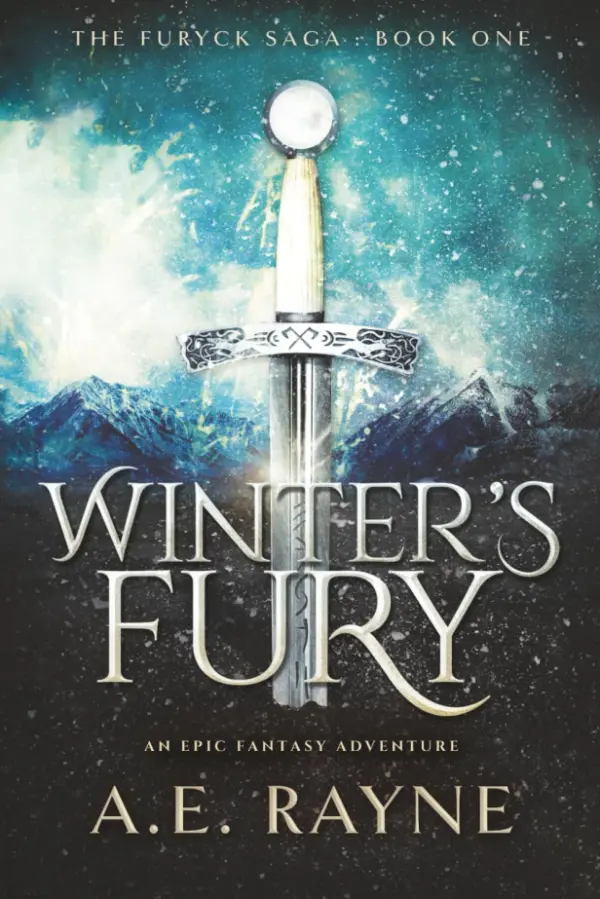
Winter's Fury
A. E. Rayne
The Furyck Saga, book 1
Average Goodreads rating4.2

We independently select and recommend books. Purchases made through our links may earn us a commission, at no extra cost to you. Prices and availability are set by each retailer.
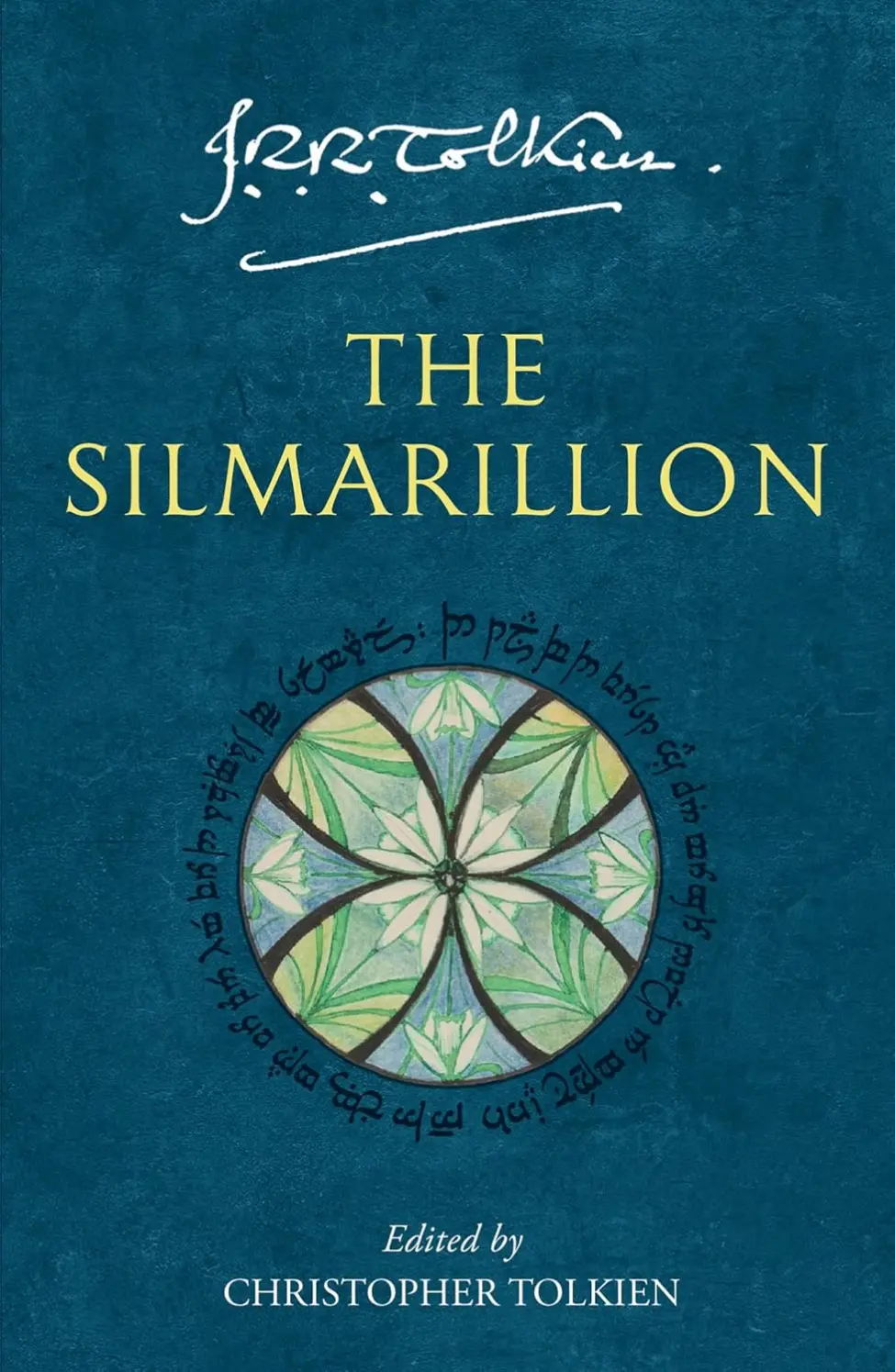
The Silmarillion by J.R.R. Tolkien presents the mythology and deep history of Middle-earth. This posthumously published collection delivers creation myths, First Age epics, and the foundational stories behind The Hobbit and The Lord of the Rings.
The Silmarillion is J.R.R. Tolkien's 1977 posthumously published collection of mythological writings forming the deep background of Middle-earth, edited by his son Christopher Tolkien from decades of his father's notes, drafts, and revisions. Presenting the creation of the universe, the history of the gods and their relationship with Elves and Men, the great wars of the First Age, and the foundational stories that give The Lord of the Rings its weight and resonance, the collection represents Tolkien's most ambitious work - the mythology he spent his entire life building and never considered complete. Essential reading for those seeking to understand Middle-earth's full depth, demanding but extraordinarily rewarding for readers willing to engage with Tolkien operating at his most mythologically serious.
Ainulindalë (The Music of the Ainur) presents Middle-earth's creation myth - how Ilúvatar (God) created the Ainur (angelic beings) and how their music shaped the universe, with Melkor (later Morgoth) introducing discord that Ilúvatar incorporates into a greater design. The section establishes the theological and philosophical framework underlying everything in Middle-earth, demonstrating that Tolkien conceived his secondary world with the same seriousness he applied to real-world mythology.
Valaquenta describes the Valar - the most powerful Ainur who entered the world to shape it - and the Maiar, lesser spiritual beings including Gandalf, Sauron, and the Balrogs. Understanding these beings transforms how readers experience The Lord of the Rings, revealing that its conflicts operate within a cosmic framework of divine beings whose history stretches back to the world's creation.
Quenta Silmarillion forms the collection's heart - the history of the First Age, following the creation of the Silmarils (jewels of incomparable beauty crafted by the Elf Fëanor containing the light of the Two Trees of Valinor), Morgoth's theft of them, and the catastrophic wars that resulted as Fëanor and his sons swore an oath to reclaim the Silmarils at any cost. The stories include some of Tolkien's finest writing - Beren and Lúthien's love story (particularly meaningful as Tolkien identified with it personally), the tale of Turin Turambar expanded in The Children of Húrin, the fall of Gondolin, and the tragic destruction of an age.
Akallabêth describes the downfall of Númenor - the island kingdom of Men destroyed by divine intervention when its people, corrupted by Sauron, attempted to sail to the immortal lands. The story provides the deep background for Aragorn's lineage and the founding of Gondor and Arnor in The Lord of the Rings.
Of the Rings of Power and the Third Age bridges the mythological history to The Lord of the Rings, providing context for the War of the Ring that makes the trilogy's events feel part of a larger pattern.
Tolkien's prose in The Silmarillion adopts archaic, elevated style deliberately recalling Norse and Finnish epic sources - more distant and formal than The Hobbit or The Lord of the Rings, reflecting the work's nature as mythology rather than novel.
Themes of beauty and its loss, the corrupting nature of possessive love, fate and free will, divine providence operating through catastrophe, pride destroying what it seeks to preserve, and the persistence of hope despite overwhelming darkness run throughout.
A. E. Rayne
The Furyck Saga, book 1
Average Goodreads rating4.2
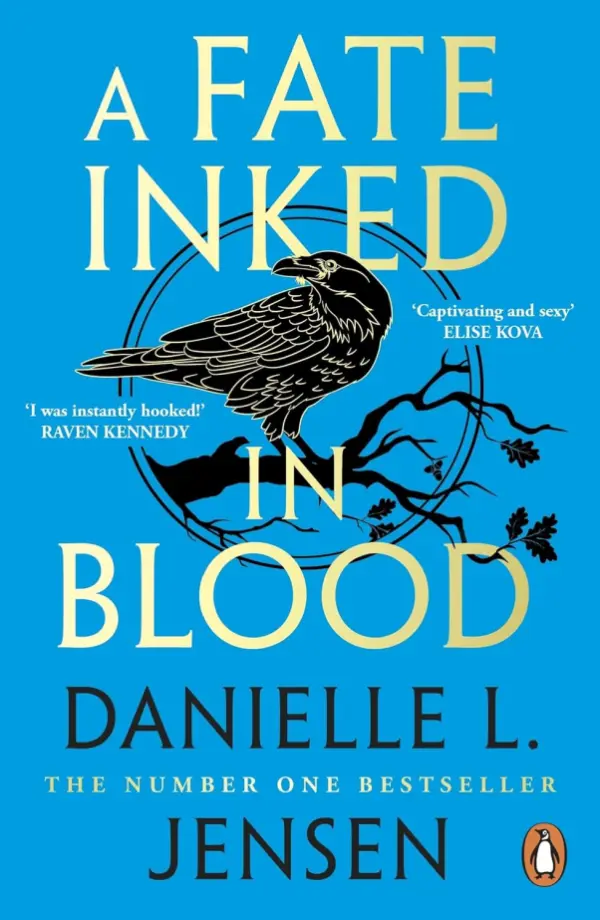
Danielle L. Jensen
Saga of the Unfated, book 1
Average Goodreads rating4.2
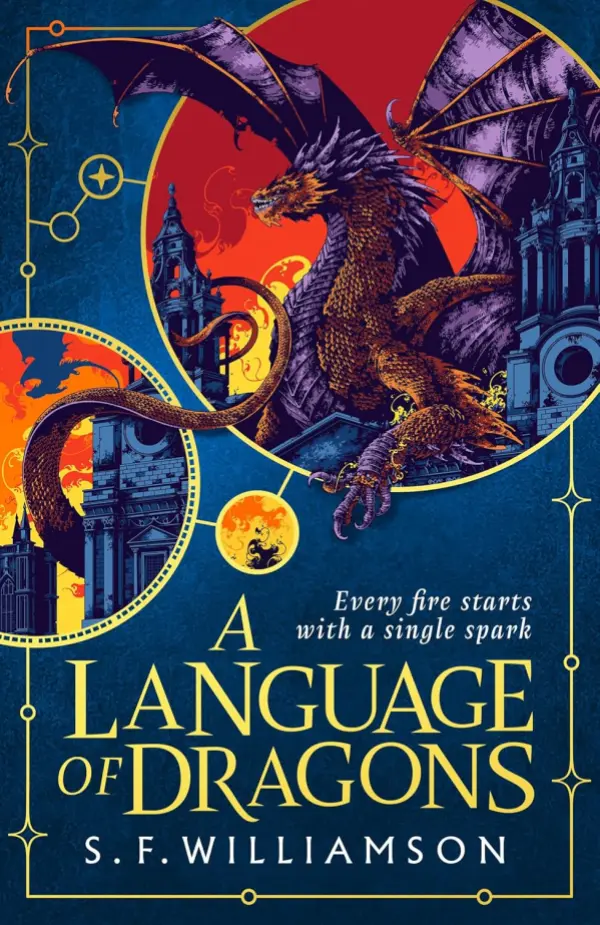
S. F. Williamson
A Language of Dragons, book 1
Average Goodreads rating4.3

George R. R. Martin
A Song of Ice and Fire, book 1
Average Goodreads rating4.7

Samantha Shannon
The Roots of Chaos, book 1
Tui T. Sutherland
Wings of Fire, book 1
Still Looking?
Further down our similarity list, but still sharing tropes and genres with this book.

Hannah Kaner
Fallen Gods, book 1
Average Goodreads rating4.3
Buy from Amazon (opens Amazon in a new tab)
Sarah J. Maas
A Court of Thorns and Roses (ACOTAR), book 1
Average Goodreads rating4.5
Buy from Amazon (opens Amazon in a new tab)
Fonda Lee
The Green Bone Saga, book 1
Average Goodreads rating4.3
Buy from Amazon (opens Amazon in a new tab)J.R.R. Tolkien was the father of modern fantasy, creator of Middle-earth and author of The Hobbit and The Lord of the Rings. His meticulous worldbuilding, invented languages, and mythological depth established the template for epic fantasy that endures today.
Books, series and tropes by J. R. R. TolkienThe Silmarillion
Buy from Amazon (opens Amazon in a new tab)Occasional emails with new recommendations, series news and trope round-ups.