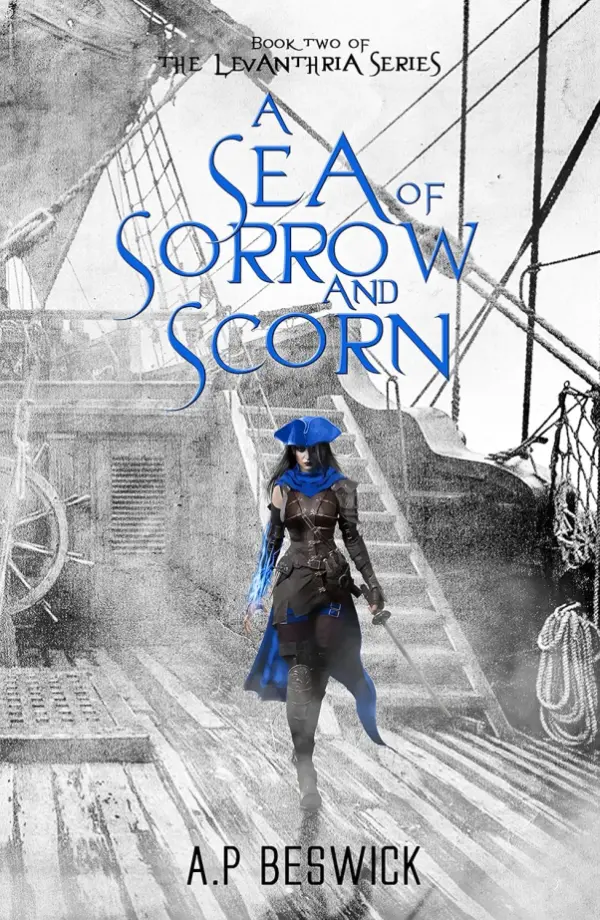
A Sea Of Sorrow And Scorn
A. P. Beswick
The Levanthria Series, book 2
Average Goodreads rating3.9

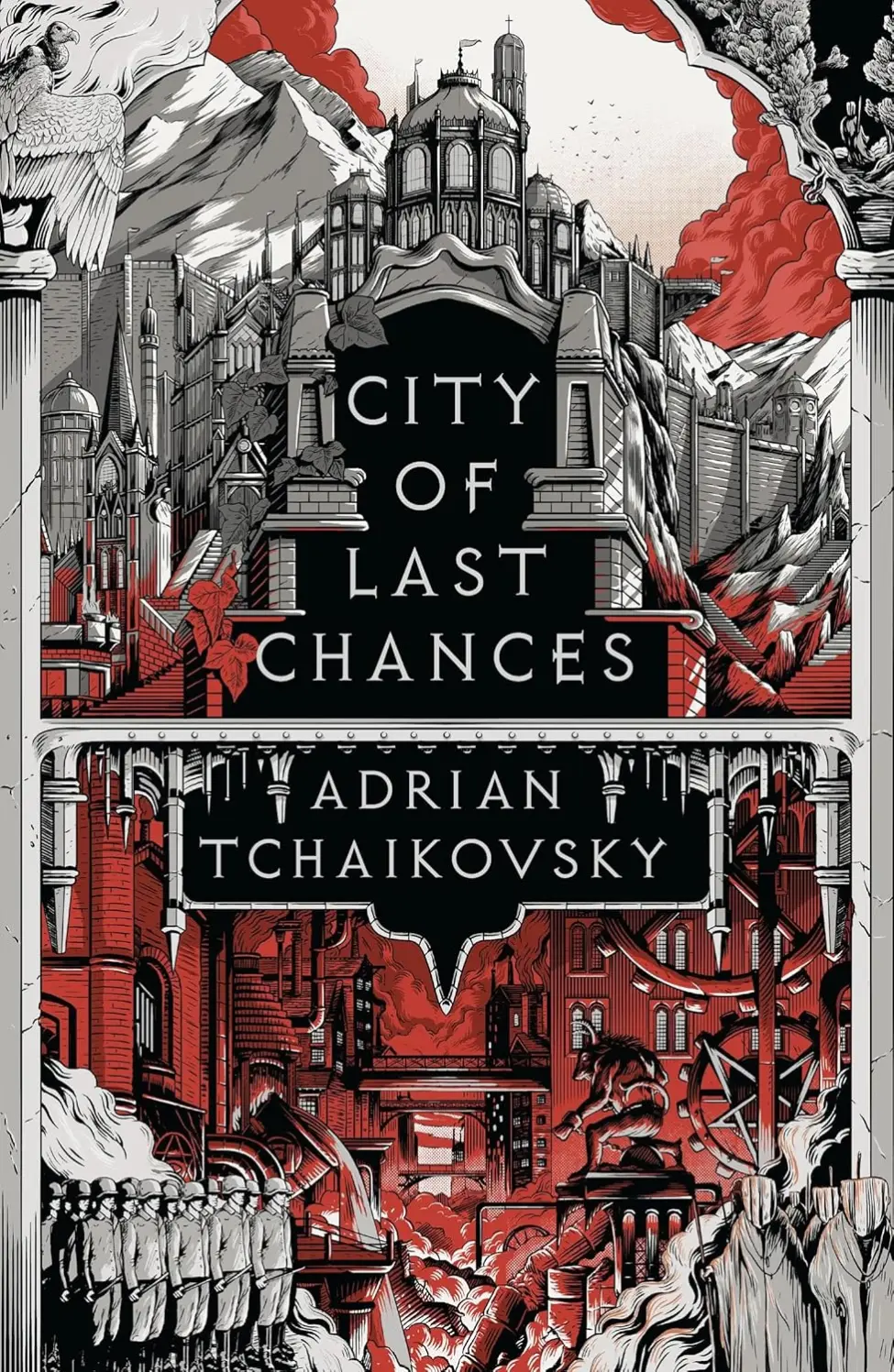
Book 1 in The Tyrant Philosophers
We independently select and recommend books. Purchases made through our links may earn us a commission, at no extra cost to you. Prices and availability are set by each retailer.
City of Last Chances by Adrian Tchaikovsky is a grimdark fantasy set in Ilmar, a city under rationalist occupation on the brink of revolution. A mosaic of rebels, criminals, and displaced gods caught in the spark before the conflagration.
Tagged on the series as a whole, so not every book will feature each one.
City of Last Chances is Adrian Tchaikovsky's 2022 first instalment in the Tyrant Philosophers series, and it announces itself with the kind of world-building confidence that only comes from a writer at the height of their powers. The city of Ilmar has never been a comfortable place. It sits atop the Anchorwood - a primeval grove of trees where the laws of physics and time grow unreliable, and which becomes, when the moon is full, a portal to strange and distant shores. Around this supernatural heart, Ilmar has grown into something layered and contradictory: a haven for refugees and runaways, a city of last chances for those with nowhere else to go, and a place riddled with criminal networks, exploited labourers, student revolutionaries, and minor gods clinging to whatever worship they can still find.
Then the Palleseen Sway arrives. The Palleseen are unlike any conquering force in conventional fantasy. They do not want gold, territory, or glory - they want correctness. Their ruling philosophers have determined that the world is fundamentally disordered, and that this disorder, which they call "Incorrectness", is dangerous and must be eliminated. Magic, religion, tradition - all of it must be measured, categorised, and either standardised or destroyed. Under Palleseen occupation, Ilmar's ancient strangeness becomes not merely tolerated eccentricity but a political crime. The city chafes. The tension builds. And then a mystical Palleseen "anchor" is stolen, and everything tips towards the edge.
What distinguishes City of Last Chances from other grimdark fantasy is its narrative structure. Rather than following a single protagonist, the novel adopts a mosaic approach - rotating across a vast ensemble of Ilmari citizens, each chapter shifting perspective to a different voice. Smugglers, scholars, factory agitators, priests of pauper gods, criminal fixers, Palleseen administrators - the city itself becomes the protagonist, seen from every angle simultaneously. This is a technique that demands patience from the reader, but rewards it richly. The picture that assembles is of a city as a living, fractured organism, where every act of resistance and every act of collaboration has texture and logic behind it.
The political and social commentary is embedded in the world rather than imposed upon it. The Palleseen are not cartoonish villains - they are true believers, their ideology coherent and internally consistent, which makes them all the more unsettling. Tchaikovsky captures the way that bureaucratic systems of oppression function: not through the malice of individuals, but through the ordinary compliance of people who have convinced themselves that what they are doing is rational and necessary. The morally grey characters on both sides of the occupation are rendered with sympathy and complexity - the Ilmari are not simply noble resistors, and the Palleseen are not simply monsters.
At the centre of the novel's supernatural architecture sits the Anchorwood and Ilmar's cursed quarter, known as the Reproach - a district so saturated with old, broken magic that no one goes in willingly. These elements are woven into the city's fabric rather than dropped in as set-pieces, giving the magic system with consequences a genuinely eerie weight. The gods of Ilmar - small, localised beings dependent on the prayers and sacrifices of their communities - are among the most memorable characters, rendered with the same rigour Tchaikovsky brings to his science fiction's non-human intelligences.
City of Last Chances won the British Science Fiction Association Award for Best Novel and was instrumental in the series' Hugo Award nomination for Best Series in 2025. It is a remarkable opening to a remarkable sequence - a book about occupation, ideology, and the strange resilience of cities that refuse to be perfected.
A. P. Beswick
The Levanthria Series, book 2
Average Goodreads rating3.9
Robert Jackson Bennett
Shadow of the Leviathan, book 1
Average Goodreads rating4.6

Penn Cole
The Kindred's Curse Saga, book 1
Average Goodreads rating4.4

N. K. Jemisin
The Broken Earth, book 1
Average Goodreads rating4.4

Brent Weeks
Lightbringer, book 1
Average Goodreads rating4.5

Leigh Bardugo
King of Scars, book 1
Average Goodreads rating4.6
Still Looking?
Further down our similarity list, but still sharing tropes and genres with this book.

Robin Hobb
Liveship Traders Trilogy, book 1
Average Goodreads rating4.5
Buy from Amazon (opens Amazon in a new tab)
R. F. Kuang
The Poppy War, book 1
Average Goodreads rating4.3
Buy from Amazon (opens Amazon in a new tab)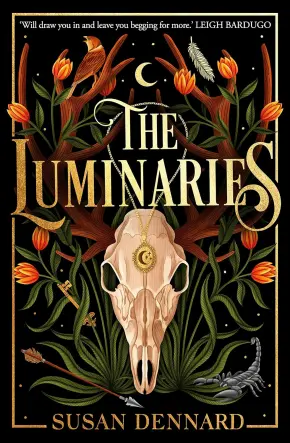
Susan Dennard
The Luminaries, book 1
Average Goodreads rating4.3
Adrian Tchaikovsky is a prolific British science fiction and fantasy author known for ambitious world-building, non-human perspectives, and ideas-driven storytelling across vast, interconnected universes.
Books, series and tropes by Adrian TchaikovskyCity of Last Chances
Buy from Amazon (opens Amazon in a new tab)Occasional emails with new recommendations, series news and trope round-ups.
