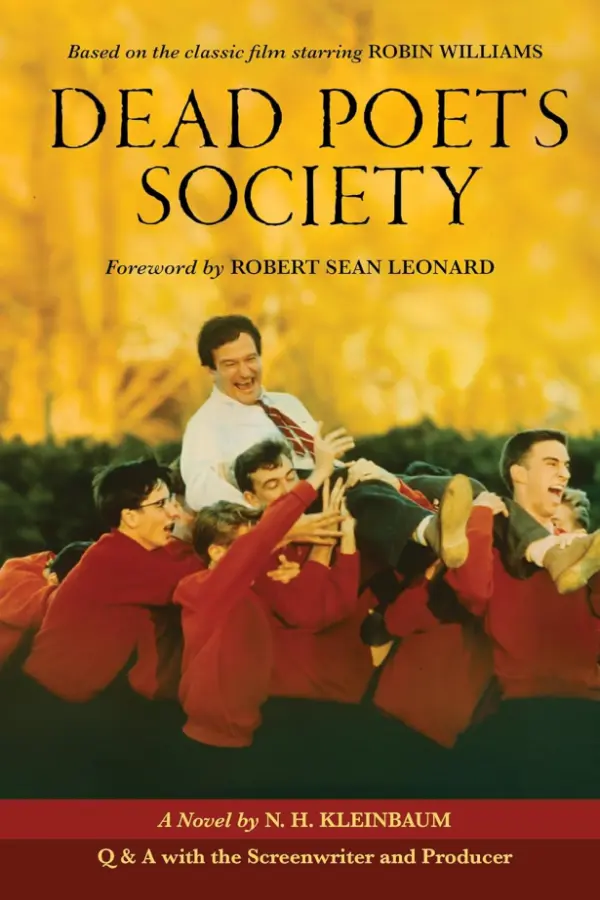
Dead Poets Society
Average Goodreads rating4.2
- Mentor/Mentee
- Coming of Age

Author · American
N.H. Kleinbaum was an American writer and journalist best known for the novelisation of Dead Poets Society. Her adaptation of the beloved 1989 film has introduced generations of readers to one of the great stories of rebellion, poetry, and seizing the day.
New to N. H. Kleinbaum? A popular place to start
Dead Poets Society by N.H. Kleinbaum is a timeless coming of age story set at an elite 1950s boarding school, where an unconventional English teacher inspires a group of boys to seize life - and question everything they have been told to want.
Picked from N. H. Kleinbaum’s most widely rated books on Goodreads, starting at the beginning of its series.
Retailer links may earn Trope Trove a commission, at no extra cost to you.
Not part of a series listed on Trope Trove
Average Goodreads rating4.2
N.H. Kleinbaum was an American writer and journalist whose name is inseparable from one of the most beloved stories in modern popular culture. Born on 30 August 1948 and passing away on 24 October 2024 at the age of 76, Kleinbaum built a career across journalism and fiction that spanned several decades, producing novelisations, children's adaptations, and non-fiction work. She is remembered above all for a single, extraordinary book - her novelisation of Dead Poets Society - which has outlasted the film that inspired it to become a standalone literary phenomenon in its own right, discovering new readers in every generation since its publication in 1989.
Kleinbaum's path to Dead Poets Society ran through journalism and a career writing novelisations of popular films and television properties. Her early work included a 1985 novel based on the science-fiction children's film D.A.R.Y.L., and a 1987 novel based on the American television series Growing Pains. This was skilled, demanding work - the art of novelisation requires a writer who can translate the grammar of film into the grammar of prose without losing what made the original work in the first place, and Kleinbaum was a practitioner of real ability. Her later output included The Magnificent Seven: The Authorized Story of American Gold (1996) and a novelisation of Dr. Dolittle (1998), as well as several adaptations of Hugh Lofting's Doctor Dolittle stories for younger readers.
But it is Dead Poets Society, published in 1989 in conjunction with Peter Weir's film of the same name, that defines Kleinbaum's legacy. The novel follows a group of students at Welton Academy, an elite New England boarding school in the 1950s, whose lives are transformed by the arrival of an unconventional English teacher, John Keating. Where Welton represents tradition, conformity, and the suffocating weight of institutional expectation, Keating represents something entirely different: the idea that poetry is not an academic exercise but a living force, that beauty and passion are not luxuries but necessities, and that the only life worth living is one seized with both hands. His revival of the secret Dead Poets Society - a group dedicated to sucking the marrow out of life through literature and free expression - becomes the catalyst for a coming of age story of rare emotional power.
The novel's dark academia atmosphere is central to its appeal. Welton is rendered as a place of real beauty and real menace - an elite institution whose traditions and hierarchies are both seductive and oppressive, and whose pressure on its students is depicted with unflinching clarity. The rebellion against oppressive system that Keating inspires is not merely adolescent restlessness; it is a genuine philosophical position about the purpose of education and the right of young people to become who they actually are rather than who their parents and institutions require them to be. That argument has lost none of its resonance in the decades since the novel was published, which is why it continues to find readers.
Kleinbaum's achievement in the novelisation is to give the story something that film, by its nature, cannot always provide: interiority. The inner lives of the Welton boys - their fears, their longings, their gradual awakening to the possibilities of carpe diem - are rendered on the page with a warmth and specificity that deepens the emotional experience considerably. The found family that forms around the Dead Poets Society is one of fiction's great depictions of adolescent friendship: intense, idealistic, and shadowed by the knowledge that the world beyond the school will not be as kind as the circle they have created within it.
The mentor and apprentice relationship between Keating and his students is the moral and emotional spine of the story, and Kleinbaum handles it with the care it deserves - conveying Keating's infectious energy and witty banter and sharp dialogue whilst never losing sight of the weight he places on young shoulders. The novel's social commentary on the costs of conformity and the violence of enforced mediocrity remains as sharp now as it ever was, and the book's status as a BookTok sensation in recent years - introducing it to a generation of young readers who came to it entirely fresh - is testament to how permanently it speaks.
N.H. Kleinbaum's contribution to reading culture, through this one remarkable book, is considerable and enduring. She gave one of cinema's great stories a life on the page that has proved entirely its own.

Olivie Blake
Atlas, book 1
Average Goodreads rating4.0
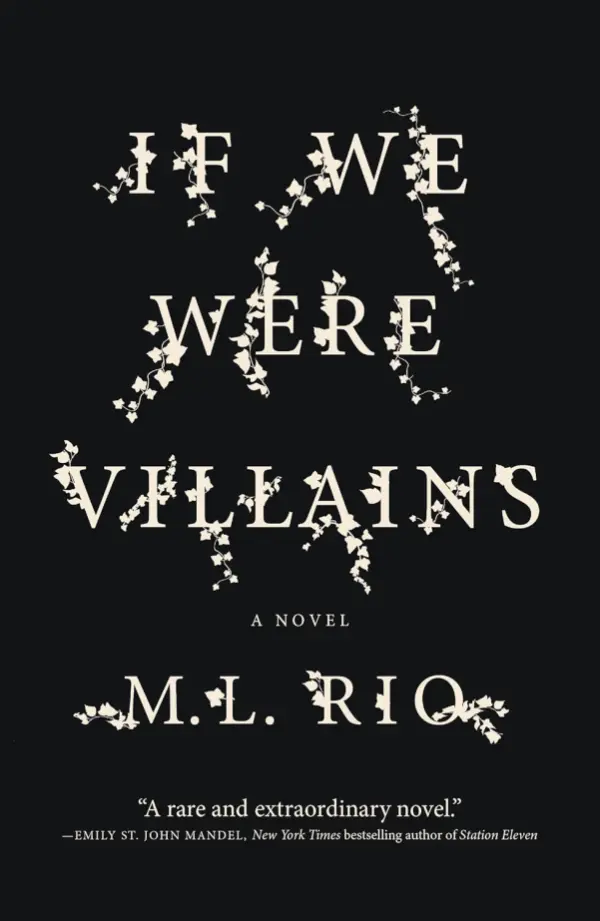
M. L. Rio
Average Goodreads rating4.1
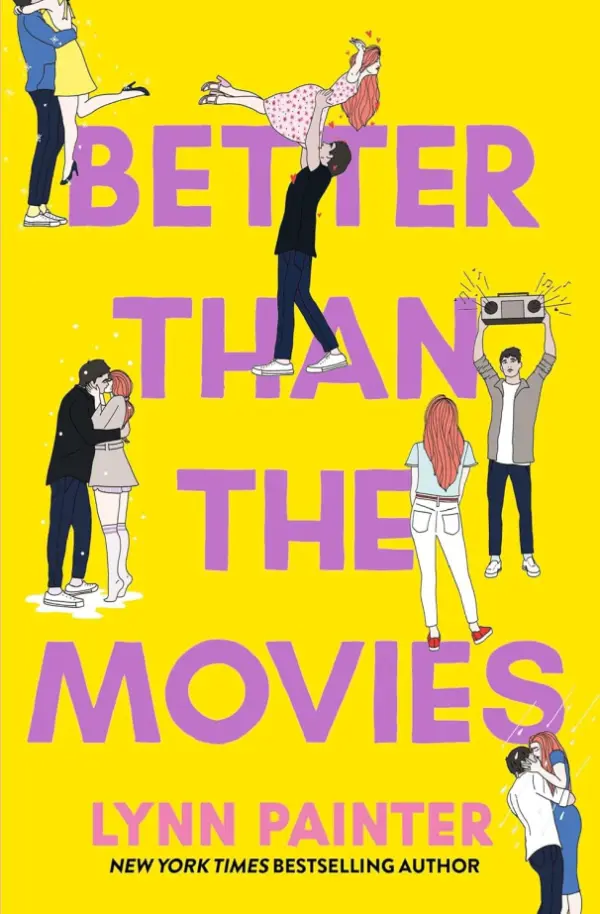
Lynn Painter
Better Than the Movies, book 1
Average Goodreads rating4.3

Neal Shusterman
Arc of a Scythe, book 1
Average Goodreads rating4.5

Sarah J. Maas
Crescent City, book 1
Average Goodreads rating4.7

Robin Hobb
Liveship Traders Trilogy, book 1
Average Goodreads rating4.5
Occasional emails with new recommendations, series news and trope round-ups.