
The Atlas Six
Olivie Blake
Atlas, book 1
Average Goodreads rating4.0

We independently select and recommend books. Purchases made through our links may earn us a commission, at no extra cost to you. Prices and availability are set by each retailer.
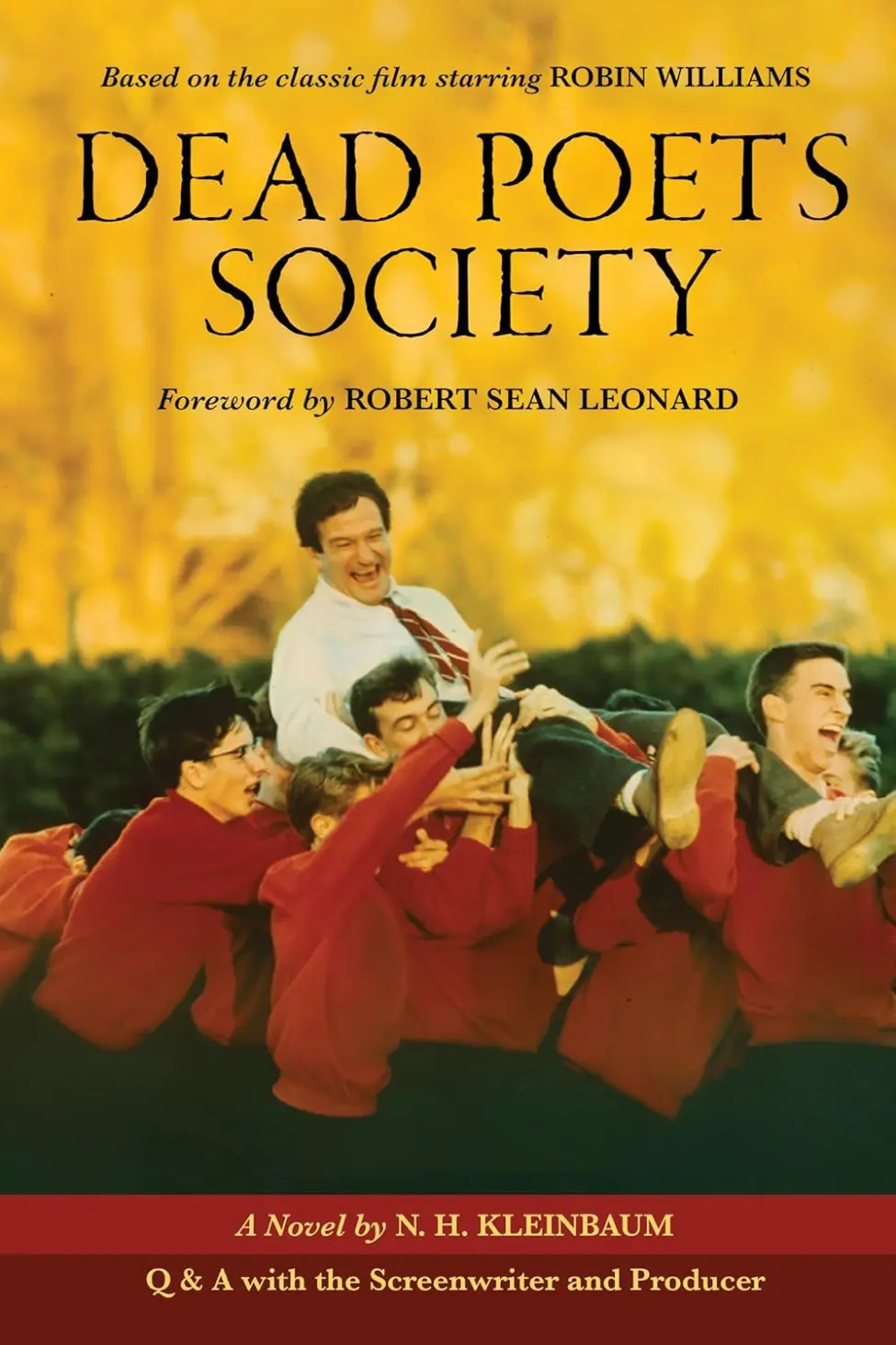
Dead Poets Society by N.H. Kleinbaum is a timeless coming of age story set at an elite 1950s boarding school, where an unconventional English teacher inspires a group of boys to seize life - and question everything they have been told to want.
Dead Poets Society by N.H. Kleinbaum is a standalone novelisation published in 1989, adapted from Peter Weir's film of the same name, that has since outgrown its origins entirely and become one of the most enduring coming of age stories in the popular literary canon. Decades after its publication, it continues to find new readers - young people who come to it seeking a story about poetry and passion and the courage to live differently, and find something that speaks to them with a directness and emotional honesty that very few books manage.
The setting is Welton Academy, an elite New England boarding school in the autumn of 1959 - a place of immaculate traditions, high academic standards, and a culture of conformity so total that individuality is not merely discouraged but barely legible as a concept. Welton is an elite institution in the fullest and most ambivalent sense: genuinely excellent, genuinely beautiful, and genuinely suffocating. The four pillars that govern school life - tradition, honour, discipline, excellence - are invoked with the solemnity of scripture, and the boys who arrive each September are expected to absorb them without question. Most do. Then John Keating arrives.
Keating is a former Welton student, now returned as the school's new English teacher, and from his very first lesson he makes clear that he intends to teach in a way the school has never quite sanctioned. Where Welton demands conformity, Keating demands presence. Where the curriculum calls for the systematic analysis of poetry, Keating tears the textbook's introduction out of the classroom copy and tells his students to do the same. His philosophy is carpe diem - seize the day - and he delivers it not as a platitude but as a genuine moral imperative, rooted in his conviction that beauty, passion, and poetry are not luxuries to be earned after the serious work of life is done but the very reason the serious work of life is worth doing at all.
The mentor and apprentice relationship between Keating and his students is the emotional spine of the novel, and Kleinbaum renders it with real warmth. Keating's witty banter and sharp dialogue - his ability to make a classroom feel alive, to make a boy who has spent years being told what to think suddenly feel the vertigo of thinking for himself - is one of the great portraits of inspired teaching in fiction. But the novel is careful not to sentimentalise him. Keating is a catalyst, not a solution. He opens doors; his students must decide whether to walk through them, and what to do when the world outside is less forgiving than the classroom.
The heart of the story belongs to the boys themselves - and specifically to the secret society they revive in Keating's honour. The Dead Poets Society meets in a cave in the woods beyond the school grounds, reading poetry aloud in the dark, and what begins as an act of romantic adolescent rebellion becomes something more genuinely significant: a found family of young men discovering, for the first time, who they might be outside the roles their families and institution have assigned them. The group's dynamics - their fierce loyalty, their different responses to freedom, the ways in which rebellion against oppressive system looks different for each of them - give the novel its texture and its emotional complexity.
The dark academia atmosphere of Welton is rendered throughout with a vividness that makes the school feel fully real: the autumn leaves, the chapel bells, the firelight in the cave, the particular quality of a world that is both protected and imprisoned. Kleinbaum's prose carries the warmth of the film whilst adding the interiority that only a novel can provide - the inner lives of these boys, their hopes and their fears and the slow, painful process of their coming of age, are accessible on the page in a way that deepens every scene. The social commentary on the cost of conformity, on what is lost when institutions prioritise tradition over the individual, is embedded in every chapter - never preachy, always felt.
Dead Poets Society has found a significant new readership in recent years, driven in part by its growing status as a BookTok sensation among younger readers encountering it for the first time. That it continues to resonate so powerfully is no accident. The questions it asks - about how to live, about who has the right to define a life's purpose, about what it costs to be who you are in a world that wants you to be someone else - are not historical questions. They are perennial ones. And Kleinbaum's novel answers them, quietly and movingly, by refusing to answer them at all - and instead placing them, with great care and conviction, in the hands of the reader.
Olivie Blake
Atlas, book 1
Average Goodreads rating4.0
M. L. Rio
Average Goodreads rating4.1

Lynn Painter
Better Than the Movies, book 1
Average Goodreads rating4.3

Leigh Bardugo
Alex Stern, book 1
Average Goodreads rating4.3

Chloe Walsh
Boys of Tommen, book 1
Average Goodreads rating4.7

Robin Hobb
Liveship Traders Trilogy, book 1
Average Goodreads rating4.5
Still Looking?
Further down our similarity list, but still sharing tropes and genres with this book.

Christopher Paolini
The Inheritance Cycle, book 1
Average Goodreads rating4.6
Buy from Amazon (opens Amazon in a new tab)
Naomi Novik
The Scholomance, book 1
Average Goodreads rating4.3
Buy from Amazon (opens Amazon in a new tab)
Brent Weeks
Lightbringer, book 1
Average Goodreads rating4.5
Buy from Amazon (opens Amazon in a new tab)N.H. Kleinbaum was an American writer and journalist best known for the novelisation of Dead Poets Society. Her adaptation of the beloved 1989 film has introduced generations of readers to one of the great stories of rebellion, poetry, and seizing the day.
Books, series and tropes by N. H. KleinbaumDead Poets Society
Buy from Amazon (opens Amazon in a new tab)Occasional emails with new recommendations, series news and trope round-ups.