
The Passengers
John Marrs
Average Goodreads rating4.1
- Multiple Perspectives
- Psychological Thriller

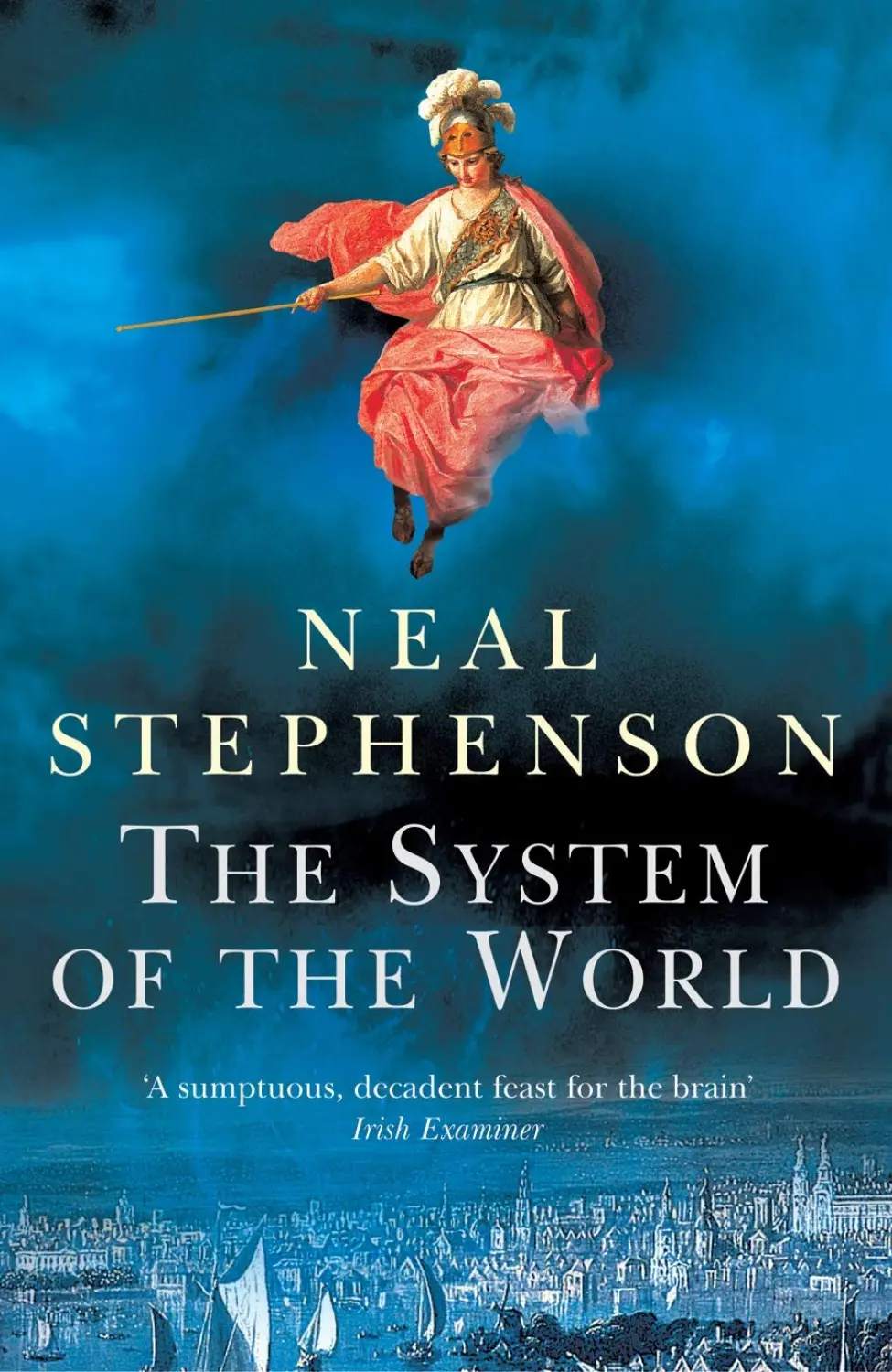
Book 3 in The Baroque Cycle
We independently select and recommend books. Purchases made through our links may earn us a commission, at no extra cost to you. Prices and availability are set by each retailer.
The System of the World by Neal Stephenson concludes The Baroque Cycle as Daniel Waterhouse returns to England amid counterfeiting conspiracies, the Newton-Leibniz dispute, and threats to Britain's monetary system. This finale brings together 2,700 pages of storylines.
The System of the World is Neal Stephenson's 2004 conclusion to The Baroque Cycle trilogy, bringing characters and storylines from across 2,700+ pages back to England for the series' climax. The 892-page finale focuses primarily on Daniel Waterhouse's return from Boston in 1714 to help resolve the Newton-Leibniz priority dispute over calculus's invention, whilst various conspiracies involving counterfeiting, threats to Britain's newly established monetary system, and political plots threaten the fragile scientific and economic progress made across decades. The title references Newton's Philosophiæ Naturalis Principia Mathematica (The Mathematical Principles of Natural Philosophy), specifically Book III titled "The System of the World," whilst also suggesting the larger systems - scientific, economic, political - that the trilogy has traced from emergence to establishment.
Daniel Waterhouse, now elderly and having spent years in Massachusetts as president of a college, reluctantly returns to England at Princess Caroline's request. His ostensible purpose is mediating between Isaac Newton (now wealthy, powerful Master of the Mint, and President of the Royal Society) and Gottfried Leibniz over their bitter dispute about who invented calculus first and deserves credit. But Daniel quickly discovers the intellectual dispute masks deeper conflicts about the nature of knowledge, credit, and truth itself - conflicts that have real-world consequences as various factions scheme to exploit or destroy the systems Newton helped establish.
Newton himself has evolved from the difficult but brilliant young natural philosopher of Quicksilver into an establishment figure wielding considerable power. As Master of the Mint, he's responsible for Britain's Great Recoinage - replacing debased currency with new coins whose metallic content matches face value, establishing the reliable monetary system essential for modern capitalism. But this system faces threats from sophisticated counterfeiters whose operations could destabilize Britain's economy, and Newton pursues these criminals with the same obsessive intensity he once devoted to natural philosophy and alchemy.
Stephenson uses the counterfeiting plot to explore how money works - why reliable currency matters, how counterfeiting threatens not just individual wealth but the abstract systems of credit and trust underlying modern economics, and why establishing these systems required both technical innovation (making coins difficult to counterfeit) and legal/institutional structures (punishing counterfeiters severely). The parallels to contemporary concerns about currency, trust, and financial systems become clear.
Jack Shaftoe and Eliza return to English storylines after their continental and global adventures. Jack, damaged by syphilis and years of hardship, pursues his own schemes whilst his son (by Eliza) becomes caught up in plots involving multiple factions. Eliza continues operating as financial genius and political operator, her interests now focused on protecting the systems she helped establish whilst navigating the complex politics of Queen Anne's reign and the uncertain succession following her impending death.
The multiple conspiracy threads weave together: counterfeiting operations threatening Britain's currency, political plots involving Jacobites seeking to restore the Stuart line versus those supporting Hanoverian succession, scientific disputes masking personal and philosophical conflicts, and various characters' private agendas intersecting with these larger forces.
Supporting characters include historical figures like Newton, Leibniz, Princess Caroline, and various political players alongside fictional characters whose bloodlines connect to Cryptonomicon, establishing multi-generational continuity. The Royal Society, coffeehouses, the Tower of London (housing the Mint), and other locations become familiar settings as plots converge.
Themes of knowledge and intellectual property, reliable currency and financial systems, how scientific progress requires institutional support, personal ambition versus larger purposes, and whether the "system of the world" (both Newton's physics and the emerging modern order) represents progress or new forms of control run throughout.
The ending provides closure for trilogy storylines whilst honoring the complexity built across three massive volumes, acknowledging that establishing new systems - scientific, economic, political - requires both brilliant insights and messy, often violent, human struggles.
John Marrs
Average Goodreads rating4.1
Stephen King & Richard Bachman
Average Goodreads rating4.3

V. E. Schwab
Villains, book 1
Average Goodreads rating4.2
Suzanne Collins
Hunger Games, book 1
Average Goodreads rating4.7

Blake Crouch
The Wayward Pines Trilogy, book 1
Average Goodreads rating4.1

Cormac McCarthy
Average Goodreads rating4.4
Still Looking?
Further down our similarity list, but still sharing tropes and genres with this book.

Neal Shusterman
Arc of a Scythe, book 1
Average Goodreads rating4.5
Buy from Amazon (opens Amazon in a new tab)
J. P. Delaney

Freida McFadden
The Housemaid, book 1
Average Goodreads rating4.5
Buy from Amazon (opens Amazon in a new tab)Neal Stephenson is a renowned sci-fi author known for dense, intellectually ambitious novels. Celebrated for Snow Crash and Cryptonomicon, he crafts sprawling narratives blending technology, history, philosophy, and meticulous research with encyclopedic detail.
Books, series and tropes by Neal StephensonThe System Of The World
Buy from Amazon (opens Amazon in a new tab)Occasional emails with new recommendations, series news and trope round-ups.