
The Passengers
John Marrs
Average Goodreads rating4.1
- Multiple Perspectives
- Psychological Thriller

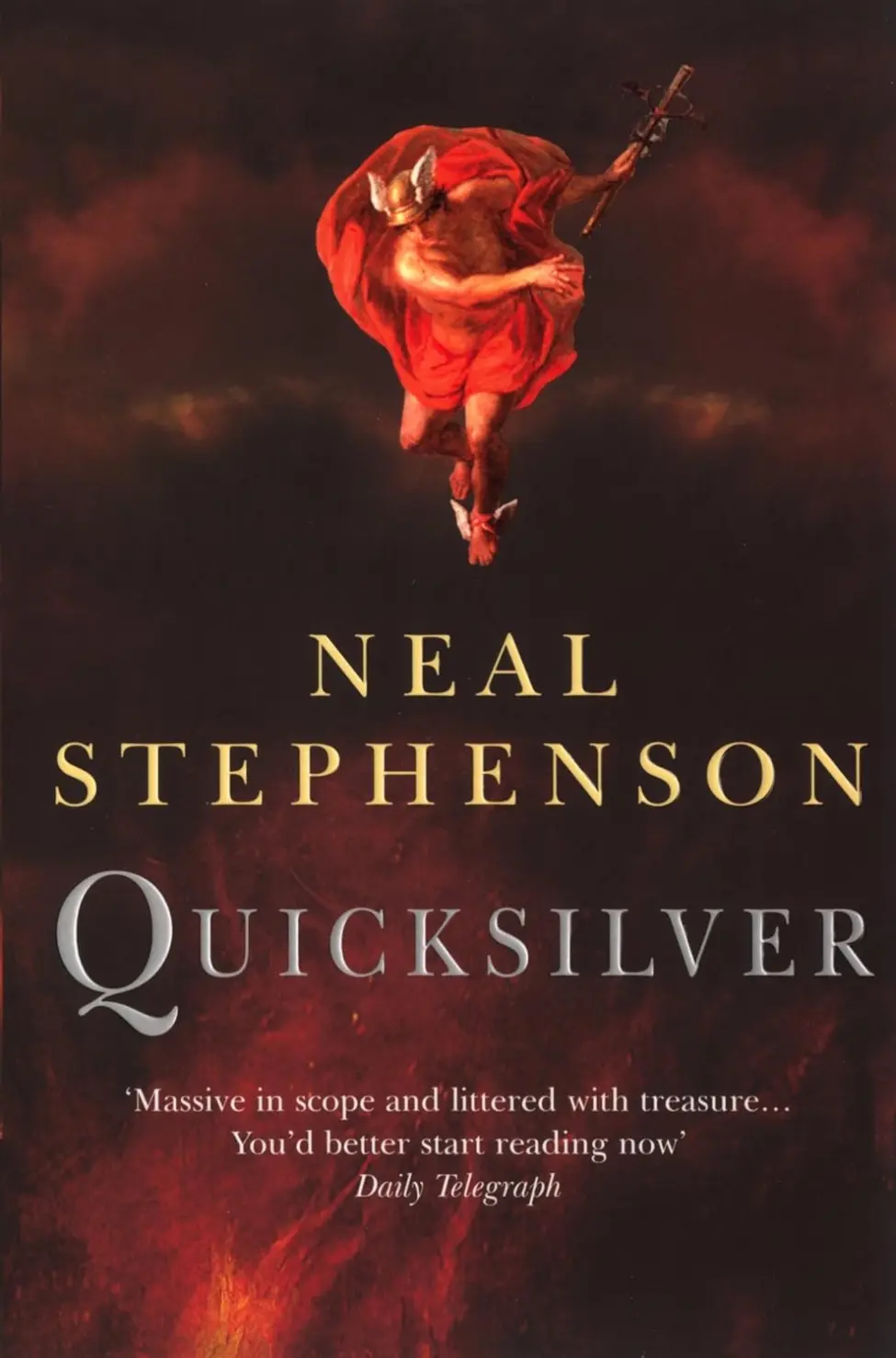
Book 1 in The Baroque Cycle
We independently select and recommend books. Purchases made through our links may earn us a commission, at no extra cost to you. Prices and availability are set by each retailer.
Quicksilver by Neal Stephenson launches The Baroque Cycle, following Daniel Waterhouse, Jack Shaftoe, and Eliza through the Scientific Revolution. This dense historical epic explores Newton, Leibniz, natural philosophy, and the birth of modern science across 900+ pages.
Quicksilver is Neal Stephenson's 2003 novel launching The Baroque Cycle trilogy, plunging readers into the intellectual ferment of the late 17th century when natural philosophy was becoming modern science, when alchemy gave way to chemistry, when Newton and Leibniz revolutionized mathematics, and when the foundations of the contemporary world were being laid by brilliant, contentious, and often difficult personalities. The 927-page novel follows three primary characters whose lives intersect with the Scientific Revolution's major figures and events: Daniel Waterhouse, a Puritan's son who becomes natural philosopher and diplomat; Jack Shaftoe, a vagabond and soldier of fortune whose adventures provide ground-level perspective on the era's conflicts; and Eliza, a former harem slave who becomes financial genius and spy. Through meticulous historical research, dense prose, and Stephenson's characteristic willingness to pause narrative for pages explaining scientific concepts or historical context, the novel demands extraordinary patience whilst rewarding readers seeking historical fiction that treats ideas as seriously as action.
"Quicksilver" introduces Daniel Waterhouse in 1713 Boston, where he's summoned back to England by Princess Caroline to mediate the bitter dispute between Isaac Newton and Gottfried Leibniz over who invented calculus first. This framing device allows extended flashback to Daniel's youth in Restoration England, his education at Cambridge where he befriended Newton, his involvement with the Royal Society of London for Improving Natural Knowledge, and his relationships with the era's scientific luminaries - Robert Hooke, Robert Boyle, Christopher Wren, and others transforming natural philosophy through empirical observation and mathematical rigor.
Stephenson depicts Newton not as saintly genius but as difficult, obsessive personality driven by need for recognition whilst pursuing alchemy, biblical chronology, and the physics that would revolutionize understanding of nature. The Royal Society becomes microcosm for examining how scientific knowledge is created, validated, and disputed - the coffeehouses and laboratories where ideas are tested, the egos and politics shaping intellectual development, and the slow emergence of scientific method from philosophical speculation.
"King of the Vagabonds" shifts to Jack Shaftoe's picaresque adventures across Europe during the 1680s-1690s. Jack is decidedly not an intellectual - he's a survivor, fighter, and schemer caught up in the era's wars, plagues, and upheavals. His storyline provides contrast to Daniel's rarefied intellectual world, showing how ordinary people experienced the period's violence and change. When Jack rescues Eliza from a Turkish harem during the 1683 siege of Vienna, he inadvertently gains companion whose intelligence and ambition far exceed his own.
"Odalisque" follows Eliza as she transforms from enslaved woman to financial operator, learning to manipulate the emerging systems of international finance and trade whilst serving as spy for various powers. Her storyline explores how money, information, and credit were being systematized during this period - the establishment of stock markets, the development of complex financial instruments, and how economic power was shifting alongside scientific and political changes.
The "quicksilver" of the title operates on multiple levels: mercury as element central to period's alchemy and early chemistry, the quicksilver pace of change transforming European society, and metaphor for the slippery nature of truth and credit in both science and finance.
Stephenson weaves real historical figures with fictional characters, creating world where Daniel corresponds with Leibniz about philosophy and mathematics, where Jack's adventures intersect with major historical events, and where Eliza's financial machinations influence the political landscape.
Supporting characters include the historical luminaries of the Scientific Revolution, various European nobles and politicians, William of Orange, and ancestors of Cryptonomicon characters establishing multi-generational connections.
Themes of science versus superstition, knowledge and intellectual property, money and power, the painful birth of modern thought, and how ideas change the world run throughout.
John Marrs
Average Goodreads rating4.1

Stephen King & Richard Bachman
Average Goodreads rating4.3
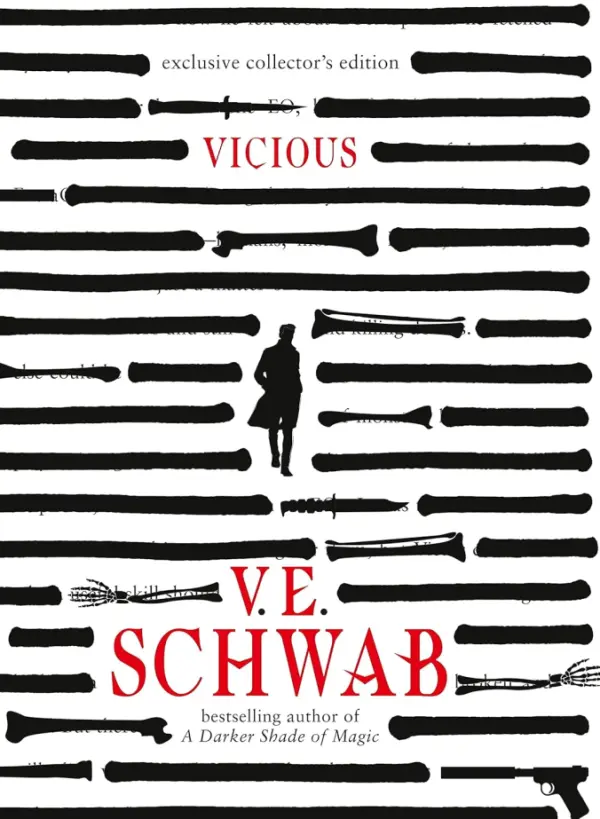
V. E. Schwab
Villains, book 1
Average Goodreads rating4.2

Suzanne Collins
Hunger Games, book 1
Average Goodreads rating4.7

Blake Crouch
The Wayward Pines Trilogy, book 1
Average Goodreads rating4.1

Cormac McCarthy
Average Goodreads rating4.4
Still Looking?
Further down our similarity list, but still sharing tropes and genres with this book.

Neal Shusterman
Arc of a Scythe, book 1
Average Goodreads rating4.5
Buy from Amazon (opens Amazon in a new tab)
J. P. Delaney

Freida McFadden
The Housemaid, book 1
Average Goodreads rating4.5
Buy from Amazon (opens Amazon in a new tab)Neal Stephenson is a renowned sci-fi author known for dense, intellectually ambitious novels. Celebrated for Snow Crash and Cryptonomicon, he crafts sprawling narratives blending technology, history, philosophy, and meticulous research with encyclopedic detail.
Books, series and tropes by Neal StephensonQuicksilver
Buy from Amazon (opens Amazon in a new tab)Occasional emails with new recommendations, series news and trope round-ups.