Scythe
Neal Shusterman
Arc of a Scythe, book 1
Average Goodreads rating4.5

Book series · 3 books
The Baroque Cycle by Neal Stephenson spans 17th-18th century Europe and beyond, following characters navigating the birth of modern science, economics, and computing. This massive trilogy blends historical fiction with Stephenson's technical depth across 2,700+ pages.
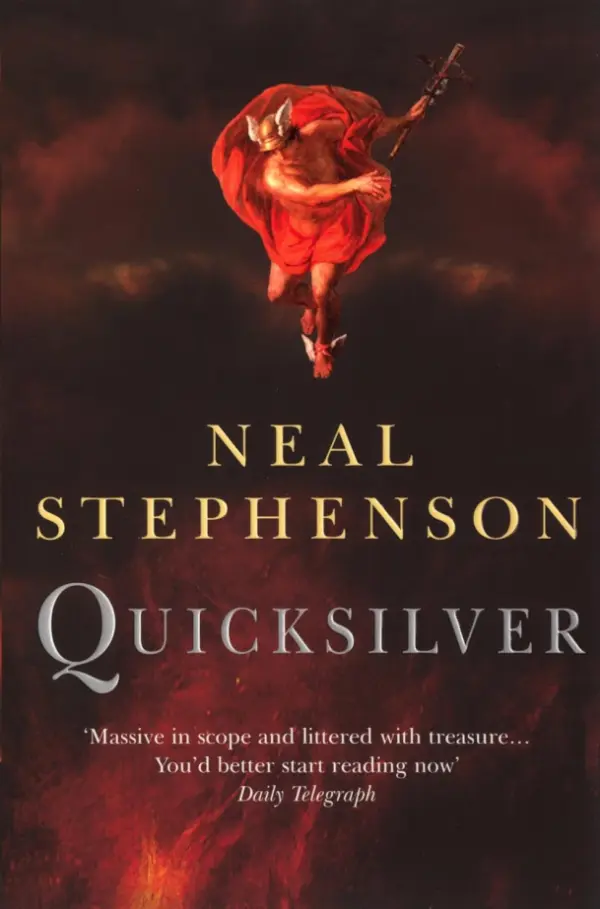
Start the series here · book 1
Quicksilver by Neal Stephenson launches The Baroque Cycle, following Daniel Waterhouse, Jack Shaftoe, and Eliza through the Scientific Revolution. This dense historical epic explores Newton, Leibniz, natural philosophy, and the birth of modern science across 900+ pages.
944 pages
Retailer links may earn Trope Trove a commission, at no extra cost to you.
Start here 944 pages Goodreads rating4.4
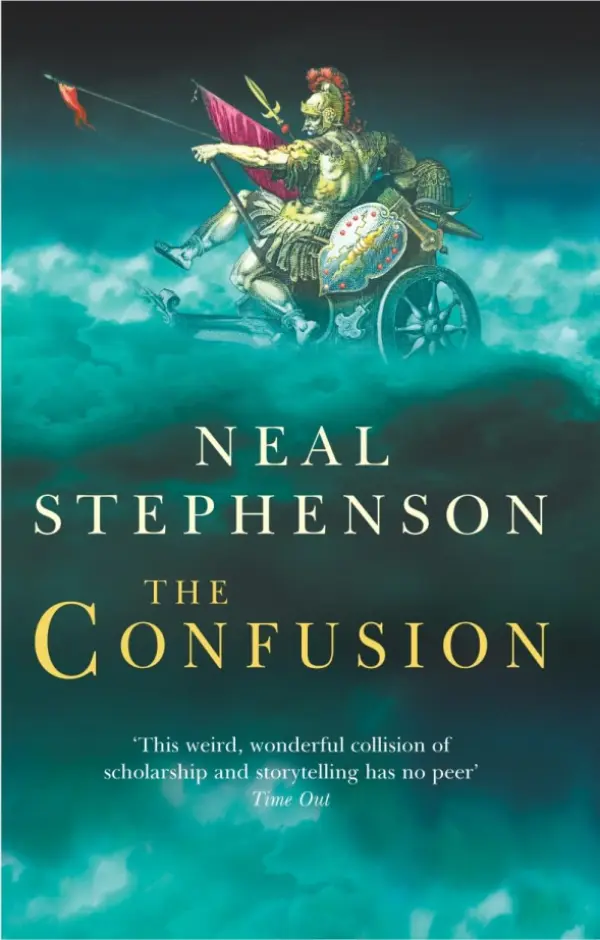
832 pages Goodreads rating4.7
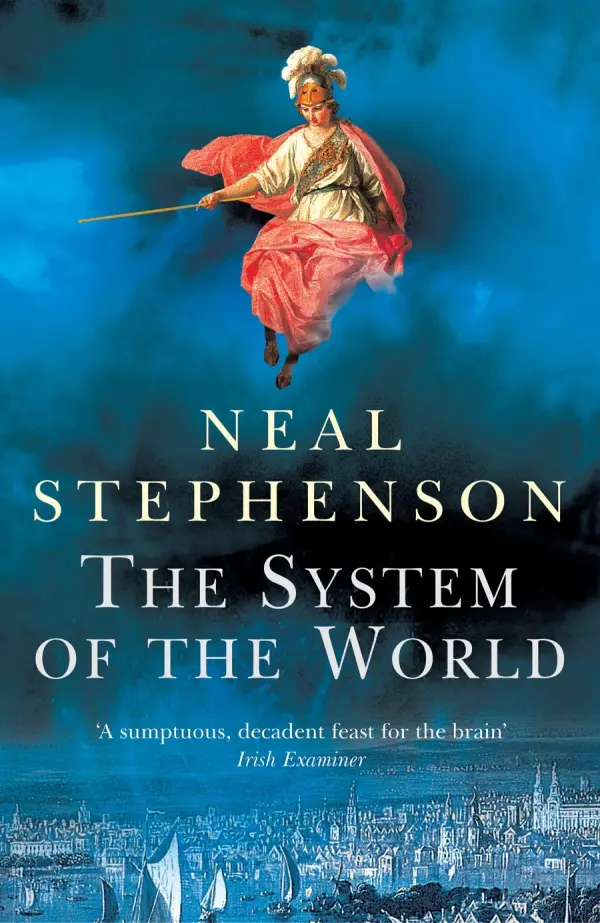
912 pages Goodreads rating4.7
The Baroque Cycle is Neal Stephenson's monumental historical fiction trilogy published between 2003-2004, comprising Quicksilver, The Confusion, and The System of the World - roughly 2,700 pages exploring the late 17th and early 18th centuries when modern science, capitalism, and the foundations of computing emerged. Following multiple characters across continents as they navigate the Scientific Revolution, the establishment of modern financial systems, political intrigues involving European powers, and the intellectual ferment that would eventually lead to contemporary technology, the series represents Stephenson at his most ambitious and demanding. Connected to Cryptonomicon through bloodlines and thematic concerns about information, money, and power, the trilogy rewards readers seeking deeply researched historical fiction that treats scientific and mathematical developments with the same narrative weight as wars and political machinations.
Quicksilver (2003) introduces the primary characters and the Baroque world. Daniel Waterhouse (ancestor of Cryptonomicon's Lawrence) moves between roles as natural philosopher, diplomat, and observer of scientific revolution, maintaining relationships with Isaac Newton, Gottfried Leibniz, Robert Hooke, and other historical figures shaping modern science. Jack Shaftoe (ancestor of Cryptonomicon's Bobby) is a "vagabond" and adventurer whose lower-class perspective contrasts with the intellectual elites, whilst Eliza is a former harem slave who becomes financial genius and spy navigating European courts and the emerging world of international finance and trade.
Stephenson uses these characters to explore the period when alchemy gave way to chemistry, when natural philosophy became physics, when the Royal Society formalized scientific inquiry, and when Newton and Leibniz's rivalry over calculus reflected larger questions about knowledge, credit, and intellectual property. The novel's title refers to mercury - both the element central to period's science and metaphor for the quicksilver pace of change transforming European society.
The Confusion (2004) follows two interleaved narratives: Jack Shaftoe's adventures across Asia, the Middle East, and the high seas as he schemes, fights, and inadvertently influences historical events whilst seeking fortune; and Eliza's continued operations in European courts and financial markets, manipulating currencies and information whilst navigating the political intrigues surrounding the War of Spanish Succession. The "confusion" refers both to the chaotic period and to the intertwining of the two narrative threads.
The System of the World (2004) brings characters back to England for the trilogy's conclusion, focusing on Daniel Waterhouse's return from Boston to help resolve the Newton-Leibniz priority dispute over calculus's invention, whilst various conspiracies involving counterfeiting, the establishment of the modern British monetary system, and political plots threaten the fragile scientific and economic progress made across the previous volumes.
The trilogy is characterized by massive scope and page count (2,700+ pages total), extensive historical research with real and fictional characters interwoven, multiple protagonists and storylines across continents, scientific and mathematical concepts explained in detail, economic and financial system development, tangential explanations and digressions, connections to Cryptonomicon, dense prose requiring patience, and Stephenson's characteristic trust in reader intelligence.
Common themes include the birth of modern science and the Scientific Revolution, capitalism and financial systems emerging, information and knowledge as power, intellectual property and credit for ideas, how mathematics and natural philosophy changed the world, alchemy to chemistry transition, political power and economic power intertwining, and historical parallels to contemporary technology and finance.
Stephenson's prose maintains his demanding style whilst adapting to Baroque-era sensibilities, creating voice that feels period-appropriate whilst remaining comprehensible. The tangents explaining scientific concepts, financial instruments, or historical context serve worldbuilding but require commitment.
What distinguishes The Baroque Cycle is Stephenson's argument that the Scientific Revolution, the Enlightenment, and the birth of modern economics deserve the same epic treatment as wars and dynasties - that Newton's Principia and the establishment of the Bank of England matter as much to human history as battles.
Neal Stephenson is a renowned sci-fi author known for dense, intellectually ambitious novels. Celebrated for Snow Crash and Cryptonomicon, he crafts sprawling narratives blending technology, history, philosophy, and meticulous research with encyclopedic detail.
Books, series and tropes by Neal Stephenson
Neal Shusterman
Arc of a Scythe, book 1
Average Goodreads rating4.5

Cormac McCarthy
Average Goodreads rating4.4

Blake Crouch
The Wayward Pines Trilogy, book 1
Average Goodreads rating4.1

Suzanne Collins
Hunger Games, book 1
Average Goodreads rating4.7

V. E. Schwab
Villains, book 1
Average Goodreads rating4.2

Richard Bachman & Stephen King
Average Goodreads rating4.3
Brandon Sanderson
4 books
Pierce Brown
6 books · complete series
Neal Shusterman
3 books
Arkady Martine
2 books
Matt Dinniman
7 books
Christopher Ruocchio
7 books
Occasional emails with new recommendations, series news and trope round-ups.