
Children of Ruin
Adrian Tchaikovsky
Children of Time, book 2
Average Goodreads rating4.3

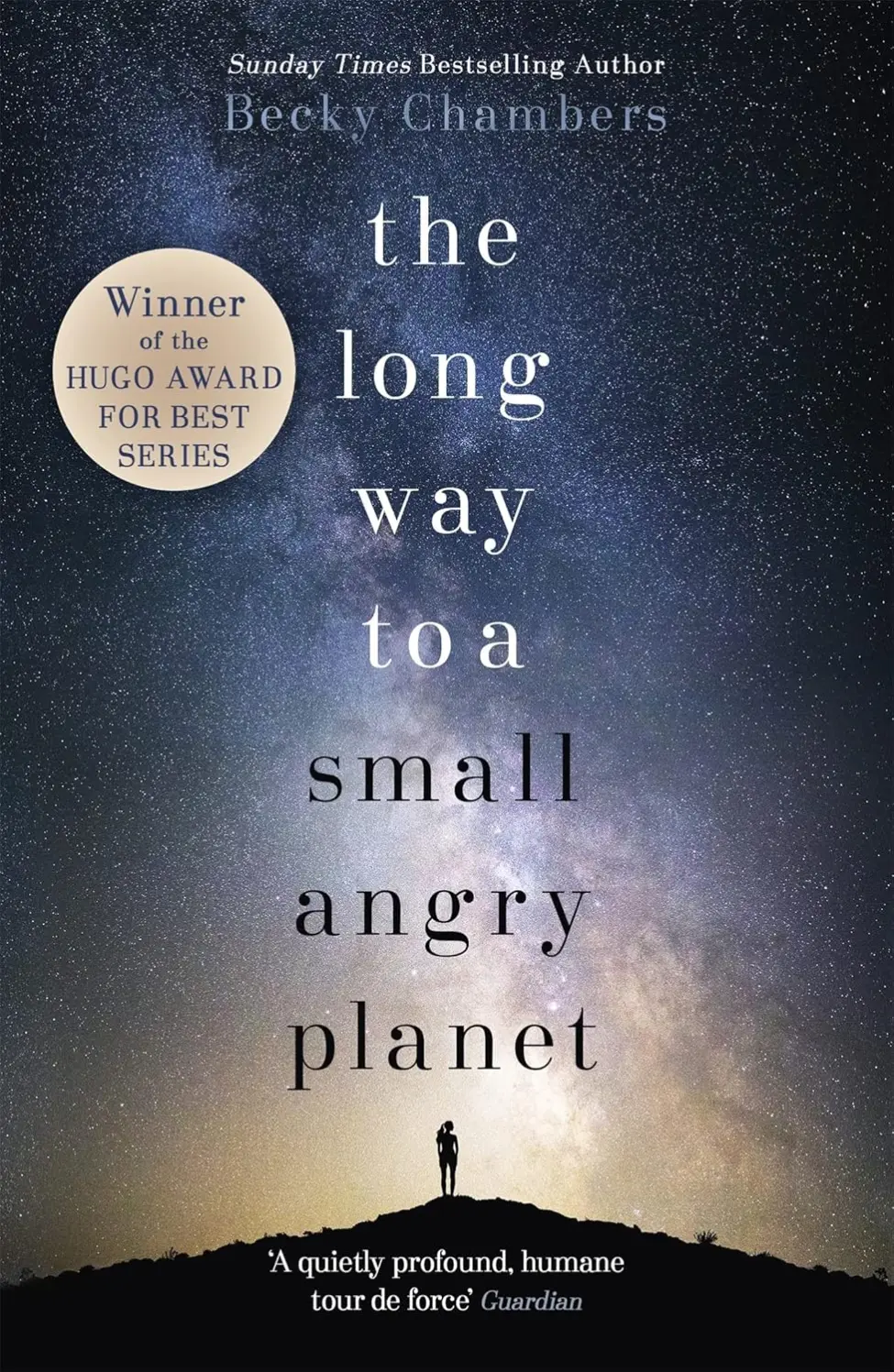
Book 1 in Wayfarers
We independently select and recommend books. Purchases made through our links may earn us a commission, at no extra cost to you. Prices and availability are set by each retailer.
The Long Way to a Small, Angry Planet by Becky Chambers follows the diverse Wayfarer crew on a tunneling ship journey. This hopeful space opera delivers found family, alien cultures, LGBTQ+ representation, and slice-of-life sci-fi prioritizing relationships over action.
Tagged on the series as a whole, so not every book will feature each one.
The Long Way to a Small, Angry Planet is Becky Chambers's 2014 debut novel that launched the Wayfarers series and redefined space opera by proving compelling science fiction doesn't require space battles or universe-ending stakes when readers care deeply about characters navigating work, friendship, love, and the mundane challenges of living together. Originally funded through Kickstarter and self-published before being acquired by traditional publishers, the novel follows the crew of the Wayfarer - a tunneling ship that creates wormholes through space - as they undertake a year-long journey to distant space whilst readers discover that the destination matters far less than who you're traveling with and the relationships built during transit.
Rosemary Harper joins the Wayfarer as new clerk, fleeing a troubled past on Mars and seeking fresh start amongst the stars. The ship's crew represents the diversity of the Galactic Commons - humanity is just one species amongst many in this universe, and the Wayfarer employs humans, aliens, and AI working together. Captain Ashby, human and steady leader maintaining crew cohesion; Sissix, Aandrisk pilot whose species experiences gender and sexuality vastly differently from humans; Dr. Chef, the ship's medic and cook who's the last of his species; Kizzy and Jenks, human techs whose exuberant friendship and technical expertise keep the ship running; Corbin, the prickly algaeist; Ohan, the Sianat Pair navigator whose consciousness spans two bodies whilst infected with a sentient virus granting navigational abilities; and Lovey, the ship's AI in love with Jenks.
Chambers structures the novel as journey narrative where the plot - traveling to create a tunnel to distant space, a lucrative job that could secure the crew's financial future - provides framework for exploring relationships. The "small, angry planet" of the title is destination, but Chambers prioritizes the journey: conversations over meals, cultural misunderstandings requiring patience and humor, romantic relationships developing across species differences, and the small conflicts inevitable when diverse individuals live in close quarters for extended periods.
The slice-of-life approach means action takes backseat to character moments. Rather than constant crises, the novel explores how the algaeist's symbiotic relationship with sentient virus affects his personality and relationships, whether an AI can truly love and be loved in return, how Sissix's cultural norms about physical affection conflict with human boundaries, and what happens when crew members' pasts catch up despite their attempts to leave everything behind. When danger arrives, it tests relationships built across hundreds of pages rather than serving as primary draw.
The world-building establishes humanity as relative newcomers to the Galactic Commons, having joined after fleeing destroyed Earth aboard generation ships. Humans are one species amongst many - some more advanced, others with vastly different biology, communication methods, or cultural values. Chambers treats alien cultures with thoughtful specificity: the Aandrisk's casual physical intimacy, the Aeluon's color-based communication and fluid gender, the Harmagians' democracy-obsessed culture. The diversity extends to human characters - LGBTQ+ representation feels natural and integrated rather than tokenized.
Supporting characters encountered during stops include representatives of various species, officials managing waystation bureaucracy, and glimpses of the broader Galactic Commons' political and social structures.
Themes of found family chosen over biological ties, what home means when you're always traveling, cultural differences requiring patience and understanding, AI personhood and consciousness, work as community, and choosing kindness run throughout.
The ending provides closure whilst launching the Wayfarers universe for subsequent standalones.
Adrian Tchaikovsky
Children of Time, book 2
Average Goodreads rating4.3
Ashley Poston
Heart of Iron, book 2
Average Goodreads rating4.0
Martha Wells
The Murderbot Diaries, book 7
Average Goodreads rating4.5

Megan O'Keefe
The Protectorate, book 3
Average Goodreads rating4.4

Neal Shusterman
Arc of a Scythe, book 1
Average Goodreads rating4.5

Adam Silvera
They Both Die at the End, book 1
Average Goodreads rating4.5
Still Looking?
Further down our similarity list, but still sharing tropes and genres with this book.

V. E. Schwab
Villains, book 1
Average Goodreads rating4.2
Buy from Amazon (opens Amazon in a new tab)
Jay Kristoff
LIFEL1K3, book 1
Average Goodreads rating4.3
Buy from Amazon (opens Amazon in a new tab)
Arkady Martine
Teixcalaan, book 2
Average Goodreads rating4.5
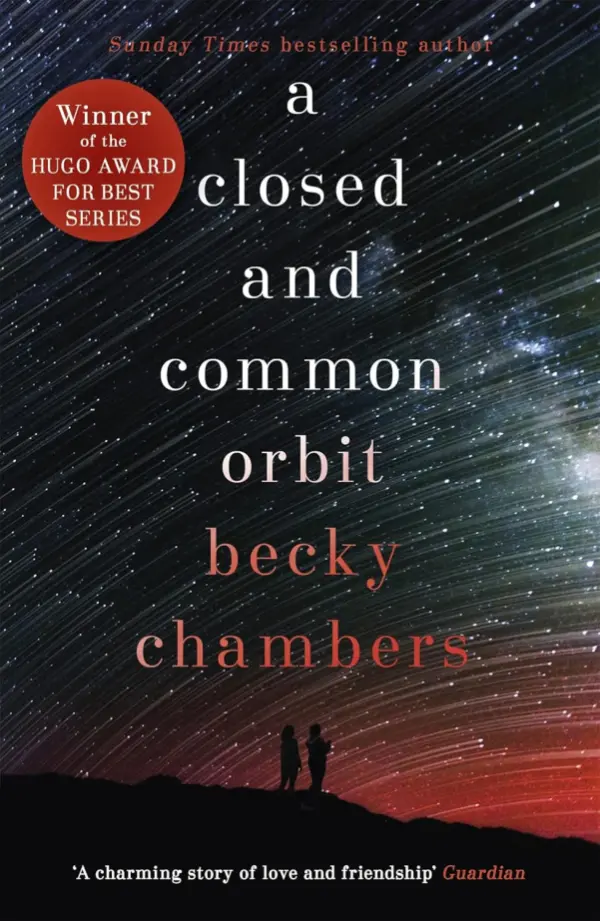
Buy from Amazon (opens Amazon in a new tab)Becky Chambers is an award-winning sci-fi author known for hopeful, character-driven space opera. Celebrated for Wayfarers series and Monk & Robot, she crafts cozy sci-fi exploring found family, alien cultures, LGBTQ+ representation, and optimistic futures.
Books, series and tropes by Becky ChambersThe Long Way to a Small, Angry Planet
Buy from Amazon (opens Amazon in a new tab)Occasional emails with new recommendations, series news and trope round-ups.