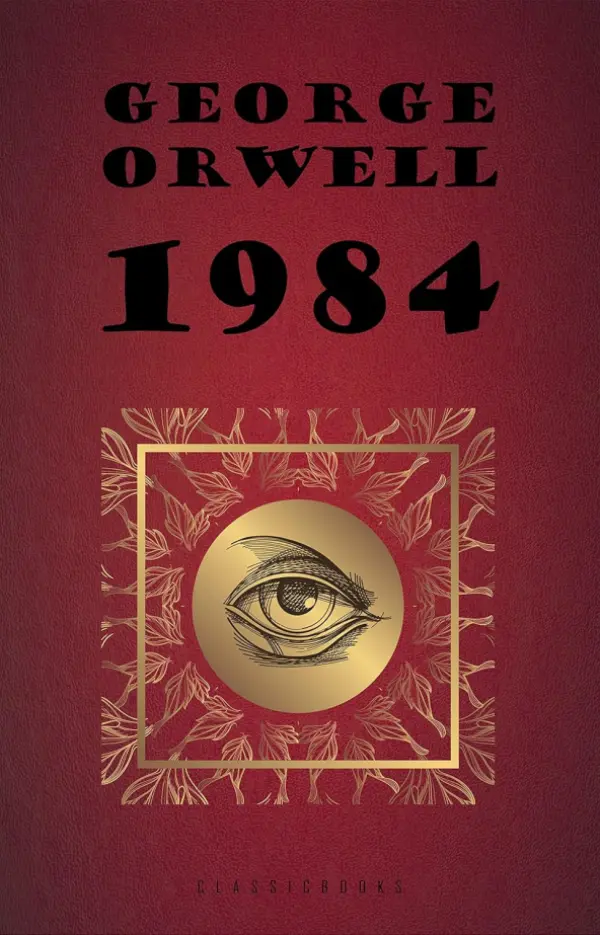
1984
George Orwell
Average Goodreads rating4.4
- Dystopian Society
- Psychological Manipulation

Book trope · 2 books
Every word monitored. Every movement logged. Every citizen watched by a government that frames its intrusion as protection. The surveillance state trope drops readers into societies where privacy isn't a right that's been eroded — it's a concept that's been all but forgotten.
More about the Surveillance State tropeUpdating books…
2 books found
George Orwell
Average Goodreads rating4.4

Richard Bachman & Stephen King
Average Goodreads rating4.3
Tropes that share the most books with Surveillance State
Every word monitored. Every movement logged. Every citizen watched by a government that frames its intrusion as protection. The surveillance state trope drops readers into societies where privacy isn't a right that's been eroded — it's a concept that's been all but forgotten. These are worlds built on information as power, where the most dangerous thing a person can do is think the wrong thought in the wrong place.
It's one of the most viscerally uncomfortable tropes in speculative fiction, precisely because it doesn't feel like pure fantasy. The paranoia is the point. Readers feel it alongside the characters: the instinct to lower your voice, to trust no one, to wonder whether the wall itself is listening.
At its core, this trope hinges on asymmetry. The state sees everything; the individual sees almost nothing. That imbalance creates a particular kind of tension that builds slowly and doesn't let up. Stories in this territory often focus less on explosive action and more on the quiet horror of living under constant observation — the way it shapes behaviour, erodes relationships, and makes rebellion feel both necessary and suicidal.
The surveillance apparatus itself takes many forms: cameras on every corner, informants embedded in communities, technology woven into the body or home, or social scoring systems that turn neighbours into enforcers. What stays consistent is the effect on characters. People become guarded, perform loyalty they don't feel, and learn to communicate in glances and silences rather than words.
Some stories position surveillance as the backdrop — the oppressive atmosphere through which a different plot (a romance, a heist, a revolution) unfolds. Others make the surveillance machinery itself the central antagonist, forcing protagonists to understand and dismantle it from within. Then there's the bleaker variation: stories where resistance isn't triumphant, where the system is shown to be genuinely effective at crushing dissent, and the tragedy lies in watching characters try anyway.
The trope overlaps frequently with dystopian fiction, totalitarian regimes, and found-family stories born of underground resistance movements. It also shows up in science fiction that's closer to the present day — near-future thrillers where the surveillance is recognisably technological, uncomfortably familiar.
There's something almost cathartic about reading surveillance state fiction. It externalises a creeping modern anxiety and gives it a shape, a villain, a set of rules. Characters who find ways to exist authentically under total observation — who carve out small, stubborn spaces of selfhood — feel genuinely heroic even when the odds are stacked entirely against them.
The best stories in this space don't just build an oppressive system for atmosphere. They ask serious questions about what we're willing to trade for safety, who benefits from that trade, and what it costs people who never agreed to it in the first place. That's why the trope endures: it's less about distant dystopia and more about the present tense.
Occasional emails with new recommendations, series news and trope round-ups.