
A Game of Thrones
George R. R. Martin
A Song of Ice and Fire, book 1
Average Goodreads rating4.7

Book series · 2 books
A Language of Dragons by S. F. Williamson is a fantasy series where dragons, language, and politics intertwine, revealing power built on knowledge and control.
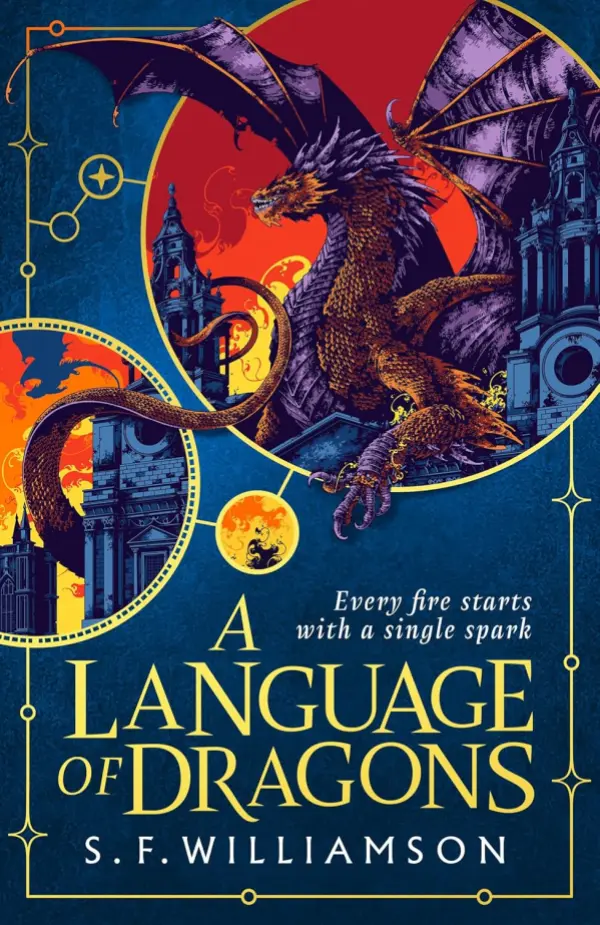
Start the series here · book 1
A Language of Dragons by S. F. Williamson is a fantasy novel where dragons, politics, and translation collide, revealing how language itself becomes a weapon of power.
480 pages
Retailer links may earn Trope Trove a commission, at no extra cost to you.
Start here 480 pages Goodreads rating4.3
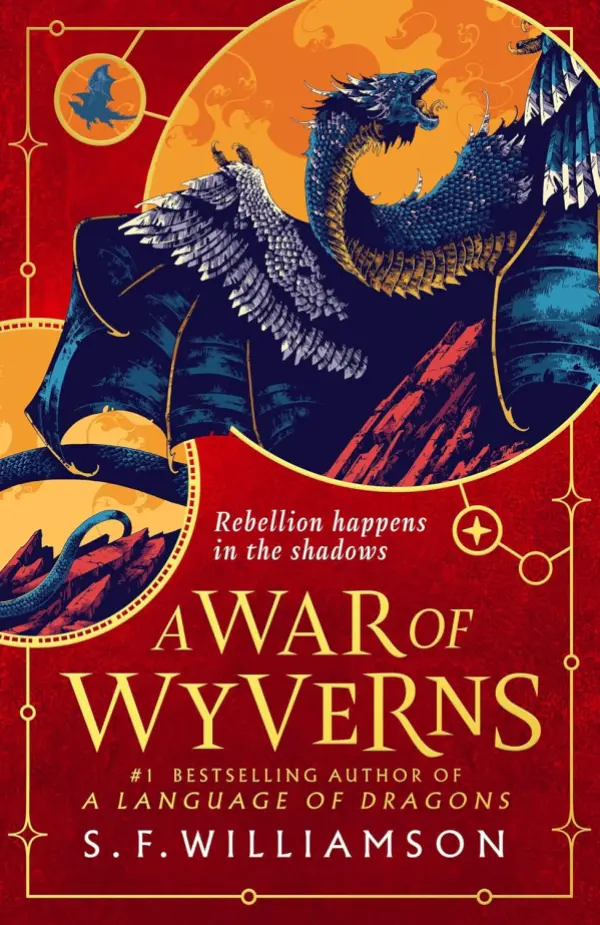
416 pages Goodreads rating4.3
The A Language of Dragons series by S. F. Williamson is an ambitious Fantasy saga that blends dragon mythology with political intrigue and linguistic power. Rather than treating dragons as simple weapons or symbols of dominance, the series places communication, translation, and knowledge at the heart of conflict - making language itself the most dangerous force in the world.
Set in a realm shaped by empire and expansion, the series explores a society where dragons are deeply entwined with culture, governance, and control. Understanding dragon language is not merely academic; it is a form of authority that determines who may rule, negotiate, or survive. Williamson uses this premise to examine knowledge as power, showing how access to information can reinforce hierarchies or dismantle them.
A central theme throughout the series is political manipulation through language. Words become tools of dominance - treaties are mistranslated, histories selectively preserved, and education restricted to maintain control. Williamson highlights how institutions weaponise scholarship, transforming learning into a gatekeeping mechanism rather than a shared good. In doing so, the series mirrors real-world systems where language defines belonging and exclusion.
The dragons themselves are portrayed with depth and intelligence, resisting easy categorisation as allies or monsters. Their culture, communication, and autonomy raise ethical questions about exploitation and coexistence. Williamson avoids romanticising power, instead presenting dragons as participants in a complex web of interests shaped by history, survival, and mistrust.
Characters in the series are defined by intellect as much as action. Protagonists often rely on observation, interpretation, and moral judgement rather than brute force. This emphasis on cunning over combat creates tension rooted in negotiation, discovery, and ideological conflict. Decisions carry lasting consequences, reinforcing the series’ morally grey tone.
Worldbuilding is layered and deliberate. Political structures, academic institutions, and imperial ambitions are revealed gradually, allowing readers to piece together how power operates beneath the surface. Williamson’s prose balances clarity with lyricism, ensuring that complex ideas remain accessible without sacrificing depth.
Another recurring theme is identity under empire. Characters struggle with inherited roles shaped by colonisation, education, and loyalty. Resistance is rarely straightforward; it often requires navigating compromised systems rather than dismantling them outright. Williamson presents rebellion as intellectual as well as emotional, grounded in understanding rather than violence.
A Language of Dragons stands out within modern fantasy for its fusion of epic scope with cerebral focus. Dragons provide wonder and danger, but the true stakes lie in who controls meaning, history, and truth.
The series is ideal for readers who enjoy Fantasy that prioritises political depth, morally complex characters, and dragons as cultural forces rather than simple spectacle. Thoughtful, immersive, and intellectually rich, A Language of Dragons offers a compelling exploration of how words can shape worlds - and unmake them.
S. F. Williamson is a fantasy author known for immersive worlds, political tension, and dragon-centric stories where language, power, and identity collide.
Books, series and tropes by S. F. Williamson
George R. R. Martin
A Song of Ice and Fire, book 1
Average Goodreads rating4.7

Evan Winter
The Burning, book 1
Average Goodreads rating4.4

Shannon Chakraborty
The Daevabad Trilogy, book 1
Average Goodreads rating4.4

Robin Hobb
Liveship Traders Trilogy, book 1
Average Goodreads rating4.5

Ryan Cahill
The Bound and the Broken, book 1
Average Goodreads rating4.4

Brent Weeks
Lightbringer, book 1
Average Goodreads rating4.5
Brandon Sanderson
3 books
Sarah J. Maas
5 books
Sarah J. Maas
7 books
Hannah Kaner
3 books · complete series
Pierce Brown
6 books · complete series
James Islington
2 books · complete series
Occasional emails with new recommendations, series news and trope round-ups.


