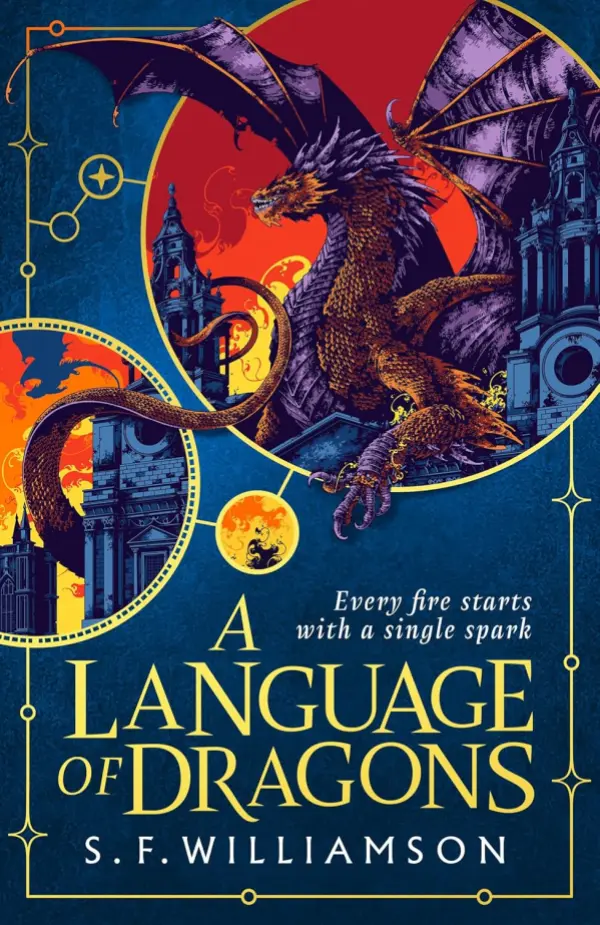
Book 1
A Language of Dragons
Average Goodreads rating4.3

Author · English
S. F. Williamson is a fantasy author known for immersive worlds, political tension, and dragon-centric stories where language, power, and identity collide.
New to S. F. Williamson? A popular place to start
Book 1 of A Language of Dragons
A Language of Dragons by S. F. Williamson is a fantasy novel where dragons, politics, and translation collide, revealing how language itself becomes a weapon of power.
Picked from S. F. Williamson’s most widely rated books on Goodreads, starting at the beginning of its series.
Retailer links may earn Trope Trove a commission, at no extra cost to you.
2 books in reading order
Book 1
Average Goodreads rating4.3
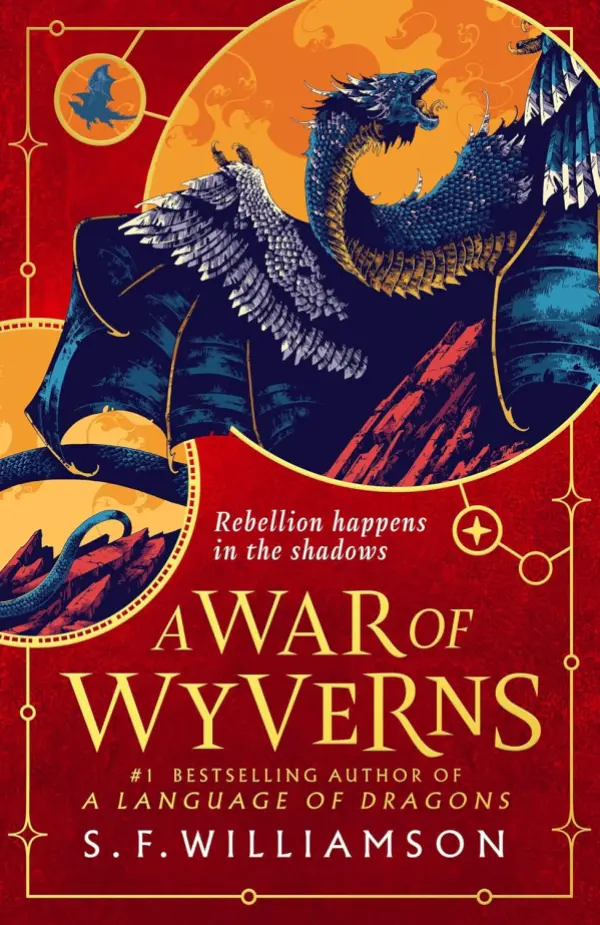
Book 2
Average Goodreads rating4.3
S. F. Williamson is a rising voice in modern Fantasy, recognised for richly imagined worlds, dragon-focused mythology, and stories that examine power through language, politics, and identity. Her work blends epic fantasy scope with thoughtful character-driven storytelling, appealing to readers who enjoy layered worldbuilding alongside emotional and intellectual depth.
A defining feature of Williamson’s writing is her interest in language as power. Communication, translation, and interpretation are not background details but central forces that shape political alliances, cultural survival, and personal agency. Rather than treating language as a neutral tool, Williamson presents it as something that can unite, divide, manipulate, or liberate - an idea that gives her fantasy settings a distinctive thematic focus.
Williamson is particularly known for incorporating dragons not merely as spectacle, but as integral components of culture, history, and conflict. Her dragons are tied to systems of knowledge and control, reinforcing the idea that power in her worlds is structured and contested rather than innate. This approach allows her to subvert familiar dragon fantasy tropes while still delivering the wonder readers expect from the genre.
Her narratives often unfold against backdrops of political tension and imperial ambition, where empires rise through domination rather than destiny. Characters must navigate rigid hierarchies, colonial influence, and the suppression of marginalised voices. Williamson is especially attentive to how institutions maintain authority - through education, language, and tradition - making her work resonate with readers drawn to socially aware fantasy.
Characterisation is another key strength. Williamson’s protagonists are typically intelligent, conflicted, and deeply shaped by their environments. Rather than relying on brute strength or prophecy, survival depends on wit, adaptability, and ethical decision-making. Moral certainty is rare; characters are frequently forced to choose between competing harms, reinforcing the morally grey tone of her stories.
Stylistically, Williamson’s prose is immersive and precise. She balances lyrical description with clarity, allowing complex ideas to emerge organically through dialogue and action. Worldbuilding details - customs, histories, and power structures - are layered gradually, encouraging readers to engage actively with the setting rather than passively absorb exposition.
Across her work, recurring themes include identity under empire, the cost of knowledge, and resistance through understanding. Williamson’s fantasy does not present rebellion as simple or triumphant; instead, it acknowledges the emotional and cultural consequences of challenging entrenched systems.
S. F. Williamson’s writing is ideal for readers who enjoy Fantasy that blends epic scope with political intrigue, dragons with depth, and magic rooted in language and learning. Thoughtful, immersive, and quietly powerful, her work positions her as an author to watch within contemporary fantasy literature.

George R. R. Martin
A Song of Ice and Fire, book 1
Average Goodreads rating4.7

Evan Winter
The Burning, book 1
Average Goodreads rating4.4

Shannon Chakraborty
The Daevabad Trilogy, book 1
Average Goodreads rating4.4

Robin Hobb
Liveship Traders Trilogy, book 1
Average Goodreads rating4.5

Ryan Cahill
The Bound and the Broken, book 1
Average Goodreads rating4.4

Brent Weeks
Lightbringer, book 1
Average Goodreads rating4.5
Occasional emails with new recommendations, series news and trope round-ups.