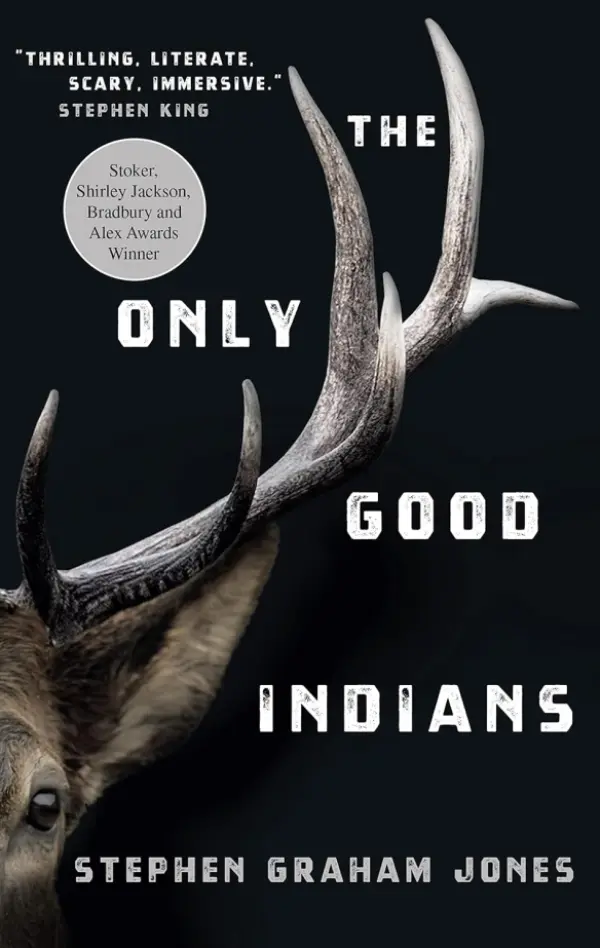
The Only Good Indians
Stephen Graham Jones
Average Goodreads rating3.8
- Multiple POV
- Social Commentary

Book trope · 1 book
Body horror is the subgenre and narrative device built around the violation, transformation, or corruption of the human form. Where other horror leans on external threats, body horror makes the threat intimate — the body itself becomes the source of dread.
More about the Body Horror tropeUpdating books…
1 book found
Stephen Graham Jones
Average Goodreads rating3.8
Tropes that share the most books with Body Horror
Body horror is the subgenre and narrative device built around the violation, transformation, or corruption of the human form. Where other horror leans on external threats, body horror makes the threat intimate — the body itself becomes the source of dread. Flesh that behaves wrongly. Limbs that don't belong. Changes that come from within and cannot be undone. The discomfort is visceral precisely because it bypasses rational fear and goes straight for something instinctive: the sense that one's own physical self should be a place of safety.
In fantasy and dark romance, the trope has found fertile ground. It sits at the intersection of the monstrous and the deeply human, which makes it ideal for stories grappling with identity, autonomy, and the cost of power.
There's a particular kind of reader who seeks out body horror not despite the discomfort but because of it. The trope works as a pressure test for characters — how do you maintain a sense of self when your self is literally changing? That question gives body horror tremendous emotional weight beyond the shock value. Readers who love transformation arcs, morally complex magic systems, or horror-adjacent fantasy often find body horror among the most psychologically rich territory the genre has to offer.
It also scratches a very specific itch for readers who feel that conventional horror has grown predictable. A jump scare fades. A body that won't stop changing stays with you.
The trope tends to announce itself through sensory specificity. Authors who do it well resist vague descriptions and instead commit to precise, uncomfortable detail — the texture, the wrongness, the way something moves that shouldn't. That specificity is what separates effective body horror from mere grotesquerie. When it works, readers feel a kind of phantom discomfort in their own skin.
Common threads include unwanted magical transformation, parasitic or symbiotic entities that alter the host, curses that rewrite physical form, and the aftermath of bargains where the body is the currency. The horror doesn't always require gore. Sometimes the most unsettling versions are quiet — a slow change, barely perceptible, that the character rationalises until they can't.
In dark fantasy, body horror frequently ties to magic systems with steep physical costs. Using power might mean losing something — the shape of a hand, the ability to feel, the boundary between self and creature. In dark romance, it often manifests through the monster love interest's form: something that shifts, something that isn't quite stable, something the protagonist has to reconcile desire with.
There's also a quieter, more psychological strand that appears in literary fantasy, where transformation becomes metaphor — for illness, for grief, for the way trauma remakes a person. These versions tend to be slower and often more haunting for it.
Whatever form it takes, body horror endures because the body is universal. You can be unmoved by a collapsing kingdom, but flesh that betrays you? That lands every time.
Occasional emails with new recommendations, series news and trope round-ups.