
Blood Over Bright Haven
M. L. Wang
Average Goodreads rating4.4
- Systemic Injustice
- Dark Academia

Book trope · 5 books
Power lies. That's the engine at the heart of this trope. Political conspiracy and corruption stories are built on the idea that the people in charge are not merely flawed — they are actively, deliberately using their authority to deceive, manipulate, and protect themselves at the expense of everyone else.
More about the Political Conspiracy & Corruption trope2 are tagged with Political Conspiracy & Corruption individually. The others belong to a series tagged with it, which doesn’t mean every book in it features the trope, so they’re marked “Matched via its series”.
Updating books…
5 books found
M. L. Wang
Average Goodreads rating4.4
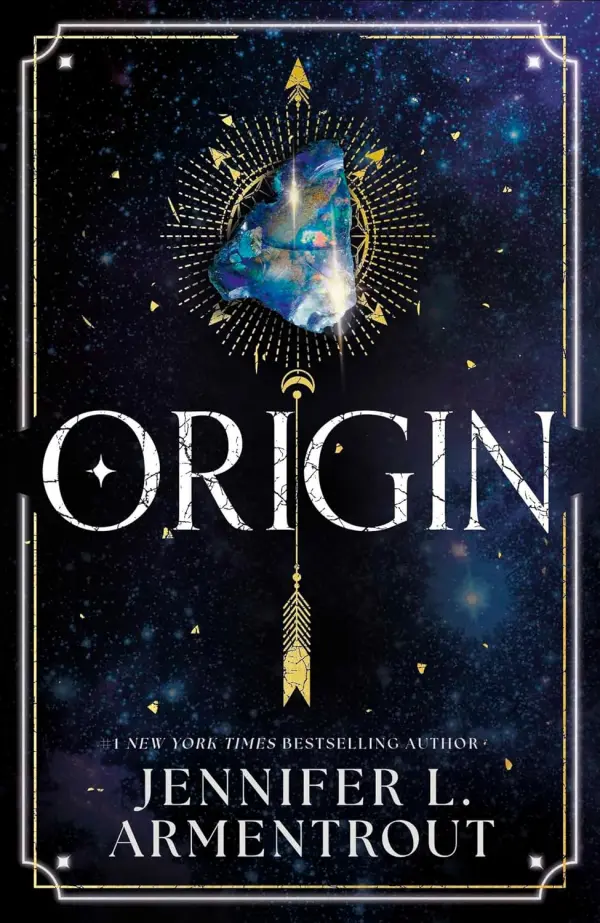
Jennifer L. Armentrout
Lux, book 4
Average Goodreads rating4.3

Megan O'Keefe
The Devoured Worlds, book 1
Average Goodreads rating4.2
Matched via its series

Megan O'Keefe
The Devoured Worlds, book 2
Average Goodreads rating4.3
Matched via its series

Megan O'Keefe
The Devoured Worlds, book 3
Average Goodreads rating4.3
Matched via its series
Tropes that share the most books with Political Conspiracy & Corruption
Power lies. That's the engine at the heart of this trope. Political conspiracy and corruption stories are built on the idea that the people in charge are not merely flawed — they are actively, deliberately using their authority to deceive, manipulate, and protect themselves at the expense of everyone else. Whether it's a king covering up an assassination, a council of mages rigging an election, or a high noble family quietly buying the loyalty of every judge in the kingdom, the rot runs deep and the protagonist is usually the only one willing to admit it exists.
Fantasy and romance readers are drawn to this trope for a specific reason: it creates stakes that feel real. The enemy isn't a monster you can fight with a sword. It's a system, an institution, a smiling face in a throne room. That kind of threat is harder to name and even harder to defeat.
What separates this trope from a simple villain-with-a-plan is scope and concealment. A conspiracy requires layers — people who know the truth, people who suspect it, people who are paid or threatened into silence, and the wider population kept deliberately ignorant. Corruption, meanwhile, tends to be structural rather than individual. It's not one bad chancellor; it's a court where everyone takes their cut and looks the other way.
Stories built around this trope often feature protagonists who are investigators, spies, reluctant courtiers, or people who stumble into knowledge they were never meant to have. The dramatic tension comes from trying to expose what powerful people need to stay hidden — while those same powerful people have every institutional advantage. Courts, councils, guilds, and religious orders are all common settings, because they provide the kind of closed hierarchy where secrets can be buried and loyalists rewarded.
The trope shifts considerably depending on where the protagonist stands. A character embedded within the corrupt system — a spy for the crown, a noble playing the game — creates moral complexity that an outside investigator doesn't have. When the protagonist is complicit, even partially, the story becomes much more uncomfortable and much more interesting.
Romance readers will recognise a particularly beloved variant: two characters on opposing political sides, each harbouring secrets they can't afford to share, falling for one another while the conspiracy tightens around them both. The forced proximity of court life, the performance of loyalty, the constant threat of exposure — all of it feeds the tension between them in a way that's difficult to manufacture through any other plot structure.
Fantasy settings use this trope to interrogate the nature of power directly. Magic systems are frequently tangled into the corruption: who controls access to power, who decides who is permitted to use it, and what happens to those who fall outside the sanctioned channels. The conspiracy often turns out to involve the suppression of knowledge, the rewriting of history, or the violent enforcement of a founding lie.
There's something cathartic about watching a corrupt institution dismantled, even fictionally. But the best stories in this space resist easy resolution — because real corruption rarely collapses the moment the evidence is laid out. It adapts, it deflects, it finds someone else to blame. Stories that understand this tend to leave readers unsettled in the best possible way, asking not just who the villain is but what the villain was protecting, and whether the system that permitted it is still standing.
If you want fantasy that respects your intelligence and romance that makes political manoeuvrings feel genuinely dangerous, this trope delivers on both counts every time.
Occasional emails with new recommendations, series news and trope round-ups.