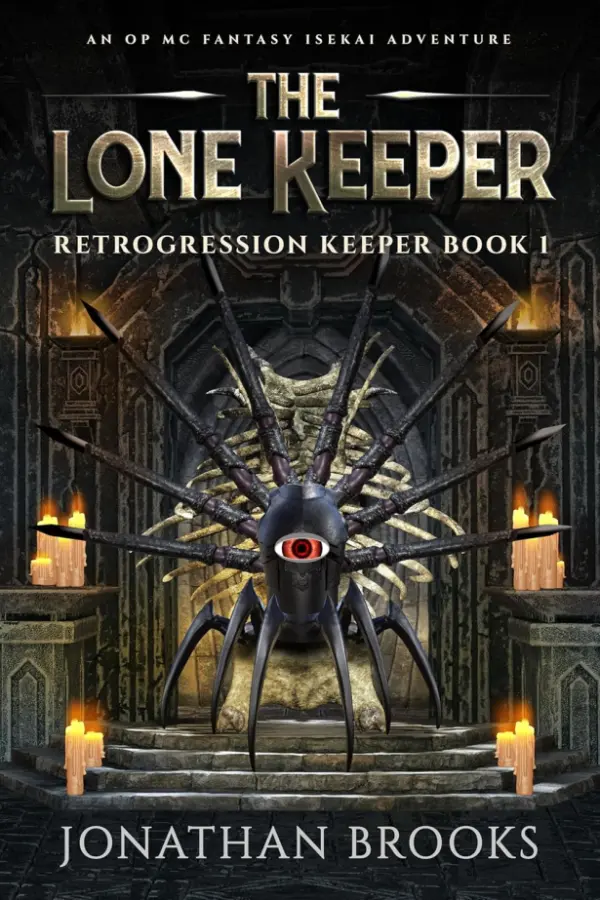
The Lone Keeper
Jonathan Brooks
Retrogression Keeper, book 1
Average Goodreads rating4.5
Matched via its series

Book trope · 2 books
Some protagonists claw their way to strength. The OP MC arrives already holding the winning hand, or gets there so quickly that the gap between them and everyone else becomes almost comical.
More about the Overpowered Main Character (OP MC) trope0 are tagged with Overpowered Main Character (OP MC) individually. The others belong to a series tagged with it, which doesn’t mean every book in it features the trope, so they’re marked “Matched via its series”.
Updating books…
2 books found
Jonathan Brooks
Retrogression Keeper, book 1
Average Goodreads rating4.5
Matched via its series
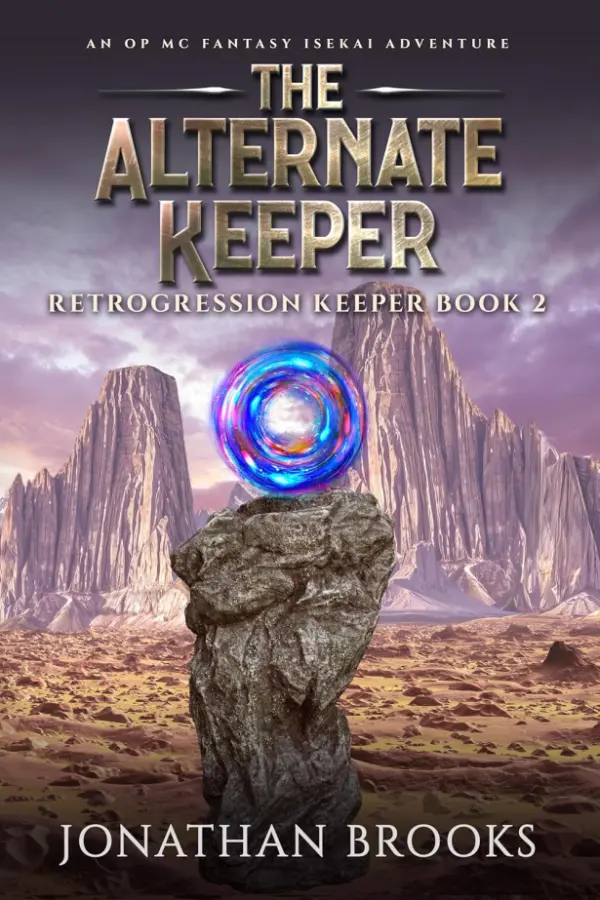
Jonathan Brooks
Retrogression Keeper, book 2
Average Goodreads rating4.6
Matched via its series
Tropes that share the most books with Overpowered Main Character (OP MC)
Some protagonists claw their way to strength. The OP MC arrives already holding the winning hand, or gets there so quickly that the gap between them and everyone else becomes almost comical. Overpowered main characters possess abilities, magic, intelligence, or combat skill so far beyond the norm that standard antagonists barely register as a threat. The tension doesn't come from whether they'll win. It comes from everything else — the politics, the relationships, the secrets, the cost of being that exceptional in a world that doesn't know what to do with you.
Readers love it precisely because it flips the conventional underdog structure. There's a particular pleasure in watching a character operate several moves ahead of everyone around them, in seeing a villain's elaborate scheme unravel the moment the protagonist actually engages. It's power fantasy done with intention, and when it's written well, it's enormously satisfying.
The core of an OP MC story isn't simply that the character is strong. It's that their strength is legible to the reader in a way that feels almost luxurious. Authors in this space spend time showing the gap — through other characters' reactions, through numerical systems, through moments where the protagonist resolves in seconds what others couldn't in years. That visible gap is the point.
Beyond raw power, overpowered protagonists tend to share a few other qualities. Many are emotionally restrained or socially detached, their inner world contrasting with their external dominance. Others are genuinely warm but simply exist on a different plane from those around them. What unites them is a kind of narrative immunity to the usual obstacles — they don't fail in the ordinary ways, so the story has to find other ways to test them.
The trope appears in several distinct flavours. In progression fantasy and LitRPG-adjacent stories, the OP MC often starts weak and ascends so rapidly that the overpowered status arrives early and stays. In portal fantasy and isekai-influenced narratives, the protagonist brings knowledge or abilities from another world that make them immediately exceptional. In secondary-world fantasy, the character might simply be born different — a once-in-a-generation mage, a monster in human form, an ancient being wearing a mortal face.
Romance reads the trope differently again. Here the overpowered love interest, rather than the point-of-view character, is more common — the brooding alpha figure whose control extends everywhere except over their feelings for one specific person. That single vulnerability does the work that external threats can't.
There's an escapist honesty to this trope that more grounded fiction can't offer. It doesn't pretend that struggle is the only source of meaning. Sometimes readers want to watch someone exceptional be exceptional — to see competence, to see power wielded with confidence, to see a protagonist who doesn't need saving. Done poorly, it collapses into wish fulfilment with no texture. Done well, it raises a more interesting question than "will they survive?": what do you do with yourself when almost nothing can stop you?
Occasional emails with new recommendations, series news and trope round-ups.