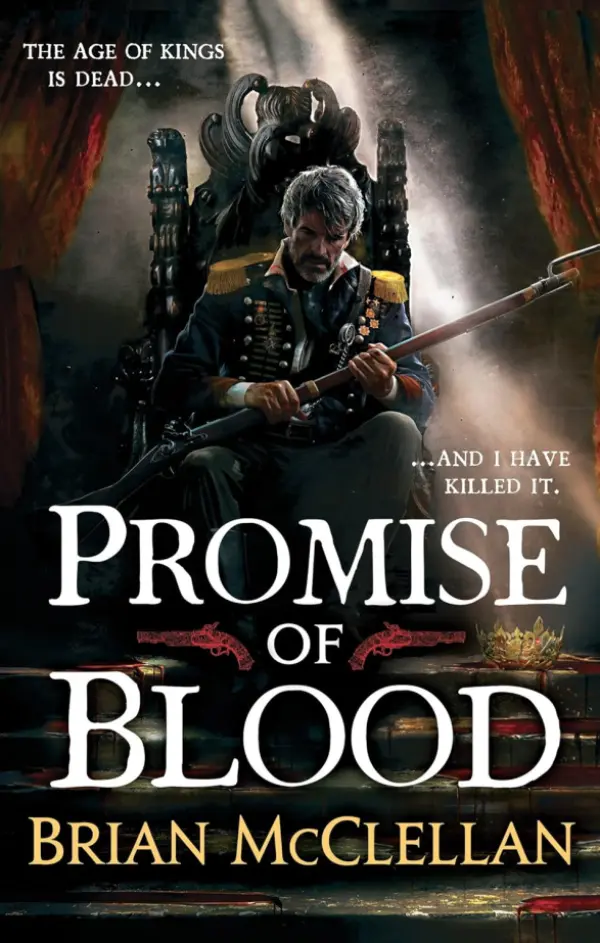
Promise of Blood
Brian McClellan
The Powder Mage Trilogy, book 1
Average Goodreads rating4.5
Matched via its series

Book trope · 12 books
Military fantasy is exactly what it sounds like, and yet it's so much more than the label suggests. At its core, it's fantasy fiction centred on warfare, armies, and the people who serve within them — but the best of it uses that framework to explore loyalty, sacrifice, the cost of power, and what violence actually…
More about the Military Fantasy trope0 are tagged with Military Fantasy individually. The others belong to a series tagged with it, which doesn’t mean every book in it features the trope, so they’re marked “Matched via its series”.
Updating books…
12 books found
Brian McClellan
The Powder Mage Trilogy, book 1
Average Goodreads rating4.5
Matched via its series

Naomi Novik
Temeraire, book 1
Average Goodreads rating4.5
Matched via its series
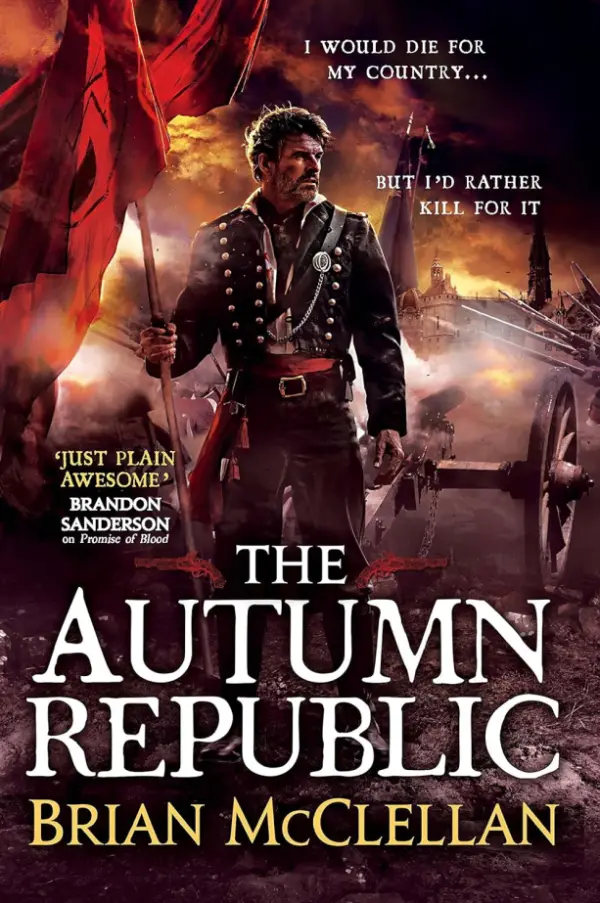
Brian McClellan
The Powder Mage Trilogy, book 3
Average Goodreads rating4.6
Matched via its series
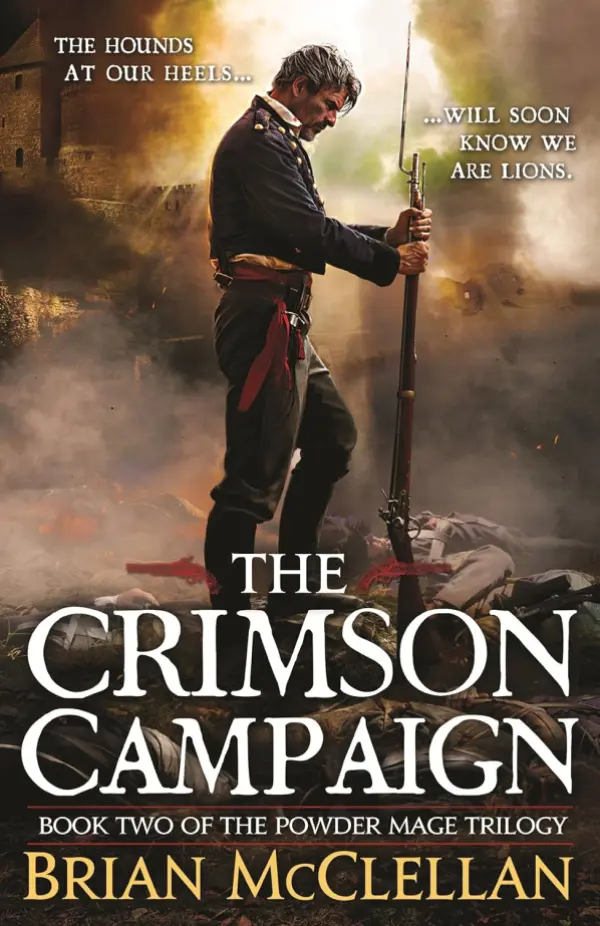
Brian McClellan
The Powder Mage Trilogy, book 2
Average Goodreads rating4.6
Matched via its series

Naomi Novik
Temeraire, book 2
Average Goodreads rating4.4
Matched via its series

Naomi Novik
Temeraire, book 9
Average Goodreads rating4.6
Matched via its series

Naomi Novik
Temeraire, book 3
Average Goodreads rating4.4
Matched via its series

Naomi Novik
Temeraire, book 8
Average Goodreads rating4.4
Matched via its series

Naomi Novik
Temeraire, book 5
Average Goodreads rating4.6
Matched via its series

Naomi Novik
Temeraire, book 7
Average Goodreads rating4.4
Matched via its series

Naomi Novik
Temeraire, book 6
Average Goodreads rating4.3
Matched via its series

Naomi Novik
Temeraire, book 4
Average Goodreads rating4.5
Matched via its series
Tropes that share the most books with Military Fantasy
Military fantasy is exactly what it sounds like, and yet it's so much more than the label suggests. At its core, it's fantasy fiction centred on warfare, armies, and the people who serve within them — but the best of it uses that framework to explore loyalty, sacrifice, the cost of power, and what violence actually does to the people who commit it. These aren't stories about battles as spectacle. They're stories about soldiers as human beings, with everything that entails.
The genre sits at a fascinating crossroads. It inherits the grand sweep of epic fantasy — maps, campaigns, world-altering stakes — but grafts onto that the grounded, sometimes brutal perspective of military fiction. The result is a category that rewards readers who want both the wonder of magic systems and the grit of trench-level survival.
A few things distinguish military fantasy from broader epic fantasy. The narrative lens is typically that of soldiers, officers, or commanders rather than chosen heroes or wandering mages. Structure follows campaigns, sieges, and tactical decisions. Politics and strategy matter as much as individual courage, sometimes more. The magic, when it appears, is often weaponised — integrated into military doctrine rather than existing as a mysterious, personal gift.
Chain of command is a recurring dramatic engine. Who gives orders, who follows them, and what happens when those orders are wrong — these questions drive conflict in ways that pure adventure fantasy rarely explores. Rank, loyalty to a unit, and the tension between institutional duty and personal conscience are themes that surface again and again.
Military fantasy is far from a monolith. At one end sits the grim, low-magic variety — close to historical fiction but with the serial numbers filed off, where the fantasy elements are almost incidental to the warfare itself. These books tend to be unflinching, interested in attrition and aftermath as much as glory.
Further along the spectrum you find high-magic military fantasy, where enchanted weapons, battle-mages, and supernatural soldiers reshape what combat looks like entirely. Some series use this to ask sharp questions about arms races and the ethics of power; others simply revel in the spectacular. There's also a growing body of military fantasy told from the perspective of common soldiers rather than generals, which brings a very different texture — less strategic overview, more mud and exhaustion and dark humour among tight-knit units.
Military fantasy also crosses genre lines comfortably. It blends readily with grimdark, secondary-world epic fantasy, and even romantic subplots forged under the pressure of shared survival.
There's something irreplaceable about the bonds this trope produces. Platoon-level camaraderie, forged under genuine threat, generates some of the most emotionally resonant relationships in the whole of fantasy fiction. Readers who want friendship that feels earned, trust that's been tested, and loss that actually lands — this is where they come.
Beyond the emotional pull, military fantasy offers a structural satisfaction that other subgenres sometimes lack. Campaigns have shape. Sieges have logic. Tactical problems have solutions, or consequences when they don't. That clarity of stakes keeps pages turning even through long, complex narratives. When the magic meets the march, something genuinely compelling happens.
Occasional emails with new recommendations, series news and trope round-ups.