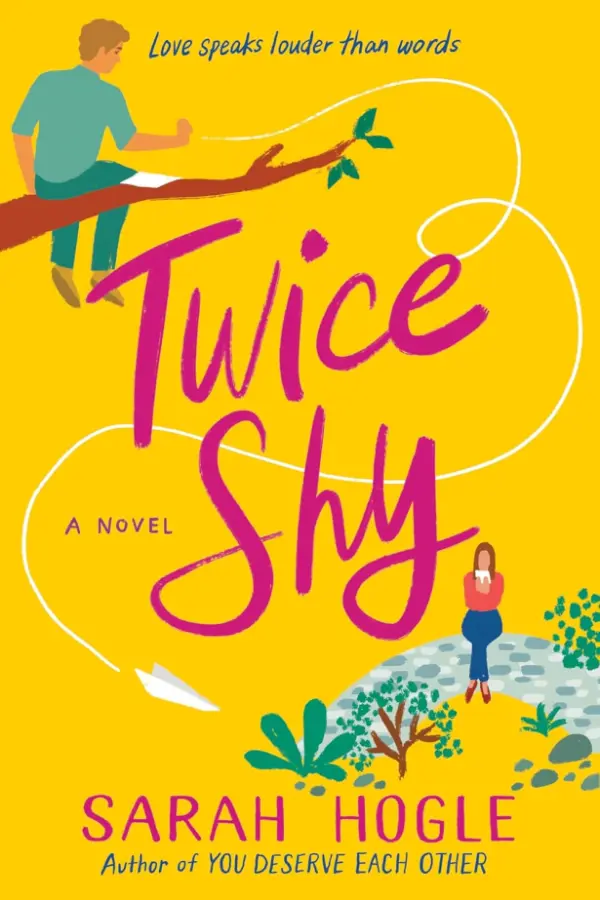
Twice Shy
Sarah Hogle
Average Goodreads rating3.6
- Enemies to Lovers
- Witty Banter & Sharp Dialogue

Book trope · 11 books
At its core, this trope places a character's psychological wellbeing at the centre of their arc. Rather than treating anxiety, depression, trauma, OCD, PTSD, or any other condition as mere backstory colour, stories in this category make the inner life — the spiralling thoughts, the bad days, the slow and non-linear…
More about the Mental Health trope1 is tagged with Mental Health individually. The others belong to a series tagged with it, which doesn’t mean every book in it features the trope, so they’re marked “Matched via its series”.
Updating books…
11 books found
Sarah Hogle
Average Goodreads rating3.6

Chloe Walsh
Boys of Tommen, book 1
Average Goodreads rating4.7
Matched via its series

Chloe Walsh
The Broken Series, book 1
Matched via its series

Chloe Walsh
The Broken Series, book 3
Matched via its series

Chloe Walsh
The Broken Series, book 2
Matched via its series

Chloe Walsh
The Broken Series, book 4
Matched via its series

Chloe Walsh
Boys of Tommen, book 2
Average Goodreads rating4.8
Matched via its series

Chloe Walsh
Boys of Tommen, book 4
Average Goodreads rating4.8
Matched via its series

Chloe Walsh
Boys of Tommen, book 6
Average Goodreads rating4.7
Matched via its series

Chloe Walsh
Boys of Tommen, book 3
Average Goodreads rating4.6
Matched via its series

Chloe Walsh
Boys of Tommen, book 5
Average Goodreads rating4.6
Matched via its series
Tropes that share the most books with Mental Health
At its core, this trope places a character's psychological wellbeing at the centre of their arc. Rather than treating anxiety, depression, trauma, OCD, PTSD, or any other condition as mere backstory colour, stories in this category make the inner life — the spiralling thoughts, the bad days, the slow and non-linear work of recovery — genuinely visible on the page. It's not about suffering for dramatic effect. It's about recognition.
Readers who love this trope often describe the experience as finding something they'd never seen named so clearly before. That sense of being understood by a story is quietly powerful, and it's the reason this trope carries such devoted readership.
The distinguishing mark isn't the presence of a mental health condition — plenty of books feature characters who struggle without ever meaningfully engaging with that struggle. What separates this trope is intentionality. The character's mental health shapes their decisions, their relationships, and the texture of how they move through the world. A protagonist with social anxiety doesn't just get shy at parties; the anxiety has weight, logic, and consequence throughout the narrative.
Crucially, the best examples in this category avoid two familiar pitfalls: the miraculous cure via romantic love, and the use of mental illness purely to signal depth without follow-through. When it's done well, recovery — if it happens at all — looks like actual recovery. Messy, partial, and worth it.
In romance, mental health storylines often intersect with the Wounded Hero or Healing Together tropes, where both protagonists are working through something and the relationship becomes part of that process rather than the solution to it. Fantasy and speculative fiction sometimes externalise the inner experience — a character's fractured magic system mirroring dissociation, or a world built around the logic of a grief spiral — which can make the emotional truth land even harder through metaphor.
Contemporary fiction tends toward the more clinical and specific: named diagnoses, therapy sessions rendered honestly, the particular frustration of a medication that mostly works but not entirely. Young adult fiction has been especially strong in this space, though adult fantasy and romance have caught up considerably in recent years, with readers actively seeking out stories that don't sanitise the experience.
There's a difference between a book that gestures at mental health and one that actually sits with it. The trope, at its best, offers something that straightforward advice or clinical language rarely manages — the feeling of being accompanied rather than instructed. Characters with anxiety, depression, or trauma aren't problems to be solved by the plot. They're people navigating something real, and that specificity is what turns a good read into a genuinely meaningful one.
For readers who live with their own mental health challenges, finding that reflected honestly on the page isn't just satisfying. It's sustaining.
Occasional emails with new recommendations, series news and trope round-ups.