
The Final Empire
Brandon Sanderson
Mistborn (The Original Trilogy), book 1
Average Goodreads rating4.6
Matched via its series

Book trope · 31 books
Epic War narratives explore armed conflict at its most massive and consequential - wars that determine the fate of civilisations, reshape political landscapes, and demand extraordinary sacrifice from ordinary people thrust into extraordinary circumstances.
More about the Epic War trope0 are tagged with Epic War individually. The others belong to a series tagged with it, which doesn’t mean every book in it features the trope, so they’re marked “Matched via its series”.
Updating books…
31 books found
Brandon Sanderson
Mistborn (The Original Trilogy), book 1
Average Goodreads rating4.6
Matched via its series

John Gwynne
The Bloodsworn Trilogy, book 1
Average Goodreads rating4.5
Matched via its series

Evan Winter
The Burning, book 1
Average Goodreads rating4.4
Matched via its series

Naomi Novik
Temeraire, book 1
Average Goodreads rating4.5
Matched via its series

John Gwynne
Of Blood & Bone, book 1
Average Goodreads rating4.6
Matched via its series
A. E. Rayne
The Lords of Alekka, book 1
Average Goodreads rating4.5
Matched via its series

Brandon Sanderson
The Stormlight Archive, book 1
Average Goodreads rating4.7
Matched via its series

Brandon Sanderson
Mistborn (The Original Trilogy), book 2
Average Goodreads rating4.6
Matched via its series

Brandon Sanderson
Mistborn (The Original Trilogy), book 3
Average Goodreads rating4.7
Matched via its series

John Gwynne
The Bloodsworn Trilogy, book 2
Average Goodreads rating4.7
Matched via its series

John Gwynne
The Bloodsworn Trilogy, book 3
Average Goodreads rating4.7
Matched via its series

Evan Winter
The Burning, book 2
Average Goodreads rating4.5
Matched via its series

Naomi Novik
Temeraire, book 2
Average Goodreads rating4.4
Matched via its series

Naomi Novik
Temeraire, book 9
Average Goodreads rating4.6
Matched via its series

Naomi Novik
Temeraire, book 3
Average Goodreads rating4.4
Matched via its series

Naomi Novik
Temeraire, book 8
Average Goodreads rating4.4
Matched via its series

Naomi Novik
Temeraire, book 5
Average Goodreads rating4.6
Matched via its series

Naomi Novik
Temeraire, book 7
Average Goodreads rating4.4
Matched via its series

Naomi Novik
Temeraire, book 6
Average Goodreads rating4.3
Matched via its series

Naomi Novik
Temeraire, book 4
Average Goodreads rating4.5
Matched via its series
A. E. Rayne
The Lords of Alekka, book 2
Average Goodreads rating4.5
Matched via its series
A. E. Rayne
The Lords of Alekka, book 3
Average Goodreads rating4.6
Matched via its series
A. E. Rayne
The Lords of Alekka, book 4
Average Goodreads rating4.6
Matched via its series
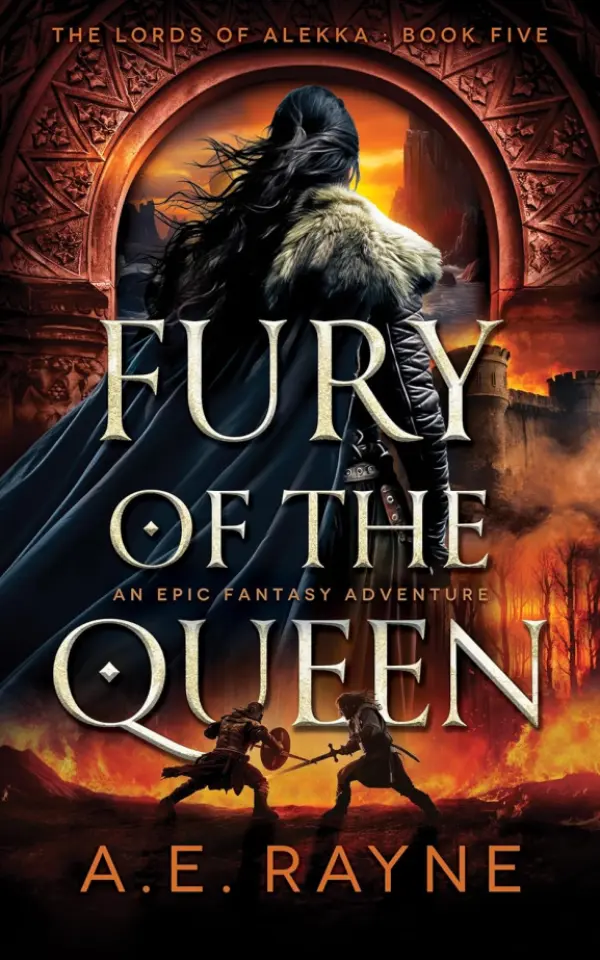
A. E. Rayne
The Lords of Alekka, book 5
Average Goodreads rating4.7
Matched via its series

John Gwynne
Of Blood & Bone, book 2
Average Goodreads rating4.6
Matched via its series

John Gwynne
Of Blood & Bone, book 3
Average Goodreads rating4.6
Matched via its series

Brandon Sanderson
The Stormlight Archive, book 3
Average Goodreads rating4.7
Matched via its series

Brandon Sanderson
The Stormlight Archive, book 4
Average Goodreads rating4.7
Matched via its series

Brandon Sanderson
The Stormlight Archive, book 5
Average Goodreads rating4.7
Matched via its series

Brandon Sanderson
The Stormlight Archive, book 2
Average Goodreads rating4.8
Matched via its series
Tropes that share the most books with Epic War
Epic War narratives explore armed conflict at its most massive and consequential - wars that determine the fate of civilisations, reshape political landscapes, and demand extraordinary sacrifice from ordinary people thrust into extraordinary circumstances. These stories examine both the grandeur and horror of large-scale conflict, celebrating courage and strategy whilst refusing to romanticise the devastating human cost of war.
Epic War stories feature conflicts operating on enormous scales - multiple nations, factions, or species engaged in prolonged warfare with civilisation-altering stakes. Unlike action-focused battle scenes, Epic War narratives examine the full spectrum of conflict: political machinations driving wars, military strategy determining outcomes, individual soldiers navigating moral complexity on the ground, civilian populations bearing enormous costs, and leaders making impossible decisions that sacrifice thousands for strategic advantage. The scope encompasses both grand strategic narratives and intimate personal stories existing within larger conflicts.
Common features include multiple perspectives showing different sides of the same conflict, the moral ambiguity of war where heroism and atrocity often coexist, military strategy and tactical brilliance determining outcomes, the psychological toll of combat on soldiers and commanders, supply lines and political alliances proving as decisive as battlefield courage, unlikely heroes emerging from chaos, and the devastating examination of what victory actually costs. These narratives often subvert glorified war narratives by showing conflict's true complexity - the bureaucratic failures, the forgotten sacrifices, and the wars that continue in survivors' minds long after peace is declared.
Epic War narratives explore fundamental questions about human nature - our capacity for both extraordinary courage and terrible cruelty, whether wars can be just, and what obligations we owe each other in extremity.
Epic War reminds us that behind every great battle are countless human stories - and that true victory means ensuring those stories aren't forgotten.
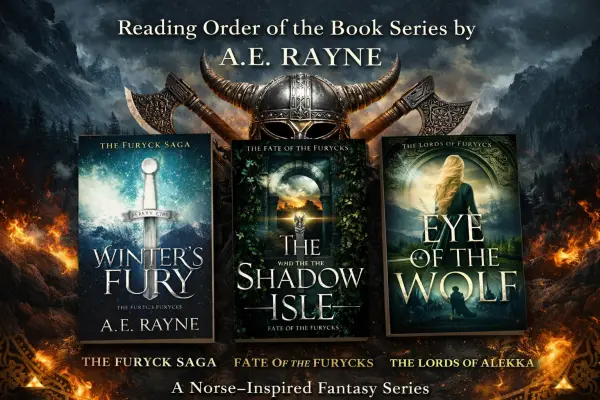
New to A. E. Rayne? This complete reading order guide covers The Furyck Saga, The Lords of Alekka, and Fate of the Furycks - three interconnected epic fantasy series set in the same world, full of warring kingdoms, dark magic, and unforgettable characters.
Occasional emails with new recommendations, series news and trope round-ups.