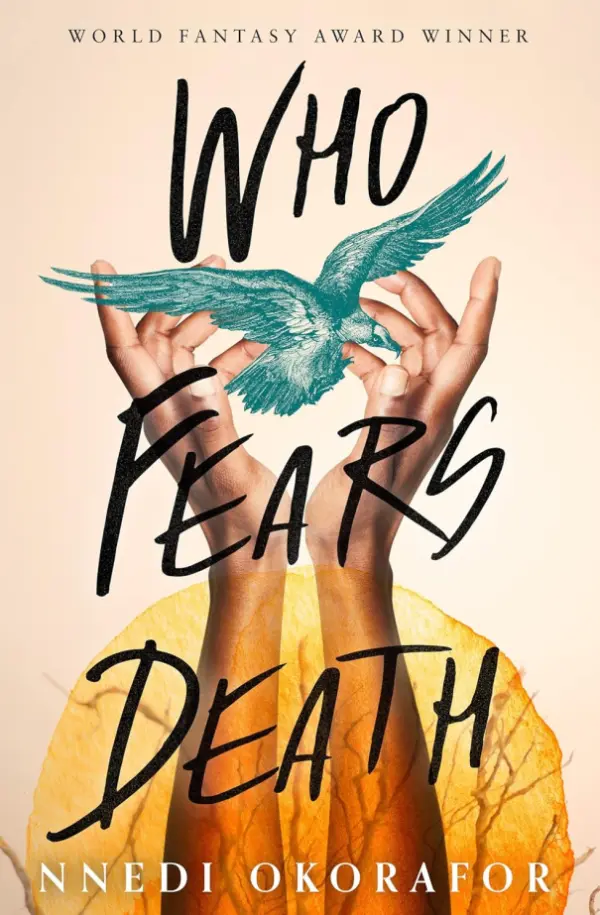
Who Fears Death
Nnedi Okorafor
Average Goodreads rating4.3
- Quest for Revenge
- Post-Apocalyptic

Book trope · 3 books
African-Inspired Fantasy draws on the mythologies, histories, spiritual traditions, and cultural landscapes of the African continent to build its worlds.
More about the African-Inspired Fantasy trope1 is tagged with African-Inspired Fantasy individually. The others belong to a series tagged with it, which doesn’t mean every book in it features the trope, so they’re marked “Matched via its series”.
Updating books…
3 books found
Nnedi Okorafor
Average Goodreads rating4.3

Evan Winter
The Burning, book 1
Average Goodreads rating4.4
Matched via its series

Evan Winter
The Burning, book 2
Average Goodreads rating4.5
Matched via its series
Tropes that share the most books with African-Inspired Fantasy
African-Inspired Fantasy draws on the mythologies, histories, spiritual traditions, and cultural landscapes of the African continent to build its worlds. Rather than the familiar medieval European backdrop that dominated fantasy for decades, these stories reach into Yoruba cosmology, West African folklore, Ancient Egyptian legend, Zulu warrior culture, Swahili coastal kingdoms, and dozens of other traditions to conjure settings that feel genuinely new — and, for many readers, long overdue.
The appeal is partly the freshness of the world-building, and partly something deeper. When a fantasy draws on traditions that carry genuine weight and complexity, the magic systems, the moral frameworks, and even the monsters feel earned rather than borrowed.
The magic in these stories tends to be closely tied to ancestry and the spiritual world. Orishas, ancestral spirits, divine intermediaries — the boundary between the living and the dead is rarely a wall, more of a permeable membrane. Characters don't simply wield power; they negotiate it, inherit it, or pay a price for it.
Community and lineage carry enormous narrative weight. A protagonist's identity is often inseparable from their people, their bloodline, their obligations to those who came before. This creates a very different kind of hero than the lone wanderer archetype fantasy readers might be used to — and often a far more interesting one.
The settings themselves do considerable work. Sun-scorched savannahs, dense rainforest kingdoms, sprawling desert cities, coastal empires built on trade and scholarship — geography shapes culture shapes conflict in ways that feel specific rather than generic.
West African mythology, particularly the Yoruba tradition, has been the foundation for some of the most celebrated recent entries in the genre, with Orishas appearing as active divine forces rather than distant background decoration. Ancient Egyptian settings occupy a slightly different space — there's a longer tradition of fictional engagement with that world, and newer authors are interrogating and reclaiming that history with fresh eyes.
Some stories stay grounded in secondary worlds that feel culturally specific without being direct analogues of real places. Others are more openly rooted in a particular region or historical moment, wearing their inspiration openly. Then there's the growing strand of contemporary fantasy — set in modern cities, but with African spiritual traditions bleeding through into everyday life in ways that are funny, frightening, and entirely believable.
Part of what drives the enthusiasm around this corner of fantasy is the quality of the story-telling itself. The best of these books don't use their cultural roots as window dressing — the mythology, the community structures, the specific textures of the world are load-bearing. Remove them and the story collapses. That kind of integration is exactly what makes fantasy worth reading in the first place.
If you've spent years feeling like fantasy kept recycling the same handful of influences, this is where to look.
Occasional emails with new recommendations, series news and trope round-ups.